

Embracing the hard things
/
I love a good book. This should be obvious by now if you've read more than one or two posts.
I also love a good challenge. This book, while written for teens, provided that for me as well. The authors of Do Hard Things, twin brothers Alex & Brett Harris (little brothers of Joshua Harris), challenge teens who are “conditioned to believe what is false, to stop when things feel hard, and to miss out on God’s incredible purpose for [the] teen years.” Um, couldn't we change "teen years" to "life" and have it apply to all of us?
That sums up my thoughts about their book. When I first read it, it was a little too close for comfort. I read it expecting to glean good stuff for my work in student ministry, intending for it to provide direction for them. Instead, God used it to challenge my own embrace of mediocrity in certain aspects of my life.

The brothers are now 22, but they weren't when this was initially published. This is a book by teens for teens. It's a book I wish I had been able to read when I was a teen. It's a book I wish I had been available to give to my students. It's a book I will pull out for Jocelyn and Robbie to read when they're teens or preteens.
And it's a book that I will pull out, again and again, to remind myself that God isn't all for the easy way. He isn't about the complacent comfort that I can settle into, sometimes intentionally, sometimes accidentally. He doesn't set a bar of low expectations for us, nor should we do so for ourselves. (I also, by the way, find this kind of encouragement at their blog.)
Life isn't about taking the easy road, nor is it about seeking out difficulty for the sake of difficulty. It is, though, about embracing the difficulties that we encounter along the way, not fleeing from them or from Christ in the midst of them. In the book, Alex and Brett write,
We don't do hard thing for the sake of doing hard things. We do them because we treasure a God who cared enough to do the hardest thing, to become a man and live with us and die in our place and rise from the dead. And Christ did those hard things for us, demonstrating for us that being comfortable - here on earth, at least - isn't the aim of a life following hard after Him.
Which hard thing is God calling you to do today?
(And have any of you read Start Here: Doing Hard Things Right Where You Are, their follow-up book? If so, what did you think?)
Yep, this is one of those disclaimer doomaflotchies: While I didn't receive this book for free and while I read it before I began writing book reviews, I am posting this as part of WaterBrook Multnomah's Blogging for Books program.
I also love a good challenge. This book, while written for teens, provided that for me as well. The authors of Do Hard Things, twin brothers Alex & Brett Harris (little brothers of Joshua Harris), challenge teens who are “conditioned to believe what is false, to stop when things feel hard, and to miss out on God’s incredible purpose for [the] teen years.” Um, couldn't we change "teen years" to "life" and have it apply to all of us?
That sums up my thoughts about their book. When I first read it, it was a little too close for comfort. I read it expecting to glean good stuff for my work in student ministry, intending for it to provide direction for them. Instead, God used it to challenge my own embrace of mediocrity in certain aspects of my life.
The brothers are now 22, but they weren't when this was initially published. This is a book by teens for teens. It's a book I wish I had been able to read when I was a teen. It's a book I wish I had been available to give to my students. It's a book I will pull out for Jocelyn and Robbie to read when they're teens or preteens.
And it's a book that I will pull out, again and again, to remind myself that God isn't all for the easy way. He isn't about the complacent comfort that I can settle into, sometimes intentionally, sometimes accidentally. He doesn't set a bar of low expectations for us, nor should we do so for ourselves. (I also, by the way, find this kind of encouragement at their blog.)
Life isn't about taking the easy road, nor is it about seeking out difficulty for the sake of difficulty. It is, though, about embracing the difficulties that we encounter along the way, not fleeing from them or from Christ in the midst of them. In the book, Alex and Brett write,
Smith Wigglesworth didn't learn to read until he was an adult, and he was unable to speak publicly for most of his life due to a terrible stammer. Against all odds he overcame this impediment and turned out to be one of England's greatest evangelist during his later years, leading thousands to Christ.
We could look at this story and say, "What a shame. If only speaking had come easily and early to him, think of how much more fruitful he could have been." But Wigglesworth recognized that the difficulties he overcame were vital to the effectiveness of his ministry. He liked to say, "Great faith is the product of great fights. Great testimonies are the outcome of great test. Great triumphs can only come out of great trials."
We don't do hard thing for the sake of doing hard things. We do them because we treasure a God who cared enough to do the hardest thing, to become a man and live with us and die in our place and rise from the dead. And Christ did those hard things for us, demonstrating for us that being comfortable - here on earth, at least - isn't the aim of a life following hard after Him.
Which hard thing is God calling you to do today?
(And have any of you read Start Here: Doing Hard Things Right Where You Are, their follow-up book? If so, what did you think?)
Yep, this is one of those disclaimer doomaflotchies: While I didn't receive this book for free and while I read it before I began writing book reviews, I am posting this as part of WaterBrook Multnomah's Blogging for Books program.
inspirations for our home
/
Every so often I'm going to post house ideas that I love here for two reasons:
And you can click on the pictures to find their original source if I don't mention it. (Mostly. Well, at least in future posts. Today I'm posting courtesy of pain relievers, which make me too loopy for thesis work but just loopy enough for blogging. Or maybe not. If this isn't a lucid enough post, feel free to leave a comment telling me that I should hold off on the blog while relieving pain as well. That won't hurt my feelings. 'Cause nothing hurts right now, thanks to the pain relievers.)
(Oh, and quickexplanation about the pain pills lest you worry that I'm an addict health update: pneumonia getting better but still on antibiotics and an inhaler; left foot which was broken is now healed and fearful of pieces of furniture falling on it again; right foot not broken just badly bruised and fearful of cans jumping out of the pantry to attack again; and two MRSA skin infections improving, although one needed a bit of scapel-loving for an I&D procedure a couple days ago, thus the pain pillage. Yes, I know you're jealous of my health. You don't need to say it out loud.)
Moving on...
First, I'm beginning to look at ideas for living room furniture. The beastly sectional that I bought with my first post-college roommate Niki is too big for the space, not really my preferred style, and no longer providing much cushioning in the cushion area. We've been living with the space issue, and I never totally loved the style (though we did love the price at Willie's Warehouse. yes, that is really the name of the place. It's a classy joint with no AC in South Texas. Their commercials consist of Willie hiding in random places, like inside refrigerators or front-load washers, while other people walk around asking where Willie is. Then he hops out, and everyone laughs. Yep, classy. I once bought a fridge, electric range, washer, and dryer all for $1200, and they lasted well. I miss Willie's.)
Niki is, by the way, listed as my spouse on one of my credit reports because she and I, as new teachers with our first paychecks not yet in sight and a house with no seating, financed the couch jointly. I've tried to correct it. I haven't been successful yet.
Okay, back to seating. I want a smaller and more neutral couch, because I want to be able to switch up accessories.
I'm not opposed to the sectional look, as long as it's miniature, like this one from World Market:

And with that one, I have the option of throwing caution to the wind and going with a color I love in our home. (Neutral? What? I never said that. Hmm, or maybe I did. But did I mean it?)

We saw a swatch of this in the store a week or two ago, and it's much less pumpkin than it looks above. more of a true spice mix - what it might look like if you dumped a little of each of the contents of your spice drawer onto a tray and then added more paprika and nutmeg.
On the other side of the room, where we have boring (and free, so boring is okay) wooden chairs. I want to replace them with one or two of these. (The pictures are the same chair, the first from World Market's website and the second that I took quickly in the store. As you can see in my not-so-great picture, it's more eggplant than purple and smaller than it looks online.)


I am glad I found the chairs, because I was thinking about getting something like this, from Crate and Barrel (I think), in its place (yes, I do like plum, along with terracotta/pumpkin oranges and mossy greens; that's basically our color palette downstairs). However, the chaise is more than double the cost of two of the chairs above.

I'm not sure we can rock the spice colored couch with the eggplant tufted-back chairs in the same room, especially given that the room has green walls. But it would combine all my favorites. I'm going to have to make a design board to consider the possibilities.
Two other quick ideas:
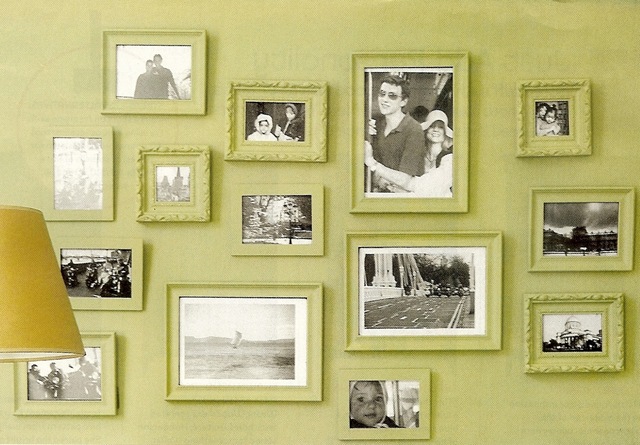
I like this idea of painting frames the same color as the wall and arranging them in a group, though this color isn't my thang. I might do that downstairs. (Thanks for the idea, Censational Girl!)
Also, I've been thinking about taking the carpet off our stairs (because there is no chore I detest as much as vacuuming them) and doing something like this, though with less white. (And, yep, this is Centsational Girl again.)

I just re-read all the work she did, though, and I'm reconsidering, especially because I can't quite figure out what the transitions at the bottom and top of the stairs, both carpeted areas, would look like with wooden stairs. Maybe I'll leave the carpet but revamp the wall and banister as a good first (or possibly only) step, like she did a year before.

And, finally, thanks to Justin Taylor about a month ago, I'm wanting this. It matches nothing that we own, and it wouldn't fit anywhere, but how cool is it?

My next home inspiration post will be my ideas for curtains and coordinating pillow covers. I've found some options at the store, some fabric online, and some other random ideas. I think that might be one of my first post-MAEd projects.
You know, after I finish my other half-finished projects.
And get healthy. (Which I'm hoping will happen. Someday. This side of heaven, hopefully.)
So what's inspiring you right now?
- I like to share what I love.
- I like to have a record of those things.
And you can click on the pictures to find their original source if I don't mention it. (Mostly. Well, at least in future posts. Today I'm posting courtesy of pain relievers, which make me too loopy for thesis work but just loopy enough for blogging. Or maybe not. If this isn't a lucid enough post, feel free to leave a comment telling me that I should hold off on the blog while relieving pain as well. That won't hurt my feelings. 'Cause nothing hurts right now, thanks to the pain relievers.)
(Oh, and quick
Moving on...
First, I'm beginning to look at ideas for living room furniture. The beastly sectional that I bought with my first post-college roommate Niki is too big for the space, not really my preferred style, and no longer providing much cushioning in the cushion area. We've been living with the space issue, and I never totally loved the style (though we did love the price at Willie's Warehouse. yes, that is really the name of the place. It's a classy joint with no AC in South Texas. Their commercials consist of Willie hiding in random places, like inside refrigerators or front-load washers, while other people walk around asking where Willie is. Then he hops out, and everyone laughs. Yep, classy. I once bought a fridge, electric range, washer, and dryer all for $1200, and they lasted well. I miss Willie's.)
Niki is, by the way, listed as my spouse on one of my credit reports because she and I, as new teachers with our first paychecks not yet in sight and a house with no seating, financed the couch jointly. I've tried to correct it. I haven't been successful yet.
Okay, back to seating. I want a smaller and more neutral couch, because I want to be able to switch up accessories.
I'm not opposed to the sectional look, as long as it's miniature, like this one from World Market:
And with that one, I have the option of throwing caution to the wind and going with a color I love in our home. (Neutral? What? I never said that. Hmm, or maybe I did. But did I mean it?)
We saw a swatch of this in the store a week or two ago, and it's much less pumpkin than it looks above. more of a true spice mix - what it might look like if you dumped a little of each of the contents of your spice drawer onto a tray and then added more paprika and nutmeg.
On the other side of the room, where we have boring (and free, so boring is okay) wooden chairs. I want to replace them with one or two of these. (The pictures are the same chair, the first from World Market's website and the second that I took quickly in the store. As you can see in my not-so-great picture, it's more eggplant than purple and smaller than it looks online.)
I am glad I found the chairs, because I was thinking about getting something like this, from Crate and Barrel (I think), in its place (yes, I do like plum, along with terracotta/pumpkin oranges and mossy greens; that's basically our color palette downstairs). However, the chaise is more than double the cost of two of the chairs above.
I'm not sure we can rock the spice colored couch with the eggplant tufted-back chairs in the same room, especially given that the room has green walls. But it would combine all my favorites. I'm going to have to make a design board to consider the possibilities.
Two other quick ideas:
I like this idea of painting frames the same color as the wall and arranging them in a group, though this color isn't my thang. I might do that downstairs. (Thanks for the idea, Censational Girl!)
Also, I've been thinking about taking the carpet off our stairs (because there is no chore I detest as much as vacuuming them) and doing something like this, though with less white. (And, yep, this is Centsational Girl again.)
I just re-read all the work she did, though, and I'm reconsidering, especially because I can't quite figure out what the transitions at the bottom and top of the stairs, both carpeted areas, would look like with wooden stairs. Maybe I'll leave the carpet but revamp the wall and banister as a good first (or possibly only) step, like she did a year before.
And, finally, thanks to Justin Taylor about a month ago, I'm wanting this. It matches nothing that we own, and it wouldn't fit anywhere, but how cool is it?
My next home inspiration post will be my ideas for curtains and coordinating pillow covers. I've found some options at the store, some fabric online, and some other random ideas. I think that might be one of my first post-MAEd projects.
You know, after I finish my other half-finished projects.
And get healthy. (Which I'm hoping will happen. Someday. This side of heaven, hopefully.)
So what's inspiring you right now?
Halloween, Dinglefest style
/
I love Halloween. I've always loved it. I love costumes (and I think this is only the second year in my life that I was sans costume). I love kids. I love candy. I love connecting with neighbors. I love carved pumpkins. I love it.
(I could do without the gory costumes and skankoween get-ups and creepy decor and teenagers who show up sans costume yet expecting candy. But I mostly love it.)
When I realized that the timing of our church festival would also allow us to go trick-or-treating afterward, I was psyched. I wasn't feeling well enough to join them and Robbie needed to get to bed, so Lee and Jocelyn conquered the neighborhood on their own. I'm not sure which one of them enjoyed it more.
Before we get to the evening's festivities, though, I have one sweet story from the morning. Jocelyn woke up early, before the sun was up, which isn't all that unusual for her. She climbed into bed with me and said, "Let's go ring doorbells and say 'trick or treat' now!" Her reasoning: it was dark out, and it was Halloween; therefore, it was time to trick or treat. To her disappointment and for the benefit of relationship-building with our neighbors, we stayed in bed.
Now back to the evening. Here are my favorite people arriving at the church for the fall festival!

And a close up on the kiddos (Starsong, her favorite My Little Pony, and our little bumblebee)..

Before these moments, we had some cute (failed) attempts at a good sibling picture in the parking lot. Despite not getting a great one, there are a couple worth sharing.


And, continuing in our reverse chronological order, here is the pony a few weeks ago. When the costume - a special gift from my mom, Gammy - arrived, Jocelyn had to try it on. And check herself out.


(I could do without the gory costumes and skankoween get-ups and creepy decor and teenagers who show up sans costume yet expecting candy. But I mostly love it.)
When I realized that the timing of our church festival would also allow us to go trick-or-treating afterward, I was psyched. I wasn't feeling well enough to join them and Robbie needed to get to bed, so Lee and Jocelyn conquered the neighborhood on their own. I'm not sure which one of them enjoyed it more.
Before we get to the evening's festivities, though, I have one sweet story from the morning. Jocelyn woke up early, before the sun was up, which isn't all that unusual for her. She climbed into bed with me and said, "Let's go ring doorbells and say 'trick or treat' now!" Her reasoning: it was dark out, and it was Halloween; therefore, it was time to trick or treat. To her disappointment and for the benefit of relationship-building with our neighbors, we stayed in bed.
Now back to the evening. Here are my favorite people arriving at the church for the fall festival!
And a close up on the kiddos (Starsong, her favorite My Little Pony, and our little bumblebee)..
Before these moments, we had some cute (failed) attempts at a good sibling picture in the parking lot. Despite not getting a great one, there are a couple worth sharing.
And, continuing in our reverse chronological order, here is the pony a few weeks ago. When the costume - a special gift from my mom, Gammy - arrived, Jocelyn had to try it on. And check herself out.
We swapped out the tight elastic band for a ribbon to tie the pony's face on to her head, and we layered matching lavender pajamas underneath the costume to keep her warm and to avoid contributing to the PG (or higher) rating that most costumes have nowadays. She's a tall, leggy gal, so few dresses are appropriate on her without leggings anyway.
Oh, and we added pink furry boots. Because everything's better with pink furry boots.
Now back to last night...when Robbie walked into the church, Tina - who is a sweet friend as well as one of our pastors' wives - was handing out the welcome bags, which included a few pieces of candy. At this point, Robbie sat down on the floor, announced "candy!" and showed himself to be quite content if the evening had ended then. We were able to convince him to come a bit farther because there were balloons.
Then he discovered more candy. At one point, he was staggering around chanting "candy, candy, candy" with a sugar-induced smile. This guy is all for Halloween!
We did bring Robs along to a couple of our nearest neighbors' houses, and then he (and I) called it a night.
More pictures of the fall festival fun will come in a future post, but I hope you enjoyed these!
Thanks again, Gammy - she felt like a beautiful pony all night! And she carried around the plastic version of Starsong in her candy container to play with and show off.
Oh, and our sweet pony told me today that she wants to go trick-or-treating every night. I had to break the news to her that it only happens once a year.
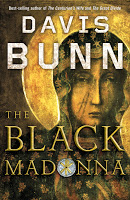
The Black Madonna by David Bunn
/
This is my first post with this group. You'll find the info about the book and an excerpt below, all text provided from the folks at FIRST Wild Card Tour (excluding these first two paragraphs). Before that, though, let me add my personal opinion: I think this author tries to be a Dan Brown, minus the church/Bible bashing. A work of fiction weaving a search for relics and international conspiracies with a equal dashes of mystery, intrigue, and romance...not bad, but not exceptional either. It was good enough that I'll check out his other books from the library, and I'm hoping that earlier books with these characters provide the depth that this one lacked in places (perhaps because the author assumed that the reader would have read the others).
Oh, and to answer the question that a friend asked when she saw the book at our house: no, this book's title doesn't have anything to do with race. I'll leave it at that, because I think anything else would give too much away.
 It is time for a FIRST Wild Card Tour book review! If you wish to join the FIRST blog alliance, just click the button. We are a group of reviewers who tour Christian books. A Wild Card post includes a brief bio of the author and a full chapter from each book toured. The reason it is called a FIRST Wild Card Tour is that you never know if the book will be fiction, non~fiction, for young, or for old...or for somewhere in between! Enjoy your free peek into the book!
You never know when I might play a wild card on you!
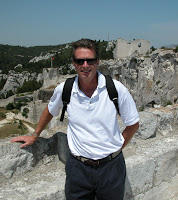
Davis Bunn is an award winning author who serves as writer in residence at Regent’s Par College, Oxford University. His novels have sold more than six million copies in sixteen languages.
Photograph by I.D. Bunn
Visit the author's website.
Product Details:
List Price: $14.99
Paperback: 336 pages
Publisher: Touchstone; 1st edition (September 7, 2010)
Language: English
ISBN-10: 1416556338
ISBN-13: 978-1416556336
AND NOW...THE FIRST CHAPTER:
Oh, and to answer the question that a friend asked when she saw the book at our house: no, this book's title doesn't have anything to do with race. I'll leave it at that, because I think anything else would give too much away.
It is time for a FIRST Wild Card Tour book review! If you wish to join the FIRST blog alliance, just click the button. We are a group of reviewers who tour Christian books. A Wild Card post includes a brief bio of the author and a full chapter from each book toured. The reason it is called a FIRST Wild Card Tour is that you never know if the book will be fiction, non~fiction, for young, or for old...or for somewhere in between! Enjoy your free peek into the book!You never know when I might play a wild card on you!
Today's Wild Card author is:
and the book:
Touchstone; 1st edition (September 7, 2010)
***Special thanks to Libby Reed, Publicity Assistant, HOWARD BOOKS, a division of Simon & Schuster for sending me a review copy.***ABOUT THE AUTHOR:
Davis Bunn is an award winning author who serves as writer in residence at Regent’s Par College, Oxford University. His novels have sold more than six million copies in sixteen languages.
Photograph by I.D. Bunn
Visit the author's website.
Product Details:
List Price: $14.99
Paperback: 336 pages
Publisher: Touchstone; 1st edition (September 7, 2010)
Language: English
ISBN-10: 1416556338
ISBN-13: 978-1416556336
AND NOW...THE FIRST CHAPTER:
FROM THE CREST OF THE Herodium dig, Harry Bennett could look out and see three wars.
The isolated, cone-shaped hill rose two thousand feet over the Judean Desert. Herodium, the palace-fortress built by Herod the Great, had been erected on the site of his victory against the Parthians in 40 BCE. Herod had then served as king of Judea under his Roman masters, but he had been utterly despised by the Judeans. When Herod's sons were finally vanquished, Herodium had been evacuated. Over the centuries, the city became a legend, its location a myth.
Modern excavations had begun in the sixties, only to be interrupted by wars and intifadas and disputes over jurisdiction. Harry Bennett was part of a group excavating the original palace fortress. The current project was supervised by a woman professor from the Sorbonne. She had fought for six years to gain the license, and nothing so minor as somebody else's war was going to stop her work.
The volunteers came from a dozen nations, to dig and learn and bury themselves in history. Most were in their twenties and tried to keep up a brave face despite the rumbles of conflict and the brutal heat. The day Harry arrived at Herodium, three Scandinavian backpackers had perished hiking above the Ein Gedi National Forest. With water in their packs. Just felled by the ferocious heat.
And here Harry was, huddled under the relentless glare of that same deadly sun, using his trowel and his brush to scrape two thousand years of crud off a stone.
Officially Harry and the other volunteers were restricted to the dig and their hilltop camp. With Hamas missiles streaking the nighttime sky, none of the other unpaid staff were much interested in testing their boundaries. But twice each week the Sorbonne professor traveled to Jerusalem and delivered her finds to the ministry. When she departed that particular afternoon, Harry signaled to the Palestinian operating the forklift. Ten minutes later, they set off in Hassan's decrepit pickup.
The angry wind blasting through his open window tasted of sand as dry as volcanic ash. Hassan followed the pitted track down an incline so steep Harry gripped the roof and propped one boot on the dashboard. He tried to ignore the swooping drop to his right by studying the horizon, which only heightened his sense of descending into danger. North and east rose the Golan hills and sixty years of struggle with Syria. Straight north was the Lebanese border, home to the Hezbollah hordes. To the southwest lay Gaza, provider of their nightly firework displays.
All West Bank digs were required to employ a certain number of locals. Hassan was one of the few who arrived on time, did an honest day's work, and showed a keen interest in every new discovery. On Harry's first day at the site, he had put the man down for a grave robber and a smuggler.
The West Bank was the richest area for artifacts in all Judea. There were thousands of sites, many dating from the Iron Age, others from the Roman era, and more still from Byzantium. Many sites remained undiscovered by archeologists but were well known to generations of Palestinians, who fiercely guarded their troves and passed the locations down from generation to generation.
Hassan's former job wouldn't have sat well with the Israeli authorities. But people like Hassan took the long view. Eventually things would settle down, and when they did, Hassan would return to his real trade. In the meantime, Hassan hid his profession from the Israeli authorities, lay low, and remained open to a little persuasion. In Harry's case, that amounted to a thousand dollars.
They arrived in Hebron three hours later. The city crawled up the slopes of two hills and sprawled across a dull desert bowl. Entering Hebron around sunset, in the company of a Palestinian smuggler, was an act of total lunacy.
Harry Bennett wouldn't have had it any other way.
Clustered on hilltops to the north of the old city rose the UN buildings, the university, and a huddle of government high-rises built with international relief funding. Other hills were dominated by Jewish settlements. These were rimmed by fences and wire and watchtowers that gleamed in the descending light. The rest of Hebron was just your basic war zone.
Sunset painted Hebron the color of old rust. The city held the tightly sullen feel of a pot that had boiled for centuries. Even the newer structures looked run-down. Most walls were pockmarked with bullet holes and decorated with generations of graffiti. Harry saw kids everywhere. They bore such tight expressions they resembled old people in miniature. Looking into their eyes made Harry's chest hurt.
The streets were calm, the traffic light. Which was good, because it allowed them to make it to the city center early. It was also bad, because the Israel Defense Forces soldiers had nothing better to do than watch Hassan's truck. Two IDF soldiers manning a reinforced guard station tracked the pickup with a fifty-caliber machine gun.
Hassan said, "This idea is not so good, maybe."
Harry nodded slowly. He smelled it too, the biting funk of cordite not yet lit. But he would trust his driver. "You say go, we go."
Hassan's gaze flitted over to Harry. "You pay?"
"The deal's the same. You get the other five hundred when we're done."
Hassan wiped his face with a corner of his checkered head-kerchief. "We stay."
Harry halfway wished the man's nerve would fail and he would turn his rattling truck around. "Better to come in twice than not go home at all."
"You know danger?"
"Some."
"I think maybe more than some. I think you see much action."
"That was then and this is now," Harry replied. "You're my man on the ground here. I'm relying on your eyes and ears. I can't tell what's real and what's just your normal garden-variety funk."
Hassan skirted a pothole large enough to swallow the neighboring Israeli tank. "Say again, please."
"Let's assume for a second that you and I can do business together."
Hassan pointed at Harry's shirt pocket holding the five bills—the rest of his fee. "This is not business?"
"I'd call it a first step. Say your man shows up like you promised. Say he's got the goods and the buy goes well. What happens next?"
"If the first buy goes well, you trust me for more."
"Right. But I need someone who can sniff out traps and see through walls. There's so much danger around here, my senses are on overload."
The man actually smiled. "Welcome to Hebron."
"I didn't go to all this trouble for just one item, no matter how fine this guy's treasure might be. I need you to tell me if we're safe or if we should pull out and return another time."
Hassan did not speak again until he parked the truck and led Harry into a cafÉ on Hebron's main square. "What you like?"
"You mean, other than getting out of here with my skin intact? A mint tea would go down well."
Hassan placed the order and settled into the rickety chair across from Harry. "There are many Americans like you?"
"I'm one of a kind."
"Yes. I think you speak truth." Hassan rose to his feet. "Drink your tea. I go ask what is happening."
All Harry could do was sit there and watch the only man he knew in Hebron just walk away. From his spot by the bullet-ridden wall, isolated among the patrons at other tables who carefully did not look his way, Harry felt as though he had a bull's-eye painted on his forehead. Even the kid who brought his tea and plate of unleavened bread looked scared. Harry stirred in a spoonful of gray, unrefined sugar and lifted the tulip-shaped glass by its rim. All he could taste was the flavor of death.
AFTER SUNSET, THE HEBRON AIR cooled at a grudging pace. Harry watched as the city square filled with people and traffic and shadows. The cafÉ became crowded with people who avoided looking Harry's way. Across the plaza, the Tomb of the Patriarchs shone pearl white. Beside the cave complex stood the Mosque of Abraham, a mammoth structure dating back seven hundred years.
The caves had been bought by the patriarch Abraham for four hundred coins, such an astronomical sum that the previous owner had offered to throw in the entire valley. But Abraham had insisted upon overpaying so that his rightful ownership would never be questioned. He had wanted the caves as his family's burial site because supposedly they were also where Adam and Eve had been laid to rest. Besides Abraham himself, the caves also held the remains of his wife, Sarah, along with Rebecca, Isaac, and Jacob.
The guy who made his way toward Harry's table resembled an Arab version of the Pillsbury Doughboy. The man waddled as he walked. His legs splayed slightly from the knees down. His round face was topped by flattened greasy curls that glistened in the rancid lights of the cafÉ. He walked up, slumped into the chair across the table from Harry, and demanded, "You have money?"
Harry kept his gaze on the square and the crawling traffic. "Where's Hassan?"
"Hassan is not my business. He is your business. You must answer my question. You have money?"
Harry was about to let the guy have it when he spotted Hassan returning across the plaza. When he reached the cafÉ's perimeter, Hassan seated himself at an empty table, facing outward toward the plaza, placing himself between Harry and any incoming threat. Harry relaxed slightly. It was always a pleasure doing business with a pro.
Harry said, "Let's take this from the top. I'm—"
"I know who you are. Harry Bennett seeks treasure all over the world. You see? We meet because I check you out."
"What's your name?"
"Wadi Haddad."
"Wadi, like the word for oasis?"
"Yes, is same." He wore a rumpled linen jacket, its armpits wet and darkened with sweat. He reached in a pocket and came up with a pack of filterless Gitanes. "You want?"
"Never learned to use them, thanks."
Wadi Haddad lit the cigarette with a gold lighter. The stench of black tobacco encircled the table. "I have much interesting items. Very nice."
"I didn't come to Hebron for nice, Mr. Haddad. I came for exceptional. You understand that word?"
"Exceptional is also very expensive."
"One of a kind," Harry went on. "Unique. Extremely old. And I have always been partial to gold."
Wadi Haddad revealed a lizard's tongue, far too narrow for his globular face. It flitted in and out several times, tasting the air. "How much money you have?"
"Not a cent with me."
"Then I also have nothing. Business is finished." But Wadi Haddad did not move.
"Here's how it's going to work," said Harry. "You show me the item. I photograph it."
"No. Photographs absolutely not to happen."
"I show the photographs to my clients. If they like, they transfer the money to an escrow account at the Bank of Jordan in Amman. You understand, escrow?"
"I know."
"Good. Then you bring the item to Jerusalem and we make the exchange."
"Not Jerusalem. Too much police everyplace."
"Okay, Mr. Haddad. Where would you prefer?"
"Petra."
"Too small. I like bright lights, big city."
"Then Amman."
Which had been Harry's choice all along. Even so, he pretended to give that some thought. "Okay, Amman. Hotel Inter-Continental. You got an account at the Bank of Jordan?"
"I make one happen."
"Then we're ready to roll. All we need is the merchandise."
"No photographs."
"Then no business. Sorry, Charlie."
"My name is Wadi."
"Whatever. I don't shoot, I don't buy."
"Photographs cost you a thousand dollars."
Suddenly Harry was very tired of this two-step. "Fine. But I take the thousand from the final purchase price. And don't even think of arguing."
Wadi Haddad did not rise so much as bounce from the seat. "Okay, we go. Not your man." He nodded toward Hassan. "Just you."
"Be right with you." Harry walked to Hassan's table and squatted down beside the man's chair. "You find anything?"
"Hebron is one tense city. People very worried."
"Yeah, I caught that too." Harry liked how the guy never stopped searching the shadows. "Where'd you see action, Hassan?"
"Nowhere. I see nothing, I do nothing. In the West Bank there is only IDF and terrorists."
"Wadi's taking me to check out the merchandise. He says I've got to do this alone. You think maybe you could watch my back?"
"Is good." Hassan held to a catlike stillness. "I see something, I whistle. I can whistle very loud."
Harry rose to his feet, patted the guy's shoulder, and said, "You just earned yourself another five bills."
WADI HADDAD MOVED SURPRISINGLY FAST on his splayed legs. He led Harry deep into the old city. The West Bank crisis was etched into every Hebron street, every bullet-ridden wall, every building topped by an IDF bunker. The streets were either dimly lit or not at all. But walking behind the wheezing Haddad, Harry had no trouble picking his way through the rubble. Behind him, the mosque and the cave complex shone like beacons. And up ahead loomed the wall.
The barrier separating the Jewish sector from Hebron's old city was thirty feet high and topped with razor wire. Searchlights from the guard towers and nearby IDF bunkers serrated the night. The wall gleamed like a massive concrete lantern.
Somewhere in the distance a truck backfired. Wadi Haddad froze. A searchlight illuminated the man's trembling jowls. Harry said, "You're not from here."
"My mother's family only. I live sometimes Damascus, sometimes Aqaba."
Aqaba was Jordan's portal to the Red Sea, a haven for tourists and smugglers' dhows. "Must be nice."
Wadi Haddad started off once more, Harry following close. But when Haddad entered a dark, narrow alley, Harry dug in his heels. "Hold up there."
"What's the matter, treasure man?"
The buildings to either side reached across to form a crumbling arch. The windows fronting the street were both barred and dark. The alley was black. Harry had spent a lifetime avoiding alleys like this. Then he saw a cigarette tip gleam. "That your buddy down there?"
"Is guard, yes. In Hebron, many guards."
"Ask him to step out where I can see him."
Wadi didn't like it, but he did as Harry said. The man emerged and flipped on a flashlight. In the dim rays reflected from the walls, Harry could see a face like a parrot, with too-narrow features sliding back from a truly enormous nose. The man's eyes were set very close together and gleamed with the erratic light of an easy killer.
"Ask him to light up that alley for us."
The man smirked at Harry's nerves but did not wait for Wadi's translation. The flashlight showed an empty lane that ended about eighty feet back with double metal doors. "What's behind the doors, Wadi?"
"Where we go. My mother's cousin's house."
Harry motioned to the man holding the light. "Lead on, friend."
The guard spoke for the first time. "You have guns?"
Harry lifted his shirt and turned around. "Make business, not war. That's my motto."
"He can search you?"
"Sure thing." Harry gestured at the doors. "Inside."
• • •
THE DOORS RATTLED IN ALARM as the guard pushed them open. Wadi called out and, on hearing no response, stepped into a neglected courtyard with Harry close behind. The dusty compound appeared empty. A pair of plastic chairs sprawled by a rusty outdoor table, their upended legs jutting like broken teeth. From inside the house a dog barked. In the distance Harry both heard and felt the grinding tremor of an IDF tank on road patrol.
Wadi led Harry to a flat-roofed side building of unfinished concrete blocks and opened a door with flaking paint. The interior was an astonishment. The front room was a well-appointed display chamber about twelve feet square. Two walls were stuccoed a light peach. A third wall was covered by a frieze of mythical birds carved from what Harry suspected was olive wood. The fourth wall held a narrow steel door with a central combination lock.
"Looks like I found the guy I've been looking for," Harry said.
Wadi held out his hand. "Thousand dollars."
Harry was about to insist he see the item first, then decided there was no reason to get off on the wrong sandal.
Wadi counted in the Arab fashion, folding the bills over and peeling the oily edges with his thumb and forefinger. He slipped the money into his pocket and motioned with his chin to the guard.
The steel door swung open on greased hinges. The guard stepped inside and emerged with a black velvet stand shaped like a woman's neck. What was draped on the stand took Harry's breath away.
The concept of women's ornamentation was as old as civilization itself. The earliest forms were fashioned as temple offerings and were considered to have magical properties. Many ancient cultures revered such jewelry for its talismanic power either to ward off evil or bring good health and prosperity.
In the very earliest days of Christianity, new believers drawn from Hellenistic temple cults often brought with them such ideas about the powers of jewelry. The necklace dated from the second century AD. The chain was a series of gold tubes, each stamped with a Christian design. It ended in an emerald the size of Harry's thumb. The gemstone had been sanded flat and carved with the Chi-Rho symbol.
Without asking, Wadi handed Harry a pair of white gloves and a jeweler's loupe. Closer inspection only confirmed Harry's first impression. This was a museum-quality piece.
The problem was, Harry could not identify it as a fake. Which was troubling, because Harry knew for a fact the item was not genuine.
Harry Bennett had nothing against a little smuggling. He would certainly not have helped anyone track down another treasure dog.
Counterfeiters, though, were a different breed of lice.
After nearly three years of roiling conflict, the Israeli Antiquities Authority had basically lost control of smuggling in the West Bank. In the past, the IAA had nabbed about ninety thieves each year for pilfering tombs, ruined cities, palaces, and forts. Since the latest political troubles began, however, arrests had slumped to almost nothing. The IAA knew without question that the worst culprits were getting away. The international arts market was being flooded with ancient Hebrew treasure. What was more, a growing number of these items were bogus. Extremely well crafted, their workmanship often able to fool museum directors and other supposed experts, but phony just the same.
The Israeli government had needed somebody with Harry Bennett's credentials, known throughout the world as a dedicated treasure dog. Somebody capable of infiltrating the system and identifying the source of the fake artifacts.
Only when Harry looked up did he realize he had been holding his breath. He handed the loupe and gloves back to Wadi and unsnapped the case of his pocket camera. "Okay if I shoot a few?"
Wadi smirked as he pulled the cigarettes from his pocket. The man knew a buyer's lust when he saw it. "Sure, sure, many as you like. You want tea?"
DICKERING OVER PRICE TOOK UNTIL well after midnight. Even so, when Harry stepped through the compound's steel door, the city remained noisily alive. Such was the manner of every Middle Eastern city Harry had ever visited, and it was one of the reasons why he relished the Arab world. These lands were full of pirates and their love of dark hours.
Wadi Haddad wore his sourest done-in-by-the-deal frown. "You give me no profit. My daughters starve."
Harry clamped down on his first thought, which was that this guy definitely hadn't missed a lot of meals. "Phone you in four days, right?"
"Four, maybe five. These days the border is very tight."
"Then maybe you ought to bring out the other items you're holding here for sale."
"You buy more?"
"If they're as fine as what you just showed me, sure, I think I can find buyers."
"Not same price," Wadi complained. "Too much hard bargain."
Harry was about to say what he thought of Wadi's poor-boy tactic when, from the distance, he heard a shrill whistle pierce the night.
The guard stood at the alley's mouth, searching in all directions. Wadi remained intent upon business, sucking on his cigarette and grumbling through the smoke as he walked past where Harry stood tense and rooted to the dusty earth. "Next time your price plus thirty percent. You pay or I go find—"
Harry leaned forward and gripped Wadi's shoulder and pulled him back. He slammed Wadi onto the alley wall, placing himself between the trader and the road. Wadi's breath whooshed out in a fetid cloud. His eyes registered surprise and rising protest. But Harry kept him pinned where he was.
Then the world of Hebron roared in rage and flames.
© 2010 T. Davis Bunn
For more information please visit www.SimonandSchuster.com
The isolated, cone-shaped hill rose two thousand feet over the Judean Desert. Herodium, the palace-fortress built by Herod the Great, had been erected on the site of his victory against the Parthians in 40 BCE. Herod had then served as king of Judea under his Roman masters, but he had been utterly despised by the Judeans. When Herod's sons were finally vanquished, Herodium had been evacuated. Over the centuries, the city became a legend, its location a myth.
Modern excavations had begun in the sixties, only to be interrupted by wars and intifadas and disputes over jurisdiction. Harry Bennett was part of a group excavating the original palace fortress. The current project was supervised by a woman professor from the Sorbonne. She had fought for six years to gain the license, and nothing so minor as somebody else's war was going to stop her work.
The volunteers came from a dozen nations, to dig and learn and bury themselves in history. Most were in their twenties and tried to keep up a brave face despite the rumbles of conflict and the brutal heat. The day Harry arrived at Herodium, three Scandinavian backpackers had perished hiking above the Ein Gedi National Forest. With water in their packs. Just felled by the ferocious heat.
And here Harry was, huddled under the relentless glare of that same deadly sun, using his trowel and his brush to scrape two thousand years of crud off a stone.
Officially Harry and the other volunteers were restricted to the dig and their hilltop camp. With Hamas missiles streaking the nighttime sky, none of the other unpaid staff were much interested in testing their boundaries. But twice each week the Sorbonne professor traveled to Jerusalem and delivered her finds to the ministry. When she departed that particular afternoon, Harry signaled to the Palestinian operating the forklift. Ten minutes later, they set off in Hassan's decrepit pickup.
The angry wind blasting through his open window tasted of sand as dry as volcanic ash. Hassan followed the pitted track down an incline so steep Harry gripped the roof and propped one boot on the dashboard. He tried to ignore the swooping drop to his right by studying the horizon, which only heightened his sense of descending into danger. North and east rose the Golan hills and sixty years of struggle with Syria. Straight north was the Lebanese border, home to the Hezbollah hordes. To the southwest lay Gaza, provider of their nightly firework displays.
All West Bank digs were required to employ a certain number of locals. Hassan was one of the few who arrived on time, did an honest day's work, and showed a keen interest in every new discovery. On Harry's first day at the site, he had put the man down for a grave robber and a smuggler.
The West Bank was the richest area for artifacts in all Judea. There were thousands of sites, many dating from the Iron Age, others from the Roman era, and more still from Byzantium. Many sites remained undiscovered by archeologists but were well known to generations of Palestinians, who fiercely guarded their troves and passed the locations down from generation to generation.
Hassan's former job wouldn't have sat well with the Israeli authorities. But people like Hassan took the long view. Eventually things would settle down, and when they did, Hassan would return to his real trade. In the meantime, Hassan hid his profession from the Israeli authorities, lay low, and remained open to a little persuasion. In Harry's case, that amounted to a thousand dollars.
They arrived in Hebron three hours later. The city crawled up the slopes of two hills and sprawled across a dull desert bowl. Entering Hebron around sunset, in the company of a Palestinian smuggler, was an act of total lunacy.
Harry Bennett wouldn't have had it any other way.
Clustered on hilltops to the north of the old city rose the UN buildings, the university, and a huddle of government high-rises built with international relief funding. Other hills were dominated by Jewish settlements. These were rimmed by fences and wire and watchtowers that gleamed in the descending light. The rest of Hebron was just your basic war zone.
Sunset painted Hebron the color of old rust. The city held the tightly sullen feel of a pot that had boiled for centuries. Even the newer structures looked run-down. Most walls were pockmarked with bullet holes and decorated with generations of graffiti. Harry saw kids everywhere. They bore such tight expressions they resembled old people in miniature. Looking into their eyes made Harry's chest hurt.
The streets were calm, the traffic light. Which was good, because it allowed them to make it to the city center early. It was also bad, because the Israel Defense Forces soldiers had nothing better to do than watch Hassan's truck. Two IDF soldiers manning a reinforced guard station tracked the pickup with a fifty-caliber machine gun.
Hassan said, "This idea is not so good, maybe."
Harry nodded slowly. He smelled it too, the biting funk of cordite not yet lit. But he would trust his driver. "You say go, we go."
Hassan's gaze flitted over to Harry. "You pay?"
"The deal's the same. You get the other five hundred when we're done."
Hassan wiped his face with a corner of his checkered head-kerchief. "We stay."
Harry halfway wished the man's nerve would fail and he would turn his rattling truck around. "Better to come in twice than not go home at all."
"You know danger?"
"Some."
"I think maybe more than some. I think you see much action."
"That was then and this is now," Harry replied. "You're my man on the ground here. I'm relying on your eyes and ears. I can't tell what's real and what's just your normal garden-variety funk."
Hassan skirted a pothole large enough to swallow the neighboring Israeli tank. "Say again, please."
"Let's assume for a second that you and I can do business together."
Hassan pointed at Harry's shirt pocket holding the five bills—the rest of his fee. "This is not business?"
"I'd call it a first step. Say your man shows up like you promised. Say he's got the goods and the buy goes well. What happens next?"
"If the first buy goes well, you trust me for more."
"Right. But I need someone who can sniff out traps and see through walls. There's so much danger around here, my senses are on overload."
The man actually smiled. "Welcome to Hebron."
"I didn't go to all this trouble for just one item, no matter how fine this guy's treasure might be. I need you to tell me if we're safe or if we should pull out and return another time."
Hassan did not speak again until he parked the truck and led Harry into a cafÉ on Hebron's main square. "What you like?"
"You mean, other than getting out of here with my skin intact? A mint tea would go down well."
Hassan placed the order and settled into the rickety chair across from Harry. "There are many Americans like you?"
"I'm one of a kind."
"Yes. I think you speak truth." Hassan rose to his feet. "Drink your tea. I go ask what is happening."
All Harry could do was sit there and watch the only man he knew in Hebron just walk away. From his spot by the bullet-ridden wall, isolated among the patrons at other tables who carefully did not look his way, Harry felt as though he had a bull's-eye painted on his forehead. Even the kid who brought his tea and plate of unleavened bread looked scared. Harry stirred in a spoonful of gray, unrefined sugar and lifted the tulip-shaped glass by its rim. All he could taste was the flavor of death.
AFTER SUNSET, THE HEBRON AIR cooled at a grudging pace. Harry watched as the city square filled with people and traffic and shadows. The cafÉ became crowded with people who avoided looking Harry's way. Across the plaza, the Tomb of the Patriarchs shone pearl white. Beside the cave complex stood the Mosque of Abraham, a mammoth structure dating back seven hundred years.
The caves had been bought by the patriarch Abraham for four hundred coins, such an astronomical sum that the previous owner had offered to throw in the entire valley. But Abraham had insisted upon overpaying so that his rightful ownership would never be questioned. He had wanted the caves as his family's burial site because supposedly they were also where Adam and Eve had been laid to rest. Besides Abraham himself, the caves also held the remains of his wife, Sarah, along with Rebecca, Isaac, and Jacob.
The guy who made his way toward Harry's table resembled an Arab version of the Pillsbury Doughboy. The man waddled as he walked. His legs splayed slightly from the knees down. His round face was topped by flattened greasy curls that glistened in the rancid lights of the cafÉ. He walked up, slumped into the chair across the table from Harry, and demanded, "You have money?"
Harry kept his gaze on the square and the crawling traffic. "Where's Hassan?"
"Hassan is not my business. He is your business. You must answer my question. You have money?"
Harry was about to let the guy have it when he spotted Hassan returning across the plaza. When he reached the cafÉ's perimeter, Hassan seated himself at an empty table, facing outward toward the plaza, placing himself between Harry and any incoming threat. Harry relaxed slightly. It was always a pleasure doing business with a pro.
Harry said, "Let's take this from the top. I'm—"
"I know who you are. Harry Bennett seeks treasure all over the world. You see? We meet because I check you out."
"What's your name?"
"Wadi Haddad."
"Wadi, like the word for oasis?"
"Yes, is same." He wore a rumpled linen jacket, its armpits wet and darkened with sweat. He reached in a pocket and came up with a pack of filterless Gitanes. "You want?"
"Never learned to use them, thanks."
Wadi Haddad lit the cigarette with a gold lighter. The stench of black tobacco encircled the table. "I have much interesting items. Very nice."
"I didn't come to Hebron for nice, Mr. Haddad. I came for exceptional. You understand that word?"
"Exceptional is also very expensive."
"One of a kind," Harry went on. "Unique. Extremely old. And I have always been partial to gold."
Wadi Haddad revealed a lizard's tongue, far too narrow for his globular face. It flitted in and out several times, tasting the air. "How much money you have?"
"Not a cent with me."
"Then I also have nothing. Business is finished." But Wadi Haddad did not move.
"Here's how it's going to work," said Harry. "You show me the item. I photograph it."
"No. Photographs absolutely not to happen."
"I show the photographs to my clients. If they like, they transfer the money to an escrow account at the Bank of Jordan in Amman. You understand, escrow?"
"I know."
"Good. Then you bring the item to Jerusalem and we make the exchange."
"Not Jerusalem. Too much police everyplace."
"Okay, Mr. Haddad. Where would you prefer?"
"Petra."
"Too small. I like bright lights, big city."
"Then Amman."
Which had been Harry's choice all along. Even so, he pretended to give that some thought. "Okay, Amman. Hotel Inter-Continental. You got an account at the Bank of Jordan?"
"I make one happen."
"Then we're ready to roll. All we need is the merchandise."
"No photographs."
"Then no business. Sorry, Charlie."
"My name is Wadi."
"Whatever. I don't shoot, I don't buy."
"Photographs cost you a thousand dollars."
Suddenly Harry was very tired of this two-step. "Fine. But I take the thousand from the final purchase price. And don't even think of arguing."
Wadi Haddad did not rise so much as bounce from the seat. "Okay, we go. Not your man." He nodded toward Hassan. "Just you."
"Be right with you." Harry walked to Hassan's table and squatted down beside the man's chair. "You find anything?"
"Hebron is one tense city. People very worried."
"Yeah, I caught that too." Harry liked how the guy never stopped searching the shadows. "Where'd you see action, Hassan?"
"Nowhere. I see nothing, I do nothing. In the West Bank there is only IDF and terrorists."
"Wadi's taking me to check out the merchandise. He says I've got to do this alone. You think maybe you could watch my back?"
"Is good." Hassan held to a catlike stillness. "I see something, I whistle. I can whistle very loud."
Harry rose to his feet, patted the guy's shoulder, and said, "You just earned yourself another five bills."
WADI HADDAD MOVED SURPRISINGLY FAST on his splayed legs. He led Harry deep into the old city. The West Bank crisis was etched into every Hebron street, every bullet-ridden wall, every building topped by an IDF bunker. The streets were either dimly lit or not at all. But walking behind the wheezing Haddad, Harry had no trouble picking his way through the rubble. Behind him, the mosque and the cave complex shone like beacons. And up ahead loomed the wall.
The barrier separating the Jewish sector from Hebron's old city was thirty feet high and topped with razor wire. Searchlights from the guard towers and nearby IDF bunkers serrated the night. The wall gleamed like a massive concrete lantern.
Somewhere in the distance a truck backfired. Wadi Haddad froze. A searchlight illuminated the man's trembling jowls. Harry said, "You're not from here."
"My mother's family only. I live sometimes Damascus, sometimes Aqaba."
Aqaba was Jordan's portal to the Red Sea, a haven for tourists and smugglers' dhows. "Must be nice."
Wadi Haddad started off once more, Harry following close. But when Haddad entered a dark, narrow alley, Harry dug in his heels. "Hold up there."
"What's the matter, treasure man?"
The buildings to either side reached across to form a crumbling arch. The windows fronting the street were both barred and dark. The alley was black. Harry had spent a lifetime avoiding alleys like this. Then he saw a cigarette tip gleam. "That your buddy down there?"
"Is guard, yes. In Hebron, many guards."
"Ask him to step out where I can see him."
Wadi didn't like it, but he did as Harry said. The man emerged and flipped on a flashlight. In the dim rays reflected from the walls, Harry could see a face like a parrot, with too-narrow features sliding back from a truly enormous nose. The man's eyes were set very close together and gleamed with the erratic light of an easy killer.
"Ask him to light up that alley for us."
The man smirked at Harry's nerves but did not wait for Wadi's translation. The flashlight showed an empty lane that ended about eighty feet back with double metal doors. "What's behind the doors, Wadi?"
"Where we go. My mother's cousin's house."
Harry motioned to the man holding the light. "Lead on, friend."
The guard spoke for the first time. "You have guns?"
Harry lifted his shirt and turned around. "Make business, not war. That's my motto."
"He can search you?"
"Sure thing." Harry gestured at the doors. "Inside."
• • •
THE DOORS RATTLED IN ALARM as the guard pushed them open. Wadi called out and, on hearing no response, stepped into a neglected courtyard with Harry close behind. The dusty compound appeared empty. A pair of plastic chairs sprawled by a rusty outdoor table, their upended legs jutting like broken teeth. From inside the house a dog barked. In the distance Harry both heard and felt the grinding tremor of an IDF tank on road patrol.
Wadi led Harry to a flat-roofed side building of unfinished concrete blocks and opened a door with flaking paint. The interior was an astonishment. The front room was a well-appointed display chamber about twelve feet square. Two walls were stuccoed a light peach. A third wall was covered by a frieze of mythical birds carved from what Harry suspected was olive wood. The fourth wall held a narrow steel door with a central combination lock.
"Looks like I found the guy I've been looking for," Harry said.
Wadi held out his hand. "Thousand dollars."
Harry was about to insist he see the item first, then decided there was no reason to get off on the wrong sandal.
Wadi counted in the Arab fashion, folding the bills over and peeling the oily edges with his thumb and forefinger. He slipped the money into his pocket and motioned with his chin to the guard.
The steel door swung open on greased hinges. The guard stepped inside and emerged with a black velvet stand shaped like a woman's neck. What was draped on the stand took Harry's breath away.
The concept of women's ornamentation was as old as civilization itself. The earliest forms were fashioned as temple offerings and were considered to have magical properties. Many ancient cultures revered such jewelry for its talismanic power either to ward off evil or bring good health and prosperity.
In the very earliest days of Christianity, new believers drawn from Hellenistic temple cults often brought with them such ideas about the powers of jewelry. The necklace dated from the second century AD. The chain was a series of gold tubes, each stamped with a Christian design. It ended in an emerald the size of Harry's thumb. The gemstone had been sanded flat and carved with the Chi-Rho symbol.
Without asking, Wadi handed Harry a pair of white gloves and a jeweler's loupe. Closer inspection only confirmed Harry's first impression. This was a museum-quality piece.
The problem was, Harry could not identify it as a fake. Which was troubling, because Harry knew for a fact the item was not genuine.
Harry Bennett had nothing against a little smuggling. He would certainly not have helped anyone track down another treasure dog.
Counterfeiters, though, were a different breed of lice.
After nearly three years of roiling conflict, the Israeli Antiquities Authority had basically lost control of smuggling in the West Bank. In the past, the IAA had nabbed about ninety thieves each year for pilfering tombs, ruined cities, palaces, and forts. Since the latest political troubles began, however, arrests had slumped to almost nothing. The IAA knew without question that the worst culprits were getting away. The international arts market was being flooded with ancient Hebrew treasure. What was more, a growing number of these items were bogus. Extremely well crafted, their workmanship often able to fool museum directors and other supposed experts, but phony just the same.
The Israeli government had needed somebody with Harry Bennett's credentials, known throughout the world as a dedicated treasure dog. Somebody capable of infiltrating the system and identifying the source of the fake artifacts.
Only when Harry looked up did he realize he had been holding his breath. He handed the loupe and gloves back to Wadi and unsnapped the case of his pocket camera. "Okay if I shoot a few?"
Wadi smirked as he pulled the cigarettes from his pocket. The man knew a buyer's lust when he saw it. "Sure, sure, many as you like. You want tea?"
DICKERING OVER PRICE TOOK UNTIL well after midnight. Even so, when Harry stepped through the compound's steel door, the city remained noisily alive. Such was the manner of every Middle Eastern city Harry had ever visited, and it was one of the reasons why he relished the Arab world. These lands were full of pirates and their love of dark hours.
Wadi Haddad wore his sourest done-in-by-the-deal frown. "You give me no profit. My daughters starve."
Harry clamped down on his first thought, which was that this guy definitely hadn't missed a lot of meals. "Phone you in four days, right?"
"Four, maybe five. These days the border is very tight."
"Then maybe you ought to bring out the other items you're holding here for sale."
"You buy more?"
"If they're as fine as what you just showed me, sure, I think I can find buyers."
"Not same price," Wadi complained. "Too much hard bargain."
Harry was about to say what he thought of Wadi's poor-boy tactic when, from the distance, he heard a shrill whistle pierce the night.
The guard stood at the alley's mouth, searching in all directions. Wadi remained intent upon business, sucking on his cigarette and grumbling through the smoke as he walked past where Harry stood tense and rooted to the dusty earth. "Next time your price plus thirty percent. You pay or I go find—"
Harry leaned forward and gripped Wadi's shoulder and pulled him back. He slammed Wadi onto the alley wall, placing himself between the trader and the road. Wadi's breath whooshed out in a fetid cloud. His eyes registered surprise and rising protest. But Harry kept him pinned where he was.
Then the world of Hebron roared in rage and flames.
© 2010 T. Davis Bunn
For more information please visit www.SimonandSchuster.com