Confidentiality: Why it matters

We all live in a fallen world. As such, it isn't pessimistic to state that everyone has challenges and unexpected circumstances. But I wouldn't want to wear my challenges as a placard around my neck, presenting them as if they define me.

How about you? What were your challenges this week? How would you feel about wearing them around your neck for all to see at church next Sunday?

Yeah, I didn't think you would. But that's exactly what we do when we present a disability as the defining aspect of a person.

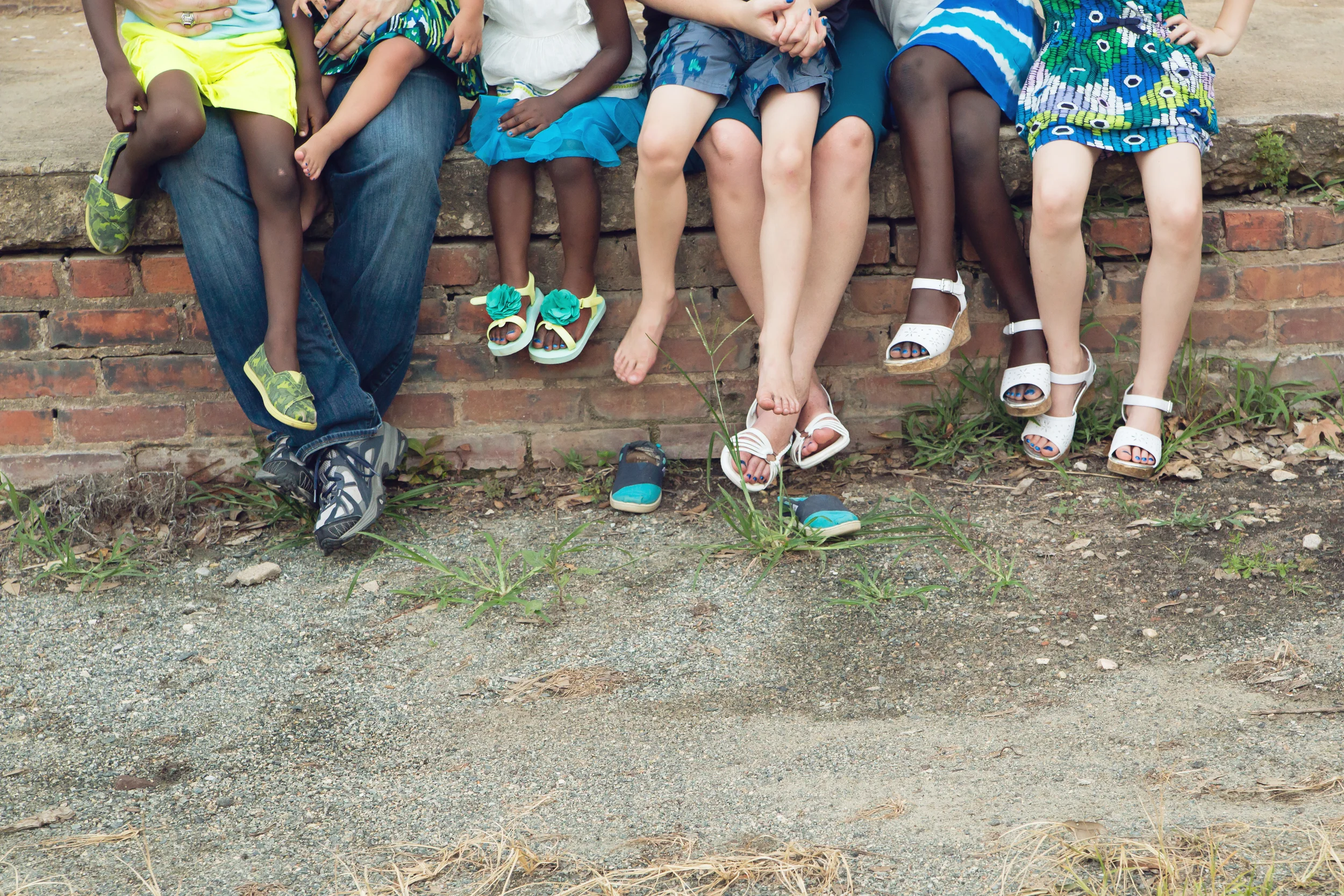
You'll never see the real name of anyone with special needs on this blog nor any easily identifiable characteristics. The only pictures you'll see are ones that I have permission to post, and I don't add names to those either.

I could use names, because some of our parents would be comfortable with that. I don't, though, because I don't want someone to meet one of these individuals and know his label before his personality. If it were my child, I would want you to know my son or daughter as a kid first and foremost.

For that reason, all of our volunteers sign a confidentiality form. It's nothing fancy, just a statement like this:

I, __________________, serve Christ as a volunteer in special needs ministry at [insert church name]. In that role, I understand that I will learn about the special needs of the individual(s) with whom I serve. Out of respect and love, I will not disclose that information to anyone outside of this ministry.

Some people with disabilities don't mind everyone in the church knowing about their special needs. (And for those with physically apparent conditions, they might not have a choice about it.) However, it's not up to us to decide when, how or with whom the information ought to be shared.

It's not our story to share or not share; it's theirs.

"But what if we don't want to add another program to our church?"

It's easy nowadays for churches to become all about programs. In the words of Jason Stellman in Dual Citizens: Worship and Life between the Already and the Not Yet,
The first questions pastors often hear from visitors to their churches concern programs: “Do you have a young married couples ministry? How about an alcoholics’ recovery program? What activities does your youth ministry offer? And do you have anything for my green-eyed, left-handed pre-teen daughter who loves ferrets and plays the oboe?” The assumption seems to be that since the church is primarily a means for social interaction, it should provide “Christian” versions of whatever club or subculture we feel drawn to, no matter how narrow or age-specific.
Often churches are hesitant to cater to every sub-group in their congregation, lest the parts of the body of Christ be segregated and the Gospel get buried under all the programs. And while this is certainly a valid concern, special needs ministry simply can't be likened to a program for green-eyed, left-handed pre-teen girls who love ferrets and play the oboe.

Why not? Well, for one, those green-eyed, left-handed pre-teen girls can
  • participate in other programs, 
  • worship with others (you know, the right handers with brown and blue eyes),
  • understand the Gospel as it is shared to anyone else and share it with others, and
  • serve within the church.
Can individuals with special needs do those things at your church? Some can, depending on the extent to which their disabilities affect them, but many cannot at most churches.

My role as special needs ministry coordinator at our church isn't to create new programs. It's to identify barriers to ministry for these families and to remove those obstacles.

Special needs ministry isn't a new silo of ministry in your church. It's about making sure that every part of your church is accessible and welcoming.

What disability ministry is (insights from the Accessibility Summit)

One of the workshops I attended at the Accessibility Summit last week was titled Built to Last – Sustaining a Disability Ministry. It was a panel discussion featuring four directors for special needs ministry at different churches. While I gained several great takeaways from it, these points from Connie Hutchinson from First Evangelical Free Church of Fullerton, CA must be shared. (The points, bolded and italicized, are hers; the commentary on each comes from me.)

Disability ministry is...
  1. ...not a numbers-driven ministry. She pointed out that it's not about how many families with special needs come to your church. It's about being a welcoming place, reaching out to your community, and serving those who come. Another way of wording this is found in my church's core beliefs, the emphasis on faithfulness over fruitfulness. We're called to be faithful; God is the one who brings forth the fruit.
  2. ...not cost-effective. We're not just talking about money here. The human cost in terms of volunteers needed is higher in special needs ministry than in other ministries.
  3. ...long-lasting. It's a lifetime commitment. A lot of churches only have special needs ministry programs for children, maybe even youth. But you know what? Those children and youth grow up. The adult special needs ministry at our church began at the result of one of our kids growing up and her family stepping forward to create a meaningful and welcoming place in our church for her and others. (And you don't need to wait until the children with special needs at your church grow up; there are adults with disabilities in your community already!)
  4. ...a mission field. I've seen estimates that as many as 90% of people with disabilities are unchurched. I've never been able to find good sources for these numbers, so I'm not sure if that figure is fully accurate, but it is well-documented that church involvement of individuals with special needs is not high. If you want to share the good news of Christ with all people, then this is a good place to start!
  5. ...relationship-driven rather than program-driven. This is true of any ministry. However, special needs ministry requires it more so than others, at least in my experience. When I was a youth ministry leader, it was possible to run all our weekly programming without getting to know students well. That wouldn't be effective ministry, but I've seen it happen before. In special needs ministry, though, it's about the individual not the disability or the program.
 And, finally, I would add one more: It's worth it.

mulletified

Once upon a time, a little four-year-old girl who had brown hair past her shoulders found scissors. And cut that brown hair shorter than her brother's hair. Short enough that she was regularly mistaken for a boy and that her momma had to scotch tape bows to her scalp.

{I can't find the pictures right now, but I will post 'em once I dig them up.}

Well, that little girl grew up and had a little blond girl. Who today, at age four, found scissors. And gave herself a mullet.

Yesterday, she looked like this at the AWANA Wacky Olympics. (Thanks, Heather, for posting this on Facebook!)


And here are a couple shots of her being silly last night before she left.


And here she is now.


The long strand in the middle shows you how long the rest of the front had been.


Heather, remember when we were talking about having you take some family pictures of us?


Um, I think we might wait on those.


She tried to pin the blame on Napoleon, suggesting that he cut her hair.


She finally 'fessed up.


Evidently, her bangs were getting in her eyes, and she didn't like that.


I don't think that's going to be a problem again for a long time.

Notes from the Children Desiring God autism workshop (one more fantastic link!)

I love it when friends share special needs ministry articles with me! (Thanks, Kim!)

Here's one that I didn't catch before my post yesterday, but it's another must-read related to autism and special needs ministry. Sojourn Kids has graciously posted the notes from the Children Desiring God conference's breakout session titled "Disability, Autism, and the Tender Mercy of God," led by Brenda Fischer, the Disability Ministry Director for Bethlehem Baptist Church in Minneapolis, MN. Go HERE to read them!