"Fair" doesn't mean "the same" (part 2: the terms & mindset)

Yesterday, I explained why "fair" doesn't mean "the same" in special needs ministry. Today, we'll begin focusing on the "how" component: What are those not-the-same things that can make a difference for individuals with disabilities in your ministry? And tomorrow I'll provide some specific strategies, in part 3: how (which was originally promised for today, but this part ended up being longer than I expected, so the two part series has become longer than planned...actually, it will be five posts in all, wrapping up on Saturday!).

First, let's play a little Webster's...what are accommodations and modifications anyway? In the field of special education, an accommodation is a change in the way that a student is expected to learn or the manner in which she is tested (or, in a church setting, the way in which he is expected to recite a memory verse). A modification, on the other hand, is a change in the material that student is expected to learn.

Sometimes the terms are used interchangeably (as I have and will often use them on this blog), but the distinction is important. An accommodation is an adjustment in how learning takes place (for example, using a hearing aid or reading a Bible in Braille), while a modification changes what is learned. When you make an accommodation for an individual, that person still learns the same thing, just in a different way. When you make a modification, the person learns something different - sometimes a more simplified version of the same content, sometimes a completely different lesson.

When used well, modifications and accommodations act as undercover agents, meeting specific needs. By "undercover agents," I mean that they should not be obvious, nor should their cover be blown for anyone who doesn't have to be in the know.

Or, to use an even better analogy, proper accommodations and modifications are like contact lenses in two ways:
  1. You choose them to meet the specific needs of an individual. If I tried to wear my husband's contacts, they would do more damage to me than good because my eyesight is pretty good. In fact, they wouldn't even fit me, because the shape of my eyes are not the same as his. Likewise, it does not help individuals with special needs to provide too few or too many modifications or accommodations. You're just aiming to meet the specific needs of the person. Think like Goldilocks: you want to find "just right."
  2. When being used correctly, they shouldn't be obvious. You can't tell at a glance that my husband is wearing contacts. Meanwhile, when I wear my glasses, they're hard to overlook. As you'll see in my lists of specific strategies, some are more obvious than others; you just don't want to draw undue attention to any of them.
 As with anything else we do in special needs ministry, modifications and accommodations should be chosen and implemented out of love and respect for the individual.

Come back tomorrow for the third post in this series, which will provide some specific modifications and accommodations that could be useful as you minister to and with people with special needs in your church! I'll follow that with a post on Thursday with helpful questions to consider for each person and a final post on Saturday to help you make decisions. (Plus Friday kicks off my new guest blogger series - you don't want to miss it!)

(Photo credit)

"Fair" doesn't mean "the same" (part 1: why)

"But that's not fair!" When someone declares that, it usually means "that's not the same."

As in, "It's not fair to designate one volunteer to one child when we usually have one volunteer for seven kids."

Or "It's not fair to change some of our materials for one kid."

Or "It's not fair to devote money and resources to a ministry that serves so few."

Is it the same? No. Is it fair, though? Yes.

Would you deprive one kid of training wheels on her bike just because other kids might not need them? Or would you tell a child to take off his glasses just because everyone else in the class has perfect eyesight? No. Once again, it's not the same, but it's fair nonetheless.

Tomorrow I'll be posting some modifications and accommodations you can make for individuals with special needs in a church setting, both low-effort and high-effort ones. That'll be "part 2: how," what it looks like. (Edited to clarify that this is now a five-part series, with other posts on Tuesday, Wednesday, Thursday, and Saturday. I pray that it'll be helpful to you!)

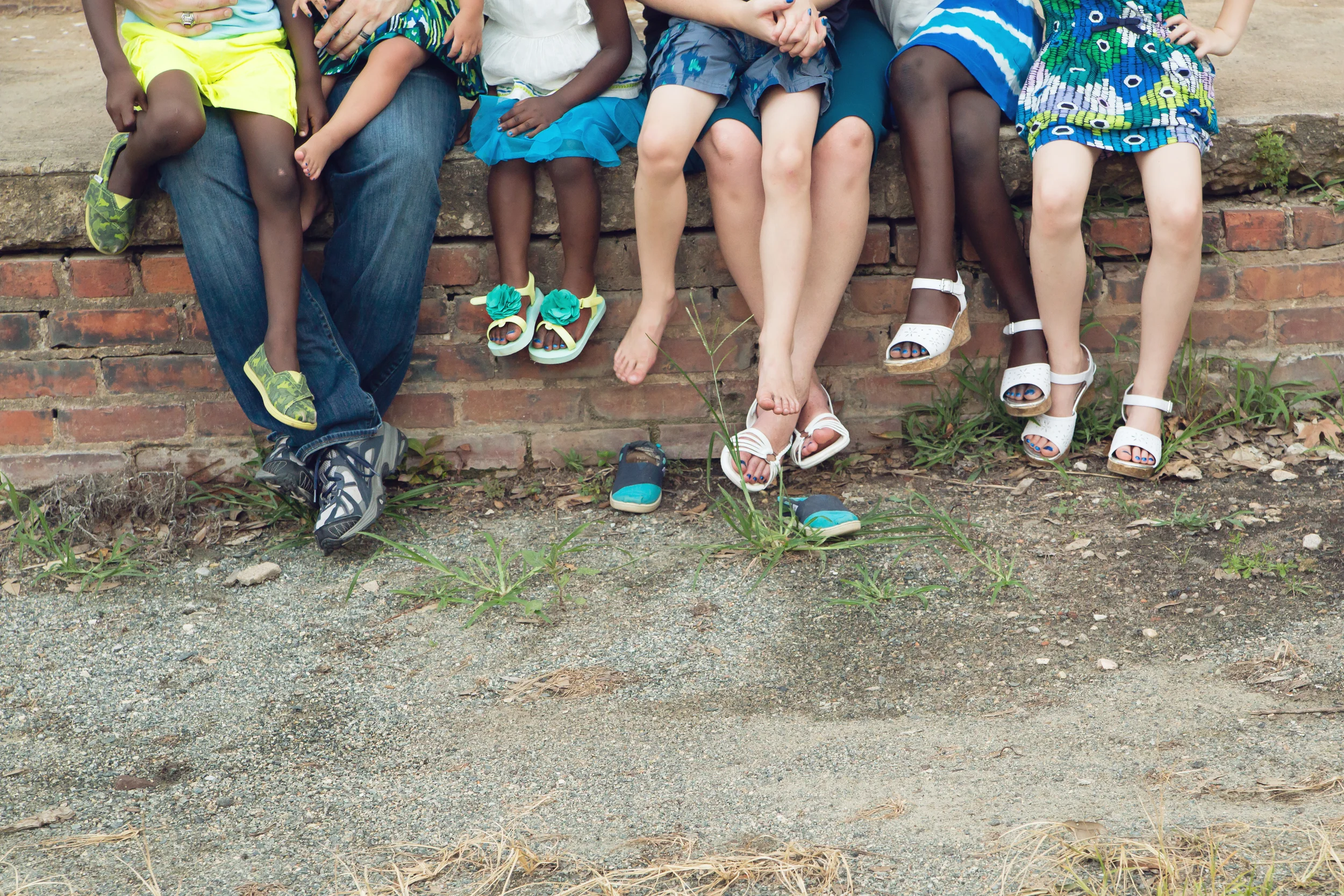
(And, while I included the picture for the sake of illustration, isn't my little girl cute?)

"But what if it just seems too hard and requires too much?"

You may think it's too hard. Special needs ministry will require too much. Maybe it hasn't been done before at your church. You may hear, "Well, we just don't have what it takes to..."

But, on this Resurrection Sunday evening, consider this:

Was the act of salvation too hard?

Did the cross require too much?

Had God sacrificing Himself ever been done before?

Did even the disciples trust that Christ had what it took to defeat death and the grave, as they mourned in hiding the day before He rose again?

It's Easter, y'all. It's a great day to remember - in light of special needs ministry and every other aspect of life - that God deals in the impossible. If you could do it on your own, you wouldn't need Him anyway.

Don't camp out on the Saturday before the resurrection, limited by your understanding of the present reality. Live and serve and rejoice in Sunday, in the complete lack of limitations on our God.

He is not here; he has risen, just as he said...
Matthew 28:6

Fridays from the Families: A new series launching next week (and guest posters wanted!)

As I began this blog, I knew one crucial aspect could be missing: the personal, real-life experiences of individuals with special needs and their families. I am a momma, but neither of my children has special needs. I do have a couple of health issues, but none that require anything different for me on Sunday morning than anyone else would need. That's why I link to other blogs with that perspective whenever I can!

Enter Fridays from the Families. This series will run on Fridays (obviously!) and feature guest bloggers, some who I know in real life and some who I met online. I have a few lined up, and I have a few more in mind who I'll be emailing in the near future. And I'm thrilled to kick it off next week with Becky, who writes about life with Mozart, Picasso, and a Princess at http://paintingwithpicasso.blogspot.com! (I already have the post saved, and it is absolutely wonderful!)

Here's what I shared with each of the guest posters when I asked them to join us for this series:
The series will be one in which people with special needs and/or their family members share their successes and struggles with church and faith in light of their special needs. One trend I see is that churches who don't do special needs ministry have two reasons: (1) they don't know the realities and needs and/or (2) they are aware of the need but they don't know what to do or where to start. Letting those with special needs and their families offer their perspectives could help change that, I hope. And it can encourage those who are already working in special needs ministry.

With that in mind, the options for topics are pretty wide open. Here are some possibilities, but it's certainly not an exhaustive list:
how your faith has changed or matured since your child with special needs was born/diagnosed,  what church leaders should know about families and/or individuals with special needs and/or about your child's specific special needs, what has been more difficult at church for your family since you had a child with special needs, why it's important for you to be able to go to church and know that your child with special needs is being loved and cared for in children's ministry, what your spiritual goals are for your child (and how those do/don't differ from the goals you have for your children), what has/hasn't worked for your family at church, what advice you would offer to other parents who want to be involved with church but aren't sure how to do that with a child with special needs, or what ways you could see (or have seen) churches minister to families with special needs beyond Sunday morning
I know that's a long list, and I certainly wouldn't expect any single guest blogger to take on the full list! Basically, ANY topic related to special needs ministry and/or parenting a child with special needs would be fantastic. If there's something entirely different that you think would make a great post instead of any of the ideas listed above, feel free to run with that instead.
That description above gives you the gist of what I'm aiming for. It was, however, written to a parent of a young child, so I would adjust the suggestions for an adult with special needs who is posting or for another different family situation (such as siblings, parents with adult children, or spouses).

If you would be interested in guest posting for this ongoing series or if you know someone who would, please email me at shannon@theworksofgoddisplayed.com.

What's your ministry's elopement plan?

No, no, I'm not talking about people running off to get married. I'm talking about one expression of several disabilities: elopement. It would be described in lay terms as wandering, running away, escaping, or darting off. We have a couple of repeat offenders on Sunday mornings in our ministry.

The two eloping fellows at our church happen to have Down syndrome, but preliminary reports from new research indicate that about half of kids with autism wander.

Below I have a list of tips for working with individuals who elope in ministry settings, but please leave a comment if you have anything else to add!
  • Talk with the parents/caregivers. If someone is eloping at church, it probably isn't the first time. What has worked in the past? What hasn't?
  • Be proactive. It's always best to avoid elopement if you can! This extends to planning space well (such as arranging the room so that no one has any reason to be near the door) and planning class activity well (so that individuals are less likely to wander). Also...
  • Pay attention, and try to figure out the cause(s). Behaviors don't just happen. If someone is eloping, odds are good that something is triggering that. Pay attention to what happens before the person tries to leave, including what other volunteers are doing, what classmates are doing, and how the individual is acting (frustrated? bored? overstimulated?). According to this research, parents reported the following reasons for elopement: the child enjoys exploring (54%), heads for a favorite place (36%), escapes demands/anxieties (33%), pursues special topic (31%), and/or escapes sensory discomfort (27%). In a church setting, that means a child might elope to get to his/her parents, to explore the rest of the church, or to escape from a loud or overstimulating class.
  • Be careful not to reward elopement. I know that sounds a little odd; I mean, why would you want to reward that? But consider this: one of our kids who elopes tends to run away, giggling and looking back with a huge grin. If it weren't so unsafe, it would be cute. (Okay, okay, it's a little cute either way!) It takes a lot of self-control not to giggle with him, but every time he sees a helper laugh at that behavior, it reinforces it. Don't reinforce a behavior that you don't want to continue. Don't act like it's a game; treat it as a serious safety matter, because it is one.
  • Plan transition times well. During our first two services, most kids go to the playground, and in our third service, children age four and up have small group time in their classes and then large group time in a bigger room. During the transitions from one place to another, I aim to position myself so that I can avoid a running situation with either of our kids who elopes. 
  • Make it more difficult to elope. In the past, we've used chimes on doors, baby gates in classes that usually wouldn't have them, and closed doors in classes that would usually have the door open. Also, we have arranged class environments so that no one in the class is by the door at any time other than pick up and drop off. Speaking of that...
  • Have a plan for pick-up and drop-off times. Classes tend to be a little more chaotic at those times, as do church hallways. Exercise extra caution and prevention in those instances, and plan activities that keep the person who elopes away from the door. 
  • Ensure that you have enough volunteers. We know the parable of the 99 sheep that Jesus told, in which the man leaves his 99 sheep in search of the one that is missing. That is a wonderful parable and a good reminder of why we want to welcome these families, because otherwise we're sending that one sheep away from a church. However, it's not good or safe ministry practice to emulate it by leaving the rest of the class unattended while you go in search of the person who wandered off. Make sure the rest of the class will be fine with other volunteers while one pursues the wanderer (two if the individual might be in a more remote area, because it's never wise or safe practice to create a situation in which the volunteer will be alone with the child).
  • Make sure other key staff and volunteers are aware of the best ways to respond when they see someone eloping. This might not be any different from what you would do if any other child ran off. Or it might involve specific tips for the child or adult in question; for example, if a child is fearful of strangers, it might be best for an unknown stranger to follow the child until a known helper arrives.
 And, to highlight why this is important, consider these points copied from the research report I linked to above (which involved surveys of more than 800 parents):
  • More than one third of children who elope are never or rarely able to communicate their name, address, or phone number verbally or by writing/typing
  • Two in three parents report their missing children had a "close call" with a traffic injury
  • Wandering was ranked among the most stressful ASD [autism spectrum disorder] behaviors by 58% of parents of elopers
  • 62% of families with children who elope were prevented from attending/enjoying activities outside the home due to fear of wandering
  • 40% of parents had suffered sleep disruption due to fear of elopement
  • Children with ASD are eight times more likely to elope between the ages of seven and 10 than their typically-developing siblings
Please don't miss in these stats that parents of children who elope are often stressed out - not sleeping, not participating in typical activities. Find ways to show them love and, if possible, give them a break. Sunday morning can be that break, as can respite care (which I'll post more about next week).
    For resources related to elopement, go here. Also, the National Autism Association, in collaboration with the American Legion Child Welfare Foundation, is offering a box of resources and information for parents, including door alarms and shoe ID tags. You can direct caregivers to this link to fill out a form to apply for a free safety box.

    Which of the tips above do you think is most useful? Are there other tips you would add?