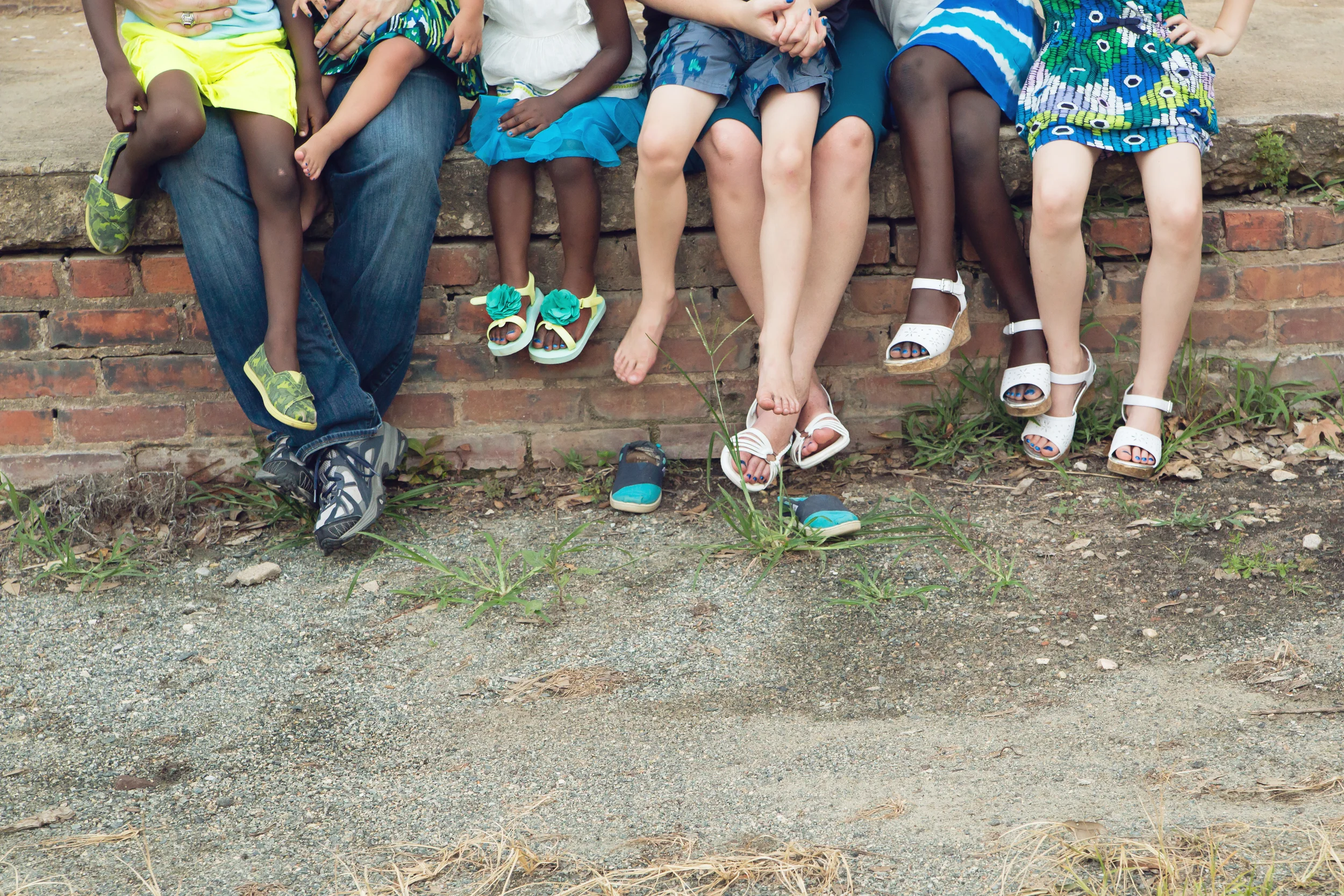
Joy Prom 2010

This is a post about last year's event. Our church started the Joy Prom in April 2004 and hosted it for several years. Now we host it every other year and seek to partner with another church to host it every other year. We do this for the following reasons:
  1. First, it allows for purposeful kingdom partnerships which allow greater community within local churches. Our desire is not that our specific church is seen as great but that God is seen as great.
  2. Second, for us, the needs were much greater than one church could handle, so partnerships have allowed us to pool more resources, raise more awareness, and involve more people than any one church could do on its own.
I'll post more about Joy Prom in the future, but I wanted to provide a little context as an intro because I haven't posted about it here before.

Here's what Steve Wright, our pastor of family discipleship and a godly man who I am thankful to call a friend, wrote about last year's event.


This year we enjoyed the company of 500 friends with special needs at our Joy Prom. The idea for this event comes from Luke 14: “When you give a dinner or a banquet, do not invite your friends or your brothers or your relatives or rich neighbors, lest they also invite you in return and you be repaid. But when you give a feast, invite the poor, the crippled, the lame, the blind, and you will be blessed, because they cannot repay you. For you will be repaid at the resurrection of the just.”

We had 1200 volunteers that worked tirelessly to make this a night to remember. These events are now held nationwide and have been a special blessing for many families. I thank the Lord for his grace and those who have received it who seek to be the hands and feet of Christ.

If you would like more information on how your church could host a Joy Prom event take a look at this manual for direction. I am grateful for a dear friend* that worked hard to put this manual together as a blessing to the Bride of Christ.

The picture above is one taken of my son escorting a young girl down the red carpet where we have 75-100 volunteers celebrating each arrival. The journey to biblical manhood is a long path but I am so encouraged by the steps he is taking along the way.


*Quick note from Shannon: I am not the friend who wrote this manual, but I can answer questions if you have any!

More posts coming about what we do at our church

Last week I discussed modifications and accommodations (perhaps in more depth than you would have liked!). Over the next few weeks, I'll be posting much about what we're currently doing and/or planning at our church, including:
  • How our special needs ministry began
  • What Sunday morning looks like for us
  • What we use for curriculum
  • What our special needs ministry is known for
  • How we use high school students in our ministry
  • What's next? Plans for the future
  • A pending decision: Renaming/branding our ministry or continuing just call it "special needs ministry"
I'm sure I'll miss key points in some of my posts, so feel free to ask questions if anything is unclear! And, if there's anything specific you would love to know about what we're doing, let me know in a comment below.

Also, after last week's series that was largely logistical in focus, I'll also be including more this week about why special needs ministry matters, from both research and God's word. May we never get so caught up in practical elements of ministry that we forget the One who is our reason for serving.

"Fair" doesn't mean "the same" (part 5: making the right decisions)

Wow! This series was supposed to only be two posts, but it turned out that I had enough useful tips for five. This is the final one, but please check out the other four if you missed them:
In this post, I'll be sharing largely from the research of Bryant, Smith, and Bryant, as shared in Teaching Students with Special Needs in Inclusive Classrooms (2008). They recommend this framework for making decisions about modifications and accommodations, which creates the acronym ADAPT.

ASK "What am I requiring the student to do?"

DETERMINE the prerequisite skills of the task.

ANALYZE the student's strengths and struggles.

PROPOSE and implement adaptations from among the four categories:
  1. instructional content
  2. instructional materials
  3. instructional delivery
  4. instructional activity
TEST to determine if the adaptations helped the student accomplish the task. [If not, go back to the beginning and repeat the process! And, remember, a "test" can simply be a checklist or an observation.]

This framework has been more beneficial to me than any other. However, it was not designed for ministry settings, so please do not forget that every step, every conversation, and every interaction needs to be bathed in prayer. God is the One guiding it, and He's the One who knows what each person needs. He made them to have those needs, just as He made you to have certain needs. Don't let anything related to accommodations and modifications or any other aspect of ministry (special needs related or not) become dry; let it be overflowing with the living water that only comes from Christ.

"Whoever believes in me, as the Scripture has said, 'Out of his heart will flow rivers of living water.'" {Christ, in John 7:38}

I hope it (and this entire series) has been helpful to you and your ministry!

Fridays from the Families: Helping children with special needs adjust to church renovations

Last week I posted about a new series in which you'll hear directly from individuals with special needs and their families. Today I kick it off with Becky who blogs about life with Mozart, Picasso, and Princess at paintingwithpicasso.blogspot.com. If you follow Amy Fenton Lee's blog, The Inclusive Church, you may know Becky as the mom who took Amy's posts about mothers with autism and personalized them. I would highly recommend you check out Becky's blog once you're done with the incredibly useful post below!

And, without any more introduction from me, read on from Becky about her family's experiences after the renovation of their church building...
 ~+~

Recently, for many different reasons, our church decided to go through a re-evaluation of our ministry goals, to review our purposes for each ministry of the church, and to find ways to better reach our community. Along with this came an opportunity to do some major renovations inside our church building, as we prepare to be the best church for the neighborhood. We took what had been a small lobby area, crammed with offices, and took out & relocated the main office. The space is now a wide-open lobby, with a café, space to sit and mingle and enjoy conversation. Sounds great, right? It absolutely is! Except...

Our son has special needs and has huge problems with change & transitions.

My name is Becky. My husband, Tim, and I are parents to 3 wonderful kids, ages 11, 6 & 4. Our middle child has some definite special needs. We are in the process of getting an appointment with a local children's hospital to see whether or not he will get an official diagnosis of Asperger’s Syndrome, as he meets all of the criteria based on psycho-educational evaluations.

Tim & I have tried to prepare our kids for the coming internal changes, especially since we know that our son has trouble. A few weeks ago, our son was having trouble in church - not sitting well, not able to listen well - very unusual for him. I took him out of church to give him a break and to try and figure out what was bothering him. As I watched him explore and look around the building, it became more evident that what was bothering him were the changes in the building. I thought I had done a pretty good job, but I probably could have done better, especially knowing just how hard change can be for my own child.

How could I have prepared our son better? And how can you prepare your child who may also have issues with change and transition? Here are some ideas that will hopefully help if there are changes planned for your church or for another place you regularly visit.
  1. As soon as you find out about the changes, take a picture of the “old” before work begins (or, as early in the process as you are able).
  2. Visit regularly to see progress, and have the “old” photo handy to remember what it did look like.
  3. Visit at times when it’s not busy - for us, with the church, that meant stopping by on a weeknight while there was work going on.
  4. With your child, talk with someone in charge about the renovations - the purpose, what the finished project will look like. You’ll find that people are eager to discuss a change about which they’re passionate. They do not need to explain great details, just be available to explain & answer questions your child might have. (If possible, set this up before-hand, so that you can explain your child’s needs & reason for questions, to the person with whom you’ll talk. This will help prepare them for how to best explain things to your child.)
  5. Be sensitive to the fact that your child may take several weeks to adjust to the “newness” of the finished project. Keep the photo of the “old” with you to explain differences. For us, that meant reminding our son that the café area used to be an office. There wasn’t room for him to sit and talk with his friends after church. Now the café area allows for extra time with friends, a snack, and a lot of people getting to enjoy each other’s company.
Kids who have troubles with change & transitions take some time to get used to the finished project. We expect that since it’s “done” that all is well. Really, that’s just about “halfway through the project” for a child with issues with transition and change.

Most importantly, be patient! Change is tough for a lot of people. For kids with special needs change can be a particularly hard thing, especially when the change is out of their control. Give them time to internalize the change by spending extra time with them in the new environment. Answer questions, make sure they have opportunity to have some positive experiences in the new setting, and be patient. They will adjust - and they will probably adjust well! - but we need to be patient and understand that they will adjust according to their needs.

~+~
Thank you, Becky, for being our first guest blogger for this series. Once again, you can - and should! - read more from her here!

Our church's curriculum: Treasuring Christ

We have used curricula from GospelLight and Orange on Sunday morning, and - for kids with special needs - we've liked GospelLight best because it includes more activities that worked for our kids. (I overheard at the Accessibility Summit that McLean Bible Church's Access Ministry made the same call, using GospelLight instead of a curriculum specific to special needs ministry.)

However, I'm so very excited about this announcement:
Our church has been working with ministry leaders across the country to create Treasuring Christ, a unified curriculum for early childhood through high school that is Gospel-centered and connects church and home in meaningful ways. And it's available now here!

It is not specific to special needs ministry, but you can use tips from my posts on accommodations and modifications this week for help with that, and we'll be providing some guidance in the near future about using it in special needs ministry settings. (One example is that the curriculum is written in a scaffolded way, with every age group studying the same thing at different age-appropriate levels. This can allow you to pull elements from the younger grade's curriculum to use with older students if necessary.)

I'll be posting more about it in the future, but for now let's me just say this:

CHECK. IT. OUT: http://www.treasuringchristonline.com

Now.

(Seriously.)

And please share the site with others if you find it useful!