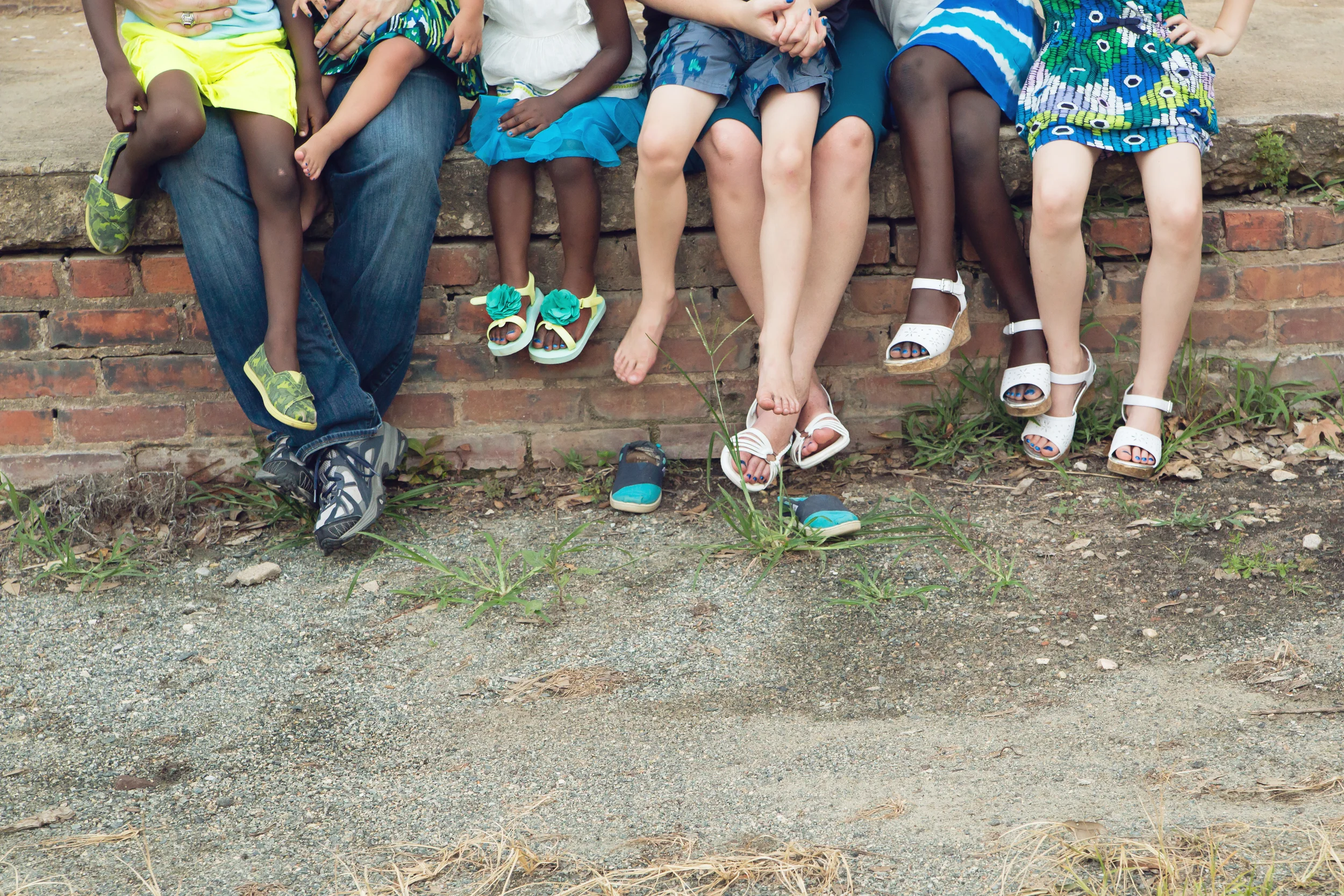
Praying for Kirill and the Davis family!

Update: The Supreme Court reversed the decision, effective immediately, and Kirill is now Gregory Kirill Davis. See the exciting update HERE!

A couple months ago I wrote about Kirll, a sweet boy in Russia who is awaiting adoption and who has Down syndrome, and the Davis family, a Christian couple from Alabama who wants to adopt them. Because of his disability, the judge in his province said no. Here's that original post.

Today - right now, actually! - Tesney and Gary are before the Supreme Court in Russia, hoping that a different decision will be made and that Kirill - who they already consider to be part of their family - can come home.

This could have implications for how people around the world view the value of children with Down syndrome and other disabilities, children who were fearfully and wonderfully made, knit together in their mother's wombs, and formed by God and in God's image. I'll be posting more in the coming weeks about the abortion and adoption of children with special needs, but for now I'll leave you with this exhortation:

Pray.

Only sharing the Gospel with 5/6 of our children? Not an option.

We have close friends with six kids. I can imagine their response if we suggested that they choose five of their kids to share Christ with and ignore the sixth one. NO! they would cry. All six of our children need Jesus. How about if I suggested that they only nurture the gifts of five of their six children? Once again, they would say Absolutely NOT!

That sounds awful, doesn't it? Why would I ever suggest such a thing? I wouldn't, but that's what many churches are doing.

According to a new government study, nearly one in six children has a developmental disability. The research, published today and found here in the journal Pediatrics, included the following disabilities, as reported by parents: attention deficit hyperactivity disorder; intellectual disability; cerebral palsy; autism; seizures; stuttering or stammering; moderate to profound hearing loss; blindness; learning disorders; and/or other developmental delays. Here's the article from USA Today, and here's one from Reuters Health.

If the church doesn't embrace these families, then we are effectively saying that we're okay with only sharing the Gospel with 5 out of 6 kids. And we're saying that we only value the gifts and talents that those five out of six have to offer.

The sixth one? It's just too hard. We might have to change. And, hey, 83% is definitely a passing grade. Why "waste" the extra resources that might be necessary to only reach around 15%? Especially when the resources per child might need to be higher for that one child in every six?

If you can find any justification in scripture for that sort of attitude, go for it.

The thing is, though, you're not going to find that justification. You'll find a God who champions the poor and marginalized. You'll find his prophets in the Old Testament calling His people out for not loving those in need with mercy and justice. You'll find His Son not only hanging out with folks who aren't the typical church crowd but going the extra mile - a phrase which, by the way, comes from Him - to die because they weren't only disabled by their own sin but dead in it. You'll find verse after verse that encourages us to let our lives be a living sacrifice to Him, which doesn't sound like taking the easy way out to me.

Should we share Christ with the five in six who don't have developmental disabilities? Yes. (And we ought to keep in mind that some of those kids have other special needs that don't fit in the label "developmental disabilities.") Should we encourage their gifts and talents so that they can serve within our body of believers? Yes. Should we stop there, though? Certainly not.

Just as my friends wouldn't choose five out of their six kids to disciple in Christ, neither should we.

What the church can learn from pop culture

A couple weeks ago James Durbin's loss on American Idol nearly broke Twitter; he was a front runner who also happens to have Asperger and Tourette syndromes. Celebrity Apprentice had Marlee Matlin and her intepreter (who I really, really wish had been female, because it's disconcerting to have the communication of a woman expressed with a male voice). On Oprah, a guy with cerebral palsy named Zach Anner won his own show on her new network. Parenthood, which I've never watched, has a character named Max with Asperger syndrome. I'm one of about three people in the US who doesn't watch Glee, but I have loved seeing the positive reception of Lauren Potter's character; Lauren has Down syndrome. Bones, a show I do watch faithfully, has candidly and artfully handled the complex issue of an expectant couple who knows that they have a one in four chance that their baby is blind during this season. While it was cancelled before it really began, Paul Reiser's show made some headlines by casting Brock Waidmann, an actor who uses a wheelchair due to spina bifida and agenesis of the corpus callosum, to play a character who uses a wheelchair. And, of course, Extreme Makeover: Home Edition regularly features families with at least one member with special needs.

I have read many blogs and articles exalting all this as an indication that pop culture becoming more accepting of people with disabilities.

So, church, what are you doing? Are you really going to let pop culture do a better job of embracing those created by God than we do?

I didn't think so. Let's step it up.

Weak. And yet perfect. {2 Corinthians 12:9-10}

 2 Corinthians 12:9-10

But he said to me, "My grace is sufficient for you, for my power is made perfect in weakness." Therefore I will boast all the more gladly of my weaknesses, so that the power of Christ may rest upon me. For the sake of Christ, then, I am content with weaknesses, insults, hardships, persecutions, and calamities. For when I am weak, then I am strong.


the style of our home

In the past year, we've changed a lot about how our house looks - the arrangement of furniture as well as the furniture itself and many elements of decor - and we're still in the process of doing so. Because I've become addicted to websites like Nesting Place, I've realized that I need to clarify what our goals are for our physical space. Otherwise, I'm tempted to be drawn into things that look pretty in someone else's home but that don't really work for us.

I'm not sure I've fully meshed out those goals, but here's the current working version of them:
  1. I want our home to be a haven for my husband and our children. We're pretty laidback, so - for us - that means that comfort is key. And it also means that the arrangement of our home doesn't conflict with living our life, nor does the expense of decorating create hardship for us. And that means that I aim for my attitude in keeping our home to create a haven-like environment as well.
  2. I want our home to be an inviting place. In other words, I want that haven to extend beyond our family. This most often means, in a practical sense, that I want my home to be tidy enough that I'm not embarrassed to invite others into it, even without much advance notice. This also means that while we aim for our home to show that we have small children in that we don't hide away all the toys (because that would violate my first aim, that of creating a haven for them), we also - in so much as is possible with two small children - aim to have places for toys to go so that they don't always have to be underfoot. 
  3. I want our home to reflect the hope we have in Christ. While this is only authentic when our attitudes and dispositions also reflect that, I like to have scripture and Christian symbols around our home in obvious ways. Not only does this display that hope to others, but it also encourages me because so much of our time is spent at home. Plus it helps us, in one way, live out these verses:
 “Hear, O Israel: The Lord our God, the Lord is one.  
You shall love the Lord your God 
with all your heart and with all your soul and with all your might. 
And these words that I command you today shall be on your heart.  
You shall teach them diligently to your children, 
and shall talk of them when you sit in your house, 
and when you walk by the way, 
and when you lie down, 
and when you rise. 
You shall bind them as a sign on your hand, 
and they shall be as frontlets between your eyes. 
You shall write them on the doorposts of your house and on your gates.

Deuteronomy 6:4-9


My latest home addition was this Wood Carved Wall Hanging from Dayspring.


It will eventually hang below this plate and painting (also from Dayspring, found here), but I need to move them up so I can have all three hung at a height that it out of reach of my little guy.


The back allows it to be hung either way, and I don't know if there's a traditional way to do it. Should the fish's nose point left or right? Or do I just make an arbitrary call? Any suggestions?!?

What are your aims for your home? I would love to know!


Many thanks to Dayspring for providing this item for my review. Though they didn't ask for or require a positive post, I do love it!