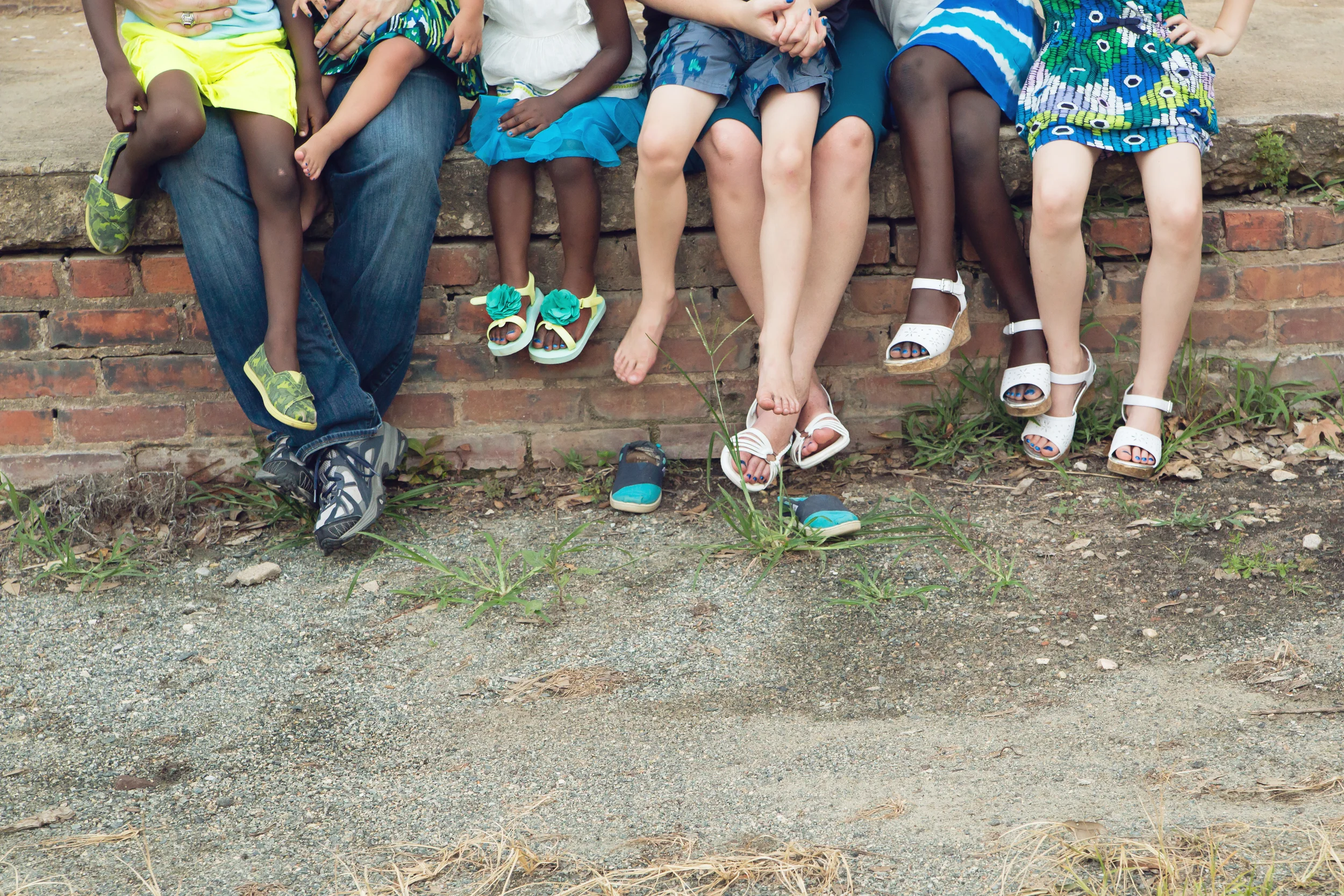
And the winner for Different Dream Parenting is...


Barbara, I'll be in touch to get your address, and your copy will be in the mail THIS WEEK!

If you didn't win, I do recommend that you buy a copy. It's currently $8.72 at Amazon* (though prices change often there, so check for yourself!). Here's the review I wrote if you'd like to learn more about the book.

And here's another picture of my two sweet helpers, Jocelyn and her handsome assistant Robbie. (Yep, that's what happens when you tell a four year old to smile!) She put all the cards with names in her pony bag and then covered it all with her Cinderella blanket "so I can't even peek and cheat when I pick, Mommy!" Nevermind that she can't read and that she doesn't know anyone who entered. :)


Congrats, Barbara! I know it will bless your ministry.


*The Amazon link above is an affiliate page that will allow a portion of the sales for this book (or anything else you buy during that shopping session) to go to my friend Sandra to help offset the cost of her son's therapies and supplements for autism. Amazon does not offer its affiliates program to residents of North Carolina, which means I can't benefit from it, but I *can* use affiliate links from my friends in the special needs community to let you provide for some of their needs while you shop!

a follow-up: a few last thoughts on disability and heaven

Will any aspect of what we know as "disability" exist in heaven? I wrote three posts about that topic last week, but one comment deserved a post and not just a comment in response. Before I blog about that, though, here are the posts from last week:
In response to the last post, I had several comments, one specific that I wanted to respond to here:
I would have to disagree with this author's conclusion. In the Bible we are told in Phil 3:20-21 "For our citizenship is in heaven, from which we also eagerly wait for the Savior, the Lord Jesus Christ, who will transform our lowly body that it may be conformed to His glorious body, according to the working by which He is able even to subdue all things to Himself." This is one of a few passages I believe there are that say we will have a new and glorified body in heaven. To me, this means that we will have bodies unaffected by sin. Bodies on this earth have disabilities BECAUSE of sin (the fall of man with Adam and Eve). Some of the people this blog quoted as saying "God didn't make a mistake with my daughter having [insert disability here]- they are right, God did not make the mistake. It was the genetic code or neural connections when the body was being formed that make the mistake. And why? Again, because of sin entering the world. Are these people telling me that if there had been no original sin, physical and mental disabilities STILL would have eventually existed? I doubt that is so.
I'm thankful for this comment, because it has several points worth discussing. First, it was an oversight not to include those verses in my first three posts on this topic. We do know from those verses that we'll have new, glorified bodies in heaven, and while we don't know exactly what the differences will be between the "lowly body" and our transformed ones, we know God is good and perfect in all he does.

I don't think, though, that the transformation from a lowly body to a glorified one would absolutely require for every aspect of every disability to be scrubbed away. His glorification could be just as much about changing the rest of us and our culture to include people who are not of the same tribe or tongue or label as changing them to fit better with us.

When I picture heaven, for example, we're all speaking English. Why? Because I speak English now as my native and primary language. Does that mean we'll all speak English in heaven? No, it just means that my current context is affecting how I picture heaven. I think it could also be that our current context of people without disabilities can affect how we think about disability.

I do think, though, that we will all be "able" in heaven. Disabled, in the meaning "not able," won't exist because glorified bodies are all able. However, could someone with a social disability that is disabling in our current culture be more able in the society of heaven that isn't looking down on, insulting, or excluding that person? It's worth considering.

As far as using the sin/fallen world argument, I agree that original sin - which has resulted in each one of us continuing that cycle, as all of us have sinned and fallen short of God's glory - is the reason for suffering today. However, I don't think it's right to say that disabilities are the direct result of sin. Suffering, yes. But not all parts of a disability induce suffering. When Christ was asked in John 9 by his disciples, "who sinned that this man is blind, him or his parents?" Christ didn't say, "Well, actually, Adam and Eve did, which set into motion a fallen state in the world and that's why this dude can't see." (Obviously, the "dude" part wouldn't have been in the King James version.) No, he said that it occurred that the works of God might be displayed in the man. Yes, it could be that Christ was pointing toward the eventual healing of the man later in that chapter, but even so, he discounted the sin reason for disability in his response.

I'm not saying that I think disability will exist in heaven. And I'm not saying it won't either. I'm just saying that this is a conversation worth having, and I'm thankful that anonymous commenter joined in the conversation.

Welcome to Holland movie clip

If you're not familiar with Emily Perl Kingsley's piece about disability, Welcome to Holland, then you've been missing out. It's an analogy comparing having a child with a disability with ending up in Holland on a trip planned for Italy. And, even if you have read Welcome to Holland before, you'll want to watch Tyne Daly in this clip from Kids Like Us - a CBS made-for-TV movie from 1987, also written by Kingsley - as she delivers it in a powerful way.

disability ministry weekly round-up {12-12-11}

Because of a two-week round trip over Thanksgiving and then our Christmas respite outreach event just a week after we returned, we didn't deck the hall with Christmas decor until yesterday. My momma's Episcopalian family never took their decorations down until Epiphany (January 6), a tradition we've adopted as well, so we'll still have a while to enjoy them! (Plus trees are cheap when you wait!) I am loving the holiday feel around our house now.

And on to this week's posts...

The Obsessive Joy of Autism: This post is fitting, given my series last week. It is helpful for us to realize that not all people with disabilities consider themselves to be suffering. This woman with autism loves the obsessive joy it brings. (Keep in mind that many families and individuals with disabilities are suffering and grieving too, so don't overgeneralize this to everyone. Just don't be surprised if what you think is suffering is perceived by another in a more positive light.)

Adopting a New Purpose: After the Clarks' daughter was born with Down syndrome, they felt called to parent more special-needs children I think the title says it all.

Sam Luce blogged last week about special needs ministry. He is a respected children's ministry leader who has many more readers than this blog, so I am thankful he has cast light on a ministry area I love. Here are his posts:
Six helps for suffering: I love me some Elisabeth Elliot. Short, sweet, and powerful.

Help Me Give An iPad to an Autistic Boy Karl Bastain, a children's pastor known online as the Kidologist, is raising money to give a boy from his church an iPad and apps, and he's asking his kidmin friends online to help.

Letting Ruth Go Get the Kleenex for this story about the death of one child with special needs, adopted from Uganda, and the Joni & Friends mission trip that allowed the parents to outfit another little girl from Uganda with their daughter's wheelchair.

Christmas form letters that should have been: 2005 I'll admit that last year, I fought to make our Christmas letter cheery. I was struggling with my health - literally struggling to even breathe with a nasty bout of pneumonia - but I wanted that annual update on our family to express a joy that I just wasn't feeling as I wrote it. This author of this post felt the same in 2005, as her daughter was in the process of being diagnosed with autism.

Those Closest to Us Hurt Us the Most | Raising a Child with Special Needs This article ties in with the previous one.

Giving a break to those who need it most I witnessed some of the richness of McLean Bible Church's Access Ministry at the Accessibility Summit conference last spring, but I didn't get to visit their respite care facility, Jill's House. This article profiles what they're doing, and I look forward to checking it out myself when I'm back at McLean to speak at this year's Accessibility Summit.

Pastor John ruined my morning A post from John Knight last week with a great video. Check it out!

Loving the 1% This isn't directly related to special needs ministry, but I think it is indirectly. Among those of us who are engaging in disability ministry, I sometimes witness an attitude that what we're doing is somehow more important than those serving in ministry to kids, teens, and adults who don't have disabilities. This post challenges
Are we ready to show grace to the greedy, corrupt business owner in the same way we show it to the drug-addicted prostitute? Are we ready to view the crooked politicians in the same way we view the inner-city gang members: as depraved sinners in need of a Savior? In our current cultural climate, it is very popular to hate the 1%. Are we ready to love them? Are we ready to serve them? Are we ready to give our lives to reach them? Jesus is.
And I'd like to add, "Are we ready to show love to all people, disabled or not?"

Special Families...A Casserole's Not Enough This booklet, by Jackie Mills-Fernald and Jim Pierson, can help churches love and support families affected by disability. Excellent.

Anxiety and the Child of Divorce: Kids whose parents are divorcing might not meet the criteria for an anxiety disorder, but they are experiencing anxiety nonetheless. This post is helpful.

Churches engaging in disability ministry:

Will disability exist in heaven? Part 3: Well, what's the answer?

This is the final post of three, each addressing different aspects of this question: Will disability exist in heaven? It's not an easy question, so you might want to read the previous two posts before reading through this one.
My first answer would have been no. I'm not sure when I realized that I could be wrong, but it rocked my world. I've been trying to write this post for several months, and I couldn't get the words right. (And I might still not be able to, so I'm praying that God will cover over my faults and make himself clear here, despite my imperfect delivery.)

This series of posts has gotten more attention than usual, so let me take a step back to introduce myself and my context if you're new here. I coordinate disability ministry at Providence Baptist Church in Raleigh, NC, and get the opportunity to work with families each week whose lives are affected by disability. And I have a couple of chronic health issues, including one that has resulted in a mild degree of physical disability.

So what's the answer? Will disability exist in heaven?

1. Heaven cannot include any aspect of disability that causes tears or death or mourning or crying or pain or thirst or hunger, per Revelation 21:4 & 21:6, Revelation 7:16-17, 1 Corinthians 15:26, and Isaiah 35:10.
For myself, I can answer the question posed by this series easily. No, my physical limitations will not exist in heaven. I know that for sure because several of the first five verses I shared yesterday tell us that no pain or crying or mourning will be there. I am in pain now, and the greatest written authority we have - the Bible - lets me know that eternity will not include rheumatoid arthritis. Any disability that includes pain will either be gone in heaven or redeemed (i.e., the condition still present, but the pain gone). Kids won't have congenital heart defects or difficulties eating or tearful anxiety or an inability to communicate or anything else like that in heaven. Neither will adults.

2. If heaven does include the aspects of disability that cause sighing and sorrow here on earth, they will be transformed into joy and gladness in heaven, per Isaiah 35:10. 
Many of the tears and sighing and sorrow among those with disabilities are not the result of the disability itself but rather the response of others. When a mom has to pay the neighbor kids to come to her child's birthday party, the sorrow isn't the child's disability but the isolating response - or lack of response - from the families who have to be bribed to attend. When my friend Donna's son was asked not to return to the youth program at church because of his disability, her pain wasn't caused by the disability but by the people in the church. The emotional pain of disability - the exhaustion and exclusion, for example - will be left behind, even if other aspects of the disability last beyond this world.

As far as the aspects of disability that aren't inherently painful but do - in the response of others - cause pain here on earth, what will stay with us in heaven and what will be left behind?

3. We're not going to care what the answer is once we get there, per Romans 8:18 & 24-25 and 1 Corinthians 5:7.
I know people with autism who believe that they'll have autism in heaven, because they would be someone else completely without it because that's so much of who they are. I know others who are looking forward to an autism-free eternity. In my post on Wednesday, I shared the views of a few parents who hope and expect that their children will still have Down syndrome in heaven, but I know other parents who are hoping to get to know their child minus the Down syndrome in heaven. So who will be disappointed when they find out they're wrong? Neither. They'll be in heaven, and no one will be disappointed by what's in store there. If anything is different from our expectations, it'll be different in a very, very good way.

So why bother considering this question as a church leader or member involved with people with disabilities? If we can't truly answer the question in full because we won't know for sure until we get there, what's the point of this conversation? If now we live by faith and we don't know what living by sight will look like just yet, what does that mean for the church?

This conversation is worth having because it challenges our biases. Considering the possibility of a heaven with Down syndrome, for example, challenges the oft-condescending approach to disability ministry of the superior us helping the inferior them. We're more likely then to invite those with disability to serve and not just be served in our churches. When we consider the aspects of disability that expose the flaws of our culture and perceptions, then we're forced to realize that maybe we're the ones with the problem in need of fixing.

The other takeaway is that some people with disabilities consider their special needs to be temporary suffering while others think that they are eternally connected in identity to their disabilities. In the absence of a clear answer from scripture, I don't think it's our place to declare either wrong or right. It is our place to welcome those with disabilities, even if our answers about disability in heaven aren't identical. We are all the body of Christ, with each part designed differently by the choice of the Designer (1 Corinthians 12, especially verse 18). 


And how about you? What do you think? Have these three posts changed your way of thinking about disability and heaven? 


I'd love to hear what you have to say, so please join the conversation by leaving a comment!


~+~
P.S. If you haven't done so already, go comment on my post about Different Dream Parenting so that you can have a chance to win your own copy. Today is your last chance, and I'll be announcing a winner this afternoon!