You’re open to HIV+ adoption? Say what?!?

We’ve shared on Facebook a few times about our openness to adopt a child with HIV when we're ready to add to our family again. We’ve talked about it with friends off-line. And, in doing so, we’ve realized a lot of folks just don’t know much about HIV in 2013. Which brought me to write this…

I get it.

I thought the same thing when we first started looking at waiting child listings before we adopted Zoe.

“Oh, that poor thing. He has HIV. It’s so sad he doesn’t have a family.”

And then I moved on to the next listing, because really? Why would anyone put themselves and their families at risk by adopting a child with HIV?

Then, as we read more and learned more, we realized that our understanding of HIV was stuck in the 80s.

You know, with big hair, leg warmers, the Cold War, shoulder pads, and an MTV that actually played music videos.

Now?

HIV is a manageable chronic illness. Meds called ARVs can make the virus undetectable in blood samples. With ARVs, children with HIV can live normal lifespans.

HIV no longer means AIDS is inevitable.

And contracting it? No, if we adopt a child with HIV, we won’t be putting the rest of our family at risk. Why? Well, because we won’t be sharing needles with each other, our next kiddo won’t be breastfeeding us, and none of us will have any sexual activity with our new arrival. Those are the primary ways that the virus is spread.

In fact, in 2009, the CDC removed HIV from their List of Communicable Diseases of Public Health Significance. While adopting a child with HIV or otherwise immigrating with the virus used to require additional paperwork, it doesn’t anymore. Furthermore, HIV has never been transmitted in typical household interactions.

So what will we do if we adopt a child who is HIV+?

We’ll cuddle with all of our kids, and they will take baths together, and we’ll wrestle, and we’ll wipe snotty noses, and we’ll change diapers, and we’ll share the occasional cup or utensil or plate, and we’ll hug, and we’ll share sweat and tears, and we’ll probably cough and sneeze on each other. (Hey, it happens.) If we do adopt a child with HIV, we’ll add him to our health insurance like any other new arrival, because adoption is treated like birth (in other words, pre-existing conditions aren’t a factor).

In other words, we’ll be a family.

{for more on HIV+ adoption, visit Project Hopeful. watch the video below to learn more.}
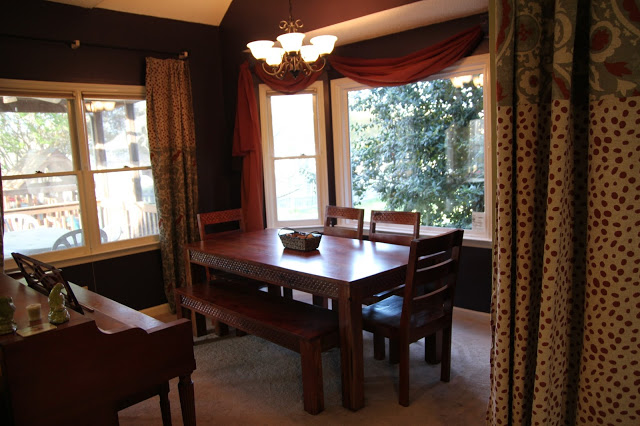
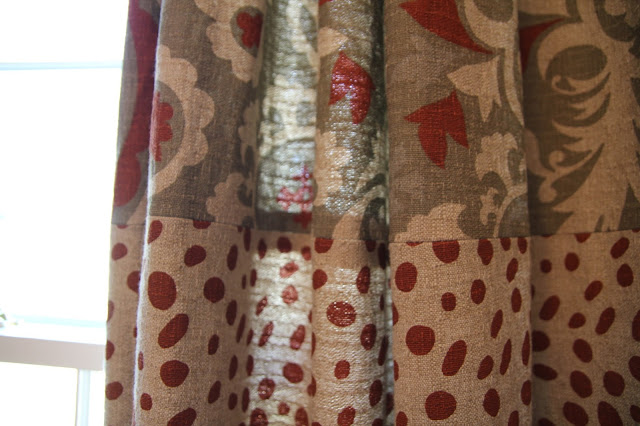
oh, that's right... i promised a post about the curtains!

I procrastinated on making curtains for years, intimidated by the size of the project.

{at the old house}

Granted, I took sewing lessons as a child and won ribbons at the Florida Strawberry Festival and Hillsborough County Fair for quilts and stockings and stuffed animals and clothing I made.

But, y'all. That was a few decades ago.

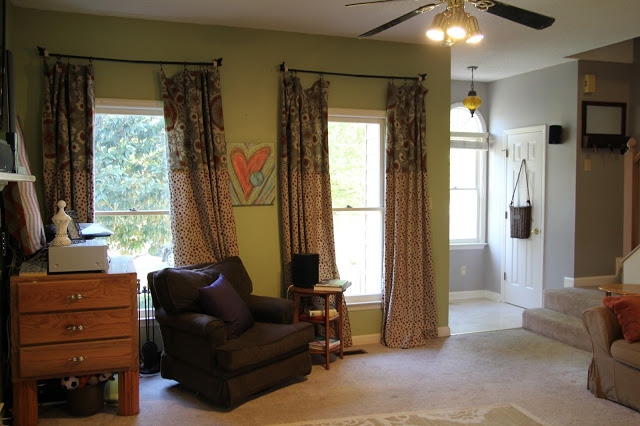
{at the old house}

Since then, I've hemmed a couple of things and repaired a few others. That's it.

Let's be honest: I've put most items to be hemmed or fixed into a drawer and forgotten about them until they've been outgrown.

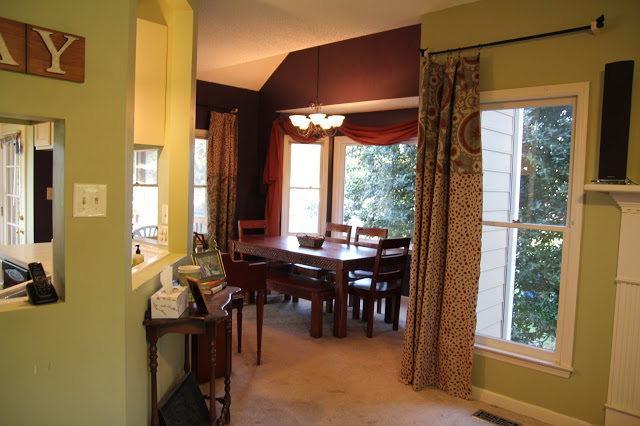
{at the old house}

The scariest part to me was the size of the fabric. I can't draw or cut in a straight line - could I sew a long one? If I messed up, would I ruin something and be out the cost of a whole lotta fabric?

And picking fabric? What if I made the wrong choice? I'm too cheap thrifty to discard it, so then I would be stuck with drapery I hated.

{at the old house}

If I had taken a fraction of the effort I spent worrying about making a mistake and devoted it to doing the work, I could have made enough curtains for all of us.


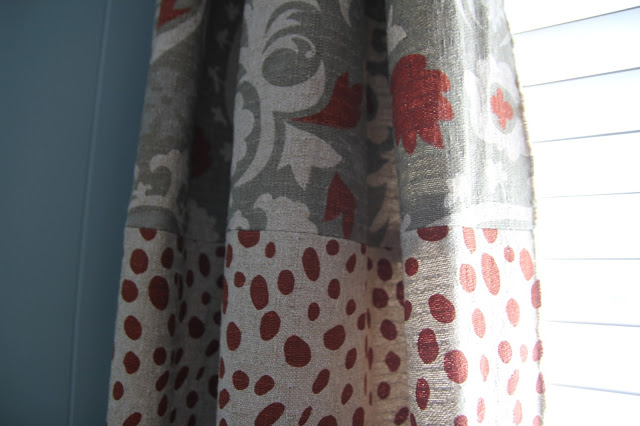
A line of Premier Prints fabrics (including this one and several others that aren't made anymore) had caught my eye early in the search, but none of my local stores carried the exact print and color. Finally, I checked out similar designs of the fabric in stores and then hoped for the best with the color. (Yes, I could have ordered a swatch first, but I'm impulsive.)


I like fabric.com, though I stalk fabrics until they're on sale or until the site offers a coupon. Remember, I'm cheap thrifty. This print is $12.98/yard right now, but a sale plus a coupon made it $7.98/yard when I ordered. (Granted that was three or four years ago, and I haven't shopped fabric in the past year, so that sort of deal might be elusive nowadays. My total was right around $90 for seven panels worth of fabric, including shipping and a good bit of extra fabric because I was scared of under-ordering.)

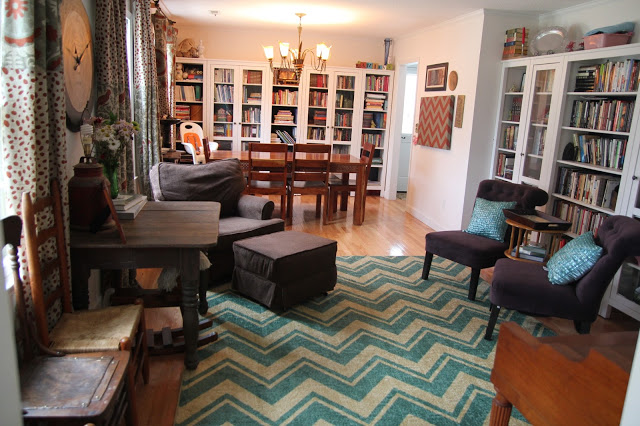
{see the matching chevron print on the wall? it's a matching fabric that I stapled to a canvas. easy art!}

If my rust and taupe designs (called Arizona and Denton in PP land) aren't your fancy, Premier Prints has a lot of other options. For curtains and other home decor fabrics, I look for this in the description: "textured 81% cotton/19% rayon (similar to barkcloth) fabric." All of these have it. That's the stuff I prefer in their line, but it seems like they are moving away from it.


A lot of other cute prints are available in a cotton duck fabric, which would work too, but it won't have the same burlap-ish look with the texture that my curtains have. (That said, I'm a fan of the kids' line of screenprinted duck fabrics - prints that are all over the place in stores and etsy lately - so I might use them in a future project. Plus I think the duck would work better in our master bedroom than barkcloth, so I'll probably go with that there too.) Some are also available in a 100% cotton textured fabric that's supposed to be like barkcloth, but I haven't seem it and I'm not sure how it compares.


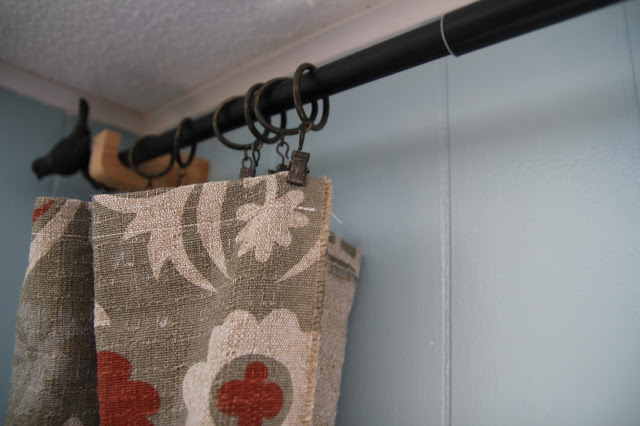
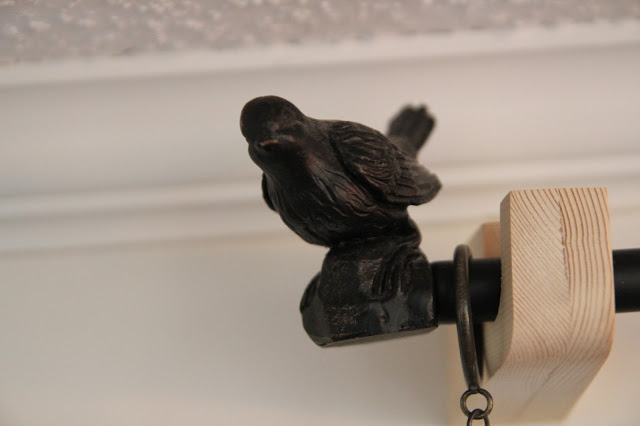
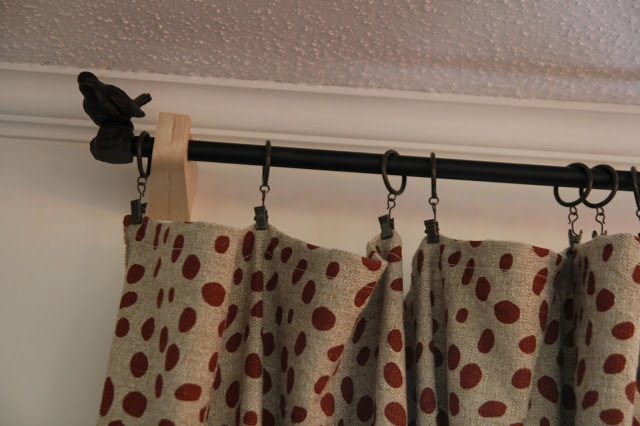
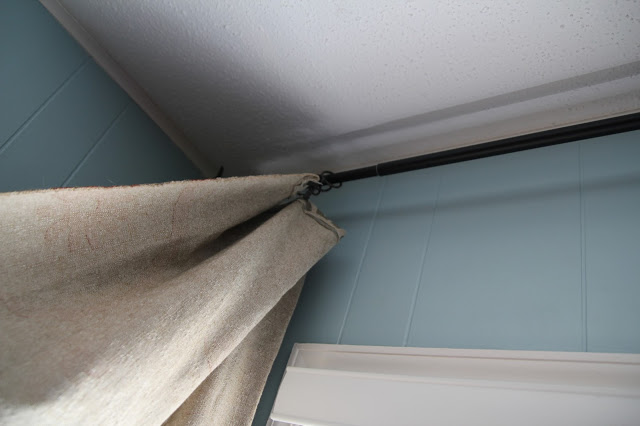
Then I bought curtain hooks from ebay and curtain rods from Lowes (a splurge for me, but I really like the color and birds... and I use half of a long rod, links above, and half of a short rod to create an in-between length that fits our wider windows at this house while saving $5 per rod).


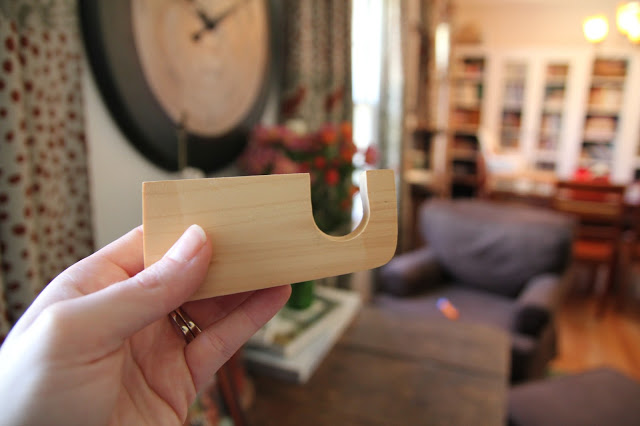
As you'll see in this post, we had a cute yet destructive reason for replacing the original support brackets. I'll be painting the wood ones but I haven't gotten around to it yet. (I can't offer a link for the wood supports, given that my father-in-law made them to my specifications, but he does contract woodworking, so let me know if you want some, and I'll connect you with him!)


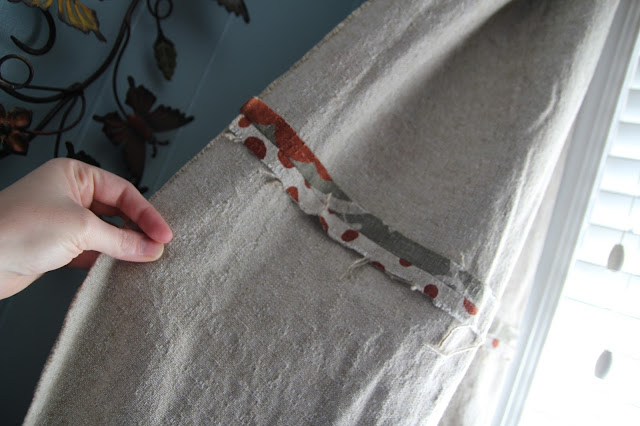
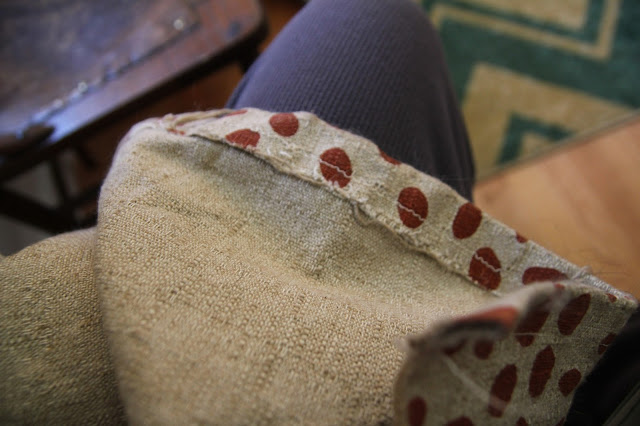
I measured how high I wanted the rod to go, and then cut a third of that length (plus two inches) in my contrast fabric and two-thirds of that length (once again, plus two inches) for the main print. I just made each panel the width of the fabric, so no cutting or measuring was necessary there.


Then I pinned the two pieces of fabric together for each curtain and sewed them with a seam of about an inch. And I hemmed each end, once again using about an inch of fabric.


I bought lining and planned to finish the sides and cover the seams, but them I decided I liked them a little raw. I might have made the seams a little prettier if I had known I wasn't covering them, but perfection is the enemy of good... and good is good enough for me, so I'm glad I didn't know.


The sides don't unravel, even when I've washed them. They kind of have a burlap-ish look to them, though burlap wasn't really a thing in home design when I made them.


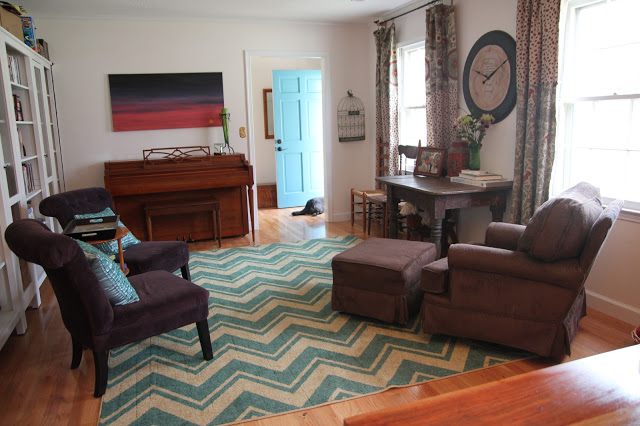
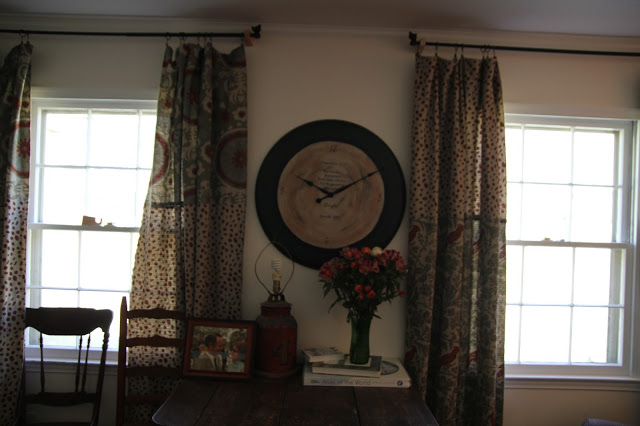
Initially, I had the spotted curtains in our family room and the bird ones in the dining room, but the new house has a different number/arrangement of windows, so our front room has mismatched curtains.

{any tips on where to find a not ugly lampshade? i've been putting that off too...}

And I like it.

For me, the hardest part was picking the fabric, hooks, and rods. Then it's one seam, one top hem, and one bottom hem for each panel. Clip on the hooks, put them on the rod, hang the supports, and put 'em up.

That's it.

please, be nice

Special ed has many forms. While most of us in the public school system start with our kiddos in kindergarten, Zoe is already receiving services under education law.


That’s because special ed law guarantees services from birth to age 21 for children who qualify.


North Carolina’s early intervention program – CDSA – is administered by Department of Health and Human Services, not the school system. Once a child hits age 3, services transition from early intervention to the local school system’s preschool program for children with disabilities.


Zoe’s services aren’t covered 100% by CDSA, though.


First, our insurance plan covers the first 30 therapy visits a year, which is the typical cap. Since Zoe has physical therapy and occupational therapy each week, that means we hit that cap at the end of March. After that, a percentage of her therapy costs are paid by early intervention, and a percentage is paid by us. Honestly, I don’t quite remember what portion is ours and what portion is theirs. It’s a sliding scale based on our income, determining how much of Zoe’s therapy costs are subsidized. I think we’ll pay about $150-200 a month, but I’m not sure about that.

(Can you tell that Lee is the bill-paying member of our marriage? Yep. Not me.) 


Why share this? First, I think it’s an important piece of knowledge to have for folks considering special needs adoption.

Second, though, I’m sharing this because we’ve had friends – even close friends – lambast anyone who receives income-based government services in Facebook posts, blogs, tweets, and so on.

Technically, early intervention is one of those programs.

Please, hold your tongue or think before you post your rant (or re-post someone else’s).

 When you state unequivocally that anyone receiving government services is not pulling their weight, it hurts.

When you think you’re talking about some nameless, faceless stranger, you’re not.


When you complain about having to pay for someone else’s services, it feels like you’re complaining about my daughter. It’s hard for me to be your friend when I feel like you’re saying that it would have been better for Zoe to remain in her country, where she - as an orphan - would have been transferred to an institution for her care. I know that sounds harsh, but we wouldn’t be able to be her parents and afford for her therapy needs without the portion subsidized by the government. Our budget is stretched enough with the additional $150-200 we’re now paying each month.


It’s popular in some of my circles of friends to judge the woman with food stamps who has her nails done and her iPhone out… without knowing if her iPhone was a gift, if her nails were done for free by a friend, or if she’s spent hours that day searching for a job and is beaten down by all the rejections, much less the condescending stares from the person behind her in line who will post about her on Facebook like he knows her full story. I’ve known pastors who were given a fancy car as a present and then embarrassed to drive it, lest people think the church is paying him way too much if he can afford that. And blogs and opinion pieces occasionally tackle the topic of how much of a financial drain people with disabilities are on the rest of us.

Enough already.

Please. 

Let’s go ahead and debate policies and discuss budget proposals and consider cost-cutting measures. Seriously. I don’t mind one bit if you disagree with me about education funding or any other topic, as long as we can talk without insulting anyone in the process.

Let’s stop pretending we know someone else’s story. Let’s stop attacking people. Let’s stop applying broad labels to diverse groups. Let’s stop shouting at each other online, as if it’s okay to forget manners when we’re communicating through the computer.

Please. Use your brain and your mouth to discuss issues… but use your heart too, so that you can express your views without being a jerk about it. 


P.S. – All the pictures in this post are of today’s therapy session with Zoe, in which she did some pretty spectacular commando crawling with only a little bit of help. Thanks for the tiny fraction of a penny from your taxes that helped make that happen. (Truly, I’m not being sarcastic; we are grateful. We love living in a country that offers services so that people with disabilities, people like Zoe, aren’t just hidden away in an institution like she might have been in her birth country.)

that chevron rug in my last post

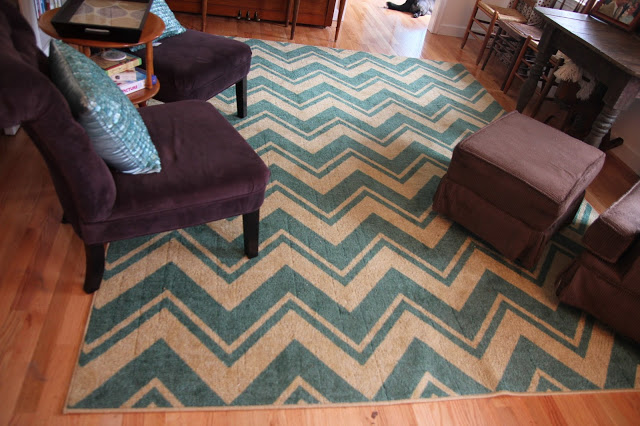
Who knew other folks would love our chevron rug as much as I do? After a few comments about it, I figured it deserved its own post.


I bought it for another room (the family room shown in the picture of our kids and our missionary friends in this post), but the print was too much for that space and the walls were a little too blue and not aqua enough to coordinate well.

So the living room it is!


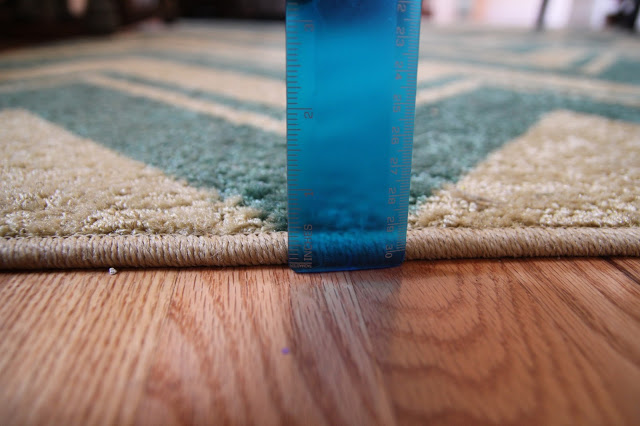
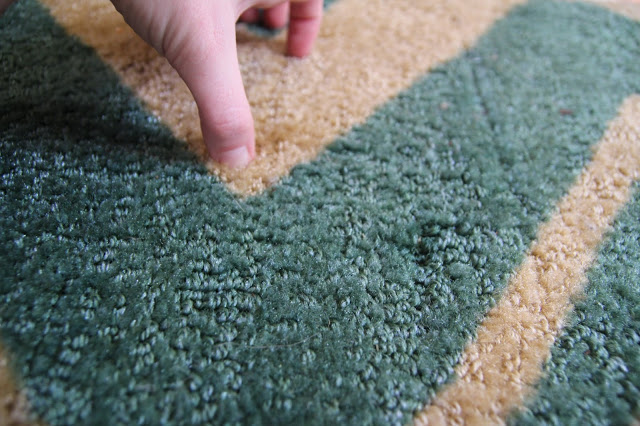
I haven't vacuumed in a nearly a week, so I'll admit that the yellow fleck and dog hairs in the picture above aren't part of the rug but just part of our filth. That said, a major selling point of this rug is that it hides dirt well. I didn't even remember that I needed to vacuum in there until I got on the floor to take pictures.


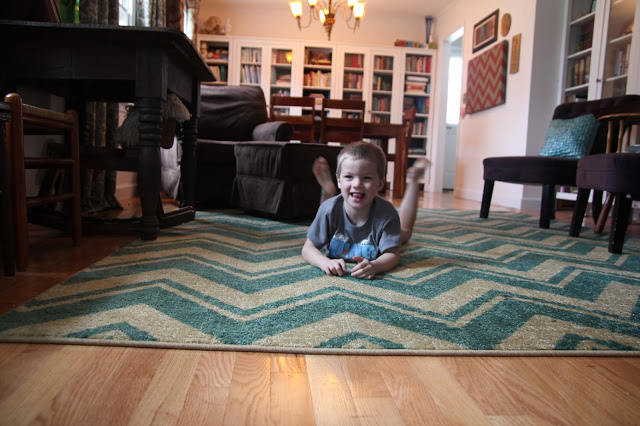
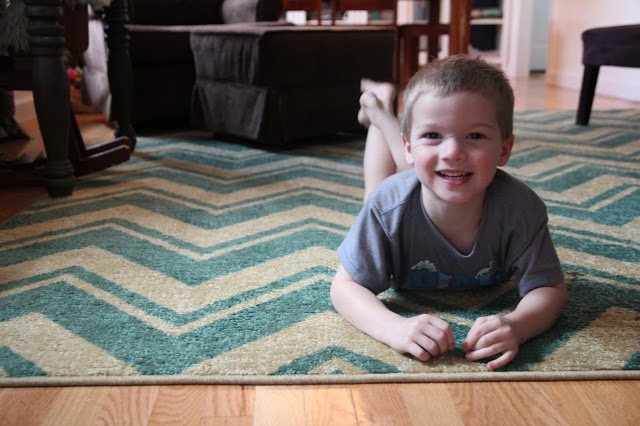
It's not deep or super plush, but it does feel nice underfoot. Zoe can rock tummy time on it, which is a necessity since this is the room where the magic physical and occupational therapy happen.


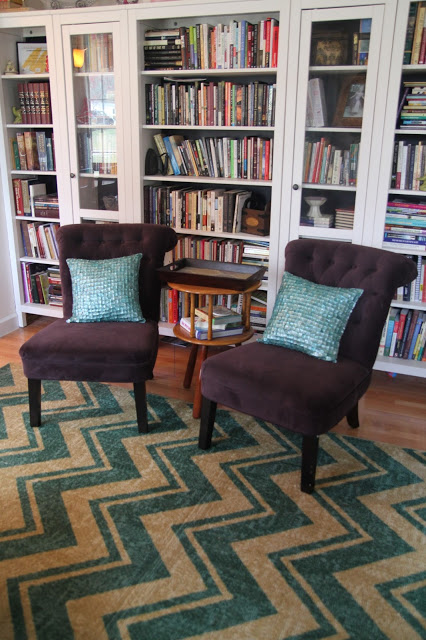
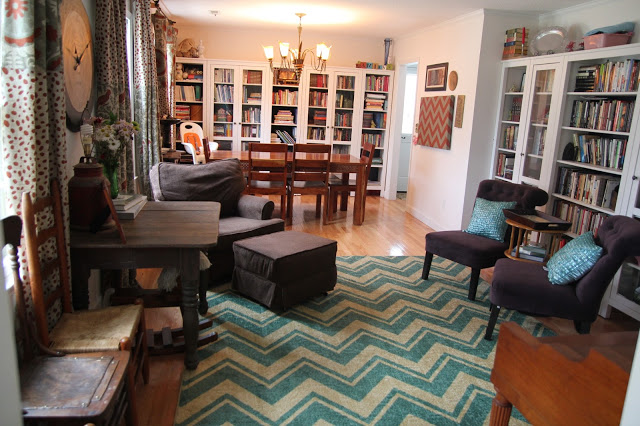
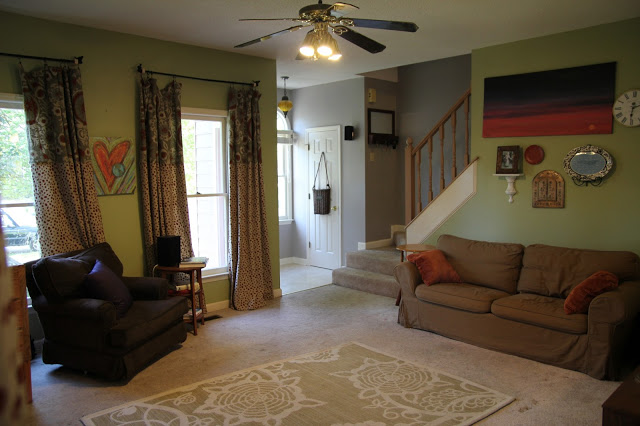
A lot of chevron rugs have a tight pattern, with uniformly skinny zigs and zags. Our front room - which includes the living room and dining area - already has a lot of pattern and color and detail, so I think any pattern smaller than this would make the room too busy.

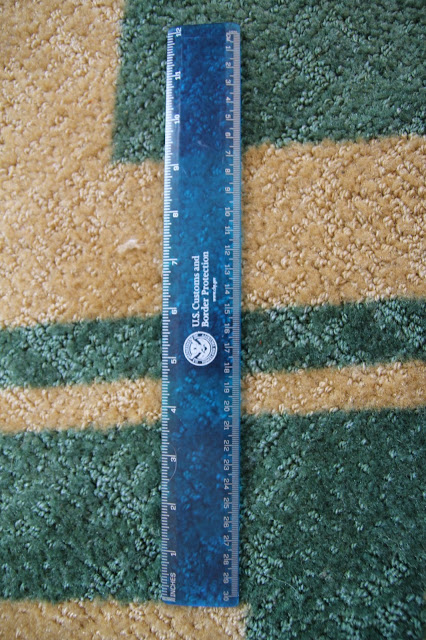
(And, yes, as a matter of fact, that is a US Customs and Border Patrol ruler. Try not to be too jealous. Just part of the swag from my B.C. - before children - days teaching middle school on the Mexican border.)


Our kids love the pattern too. Cars have been lined up the "dirt" and driven so they don't fall in the "rivers."


Barbie has sunned herself on the "sand" while dipping her toes in the "ocean."


Dances have been choreographed to carefully keep feet on the "ground" without stepping in the "blue flames."


It's soft enough to be the perfect playing or walking surface (especially in a high traffic area), but it's flat enough that the surface is perfect for puzzles and board games.


Added bonus? It not only matches the front door, but also these fancy pillows I bought last year.


The rug was the last touch in our front room that brought everything together. It's so refreshing to feel like this is our home, instead of just the house we moved into ten months ago.


---{Details}---
I purchased the rug from Zulily for $169.99, not including shipping or tax. I have the 8x10 version, but it's also available in 5x8. Zulily is one of those daily deal sites, and the rug isn't currently available there... but fear not! I had been eyeing it on Overstock long before it hit Zulily: here's the link for the 8x10, and here it is in 5x8. This is the "medium blue," but it's also available in light blue, rust, and two black options (one with cream stripes and the other with the natural color). The price fluctuates on Overstock, so I would wait until it's at least 10% off and then use one of the 10% or 15% off coupons in my email (which you can get too, if you sign up for emails on their site).

Hope that helps!

a pop of beauty

Color makes me happy.

While burgundy is a fine color for some folks, it's just not for me. Especially the drab shade that used to be on our front door.

Excuse the exhaustion... our dear friend Heather took this picture the moment we returned home from Taiwan. It's the only picture of the front door I could find!

And the khaki that graced all the siding and exterior trim and side and back doors?

Y'all. 

To me, that's as bad as having it all the color of Pepto.


Yep, I'd take bright pink - and I'm not  a girly girl - over neutral, institutional shades of bland.

But now?


Much better.


We ditched the storm door, because we never use it and because the wood frame was literally falling apart.

Now?


Please ignore the evidence that I kill plants and keep weeds alive and well. Moving on...

This was the front of our house.


This is now the front.


Granted, the trim and shutters are a'changing too in due time, but I'm amazed at how much difference the door makes!


And my view as I sit and read or write in our front room?


Love.