how good and pleasant it is, indeed

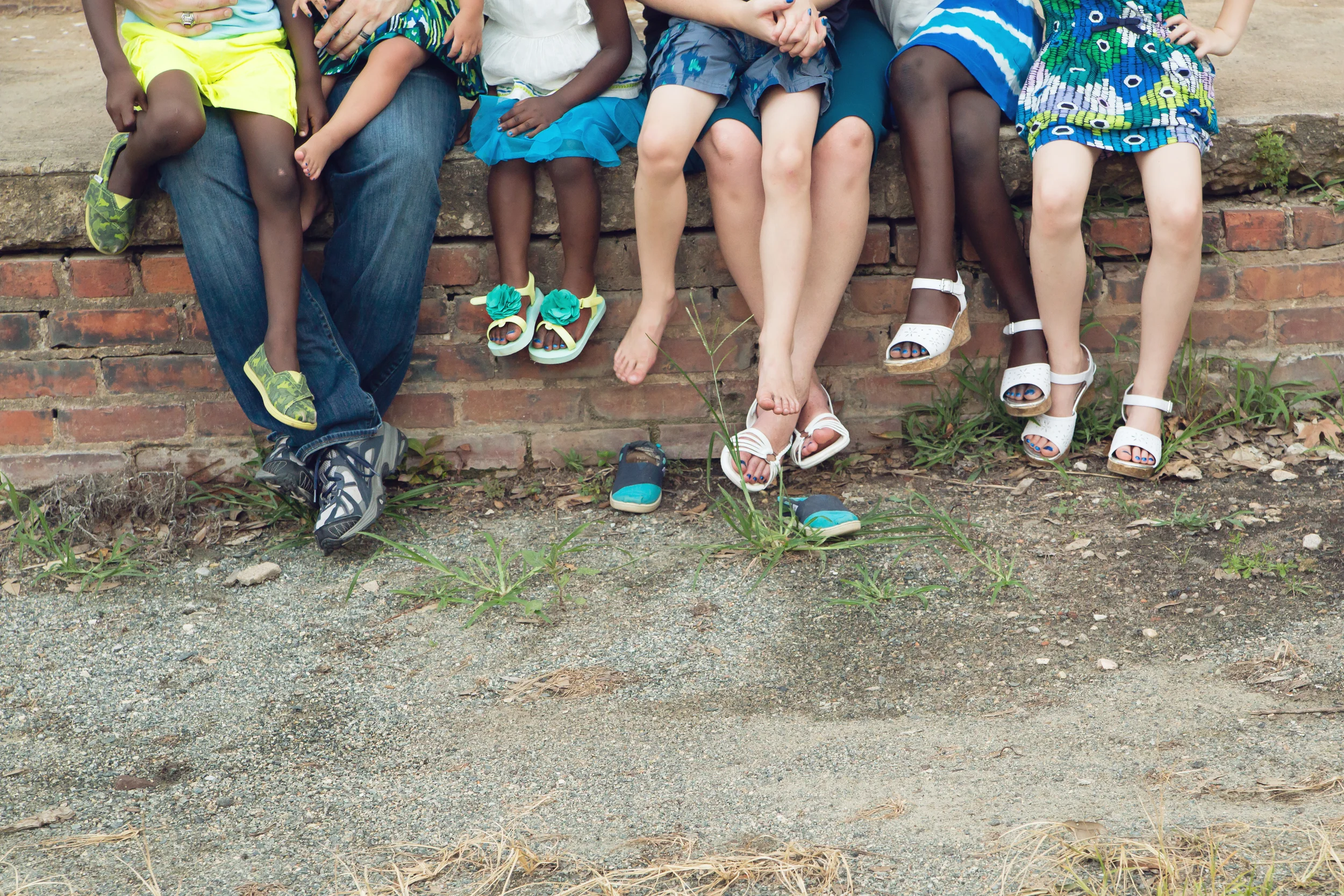
This picture generated more "likes" this weekend on Facebook than anything else I've ever posted.


And not just because of the amazing lizard shirt + seersucker puppy shorts + wild animal camo Toms combo, though Philip wore it well.


This handsome five year old saw me on my knees pushing Zoe's Rifton Mini Pacer so she could take steps without having to move the additional weight of the gait trainer (which, with all its accessories, nearly weighs as much as she does), and he politely dismissed me.


He wanted the job of helping his little sister walk around the playground, one we chose to visit specifically because of the accessibility features. (Local friends, it's Marsh Creek Park's play area, if you want to check it out.)


But to him, it wasn't a job. It was a joy.


Without any suggestion from me, he brought her over to the play wall, made for kids like Zoe to enjoy.


Then he enjoyed it with her.


 He wasn't satisfied with that, though. He directed her to the big play structure, where our other four were playing. Zoe wants nothing more than to tag along with her big brothers and sisters, just like any other youngest child.


Up... up... up... and down... down... down... they went.


Full of smiles, full of personality!


Zoe crashed hard on the way home, worn out from all the activity.


And my heart nearly exploded, for the love of two children born across the world from each other and made siblings in a whole 'nother country.

Amazing grace.
Behold, how good and pleasant it is when brothers
{and, in this case, their sisters}
dwell in unity!
(Psalm 133:1, italics mine)

resources

This page is and will always be a work in progress. I aim to list online and off-line resources - many free - that can help churches minister to and with people with special needs here. Please comment if you have any suggestions for me to add!

By summer 2014, I'll be adding a page titled "handouts" of my own print resources that you can freely use as long as you don't charge anything for the content.


Other blogs

The Works of God

Story Fork: A Community Engaging Disability {where I serve as a content curator}

Disability Concerns for the Christian Reformed Church in North America

The Inclusive Church

Church 4 Every Child

Diving for Pearls

All Access

Different Dream

Wrestling with an Angel


Disability Ministry Organizations

99 Balloons {where I serve as a consultant}

Joni & Friends

Key Ministry {where I serve as a consultant}

Mark 2 Ministries


Secular Organizations offering Support/Information Valuable to Churches

The Elizabeth M. Boggs Center on Developmental Disabilities

Disability Scoop


Special Needs Adoption resources

To be developed soon. 
{I used to list a popular special needs adoption website here, but I no longer can do so after hearing first-hand stories of unethical behavior.}

Books & curricula

Same Lake, Different Boat by Stephanie O. Hubach

Wrestling With an Angel by Greg Lucas

Special Needs, Special Ministry 
{currently out of print, but a new edition is available: Special Needs Ministry for Children}

My review of several special needs handbooks
and a direct Amazon link to the one I recommend most: Autism & Your Church, which is helpful for a wide array of diagnoses and not just autism

Recommended disability ministry book list from Bethlehem Baptist Church

Another blogger's review of A Different Dream for My Child by Jolene Philo

Another blogger's review of Lifeway's Special Buddies curriculum

about

Hi. I'm so glad you found this site, and I pray that it equips you as you serve in your home and your church.

I'm a Christian. I'm also a wife, mom, and ministry leader, in that order. I blog about our family at Dinglefest.


disability and disease in my life
I stumbled into the realm of disability and disease in several ways: in elementary school when I rocked the IEP for years due to severe speech impairments, in the summer of one of those years when I hung out under Mississippi magnolia trees as my mom nursed my Pops through end-stage lung cancer, in high school when my friend on the swim team needed someone to help include her because she couldn't hear, in college when I worked at a preschool program for children with developmental delays resulting from prenatal drug exposure, after graduation as I taught kids with a range of disabilities in public schools in Texas and North Carolina, and in consulting as I developed training materials for new special ed teachers.

Somewhere along the way, I earned my MAEd in Special Education, specializing in learning disabilities and autism, but all my experiences before that and since have taught me far more than my formal education ever could.

disability and disease in the church
When it came to church, though, I didn't notice that my church didn't include the kids and adults I loved. It took a God-ordained assignment of a little guy with Down syndrome to my Vacation Bible School class to make me realize how much my church was failing to truly include image bearers like him. Shortly after that, my husband and I started coordinating Access Ministry, the special needs ministry of Providence Baptist Church.

In that role, we've gotten to be the church and love the church in deeper ways that we knew were possible. We have poured more of our time and energy and selves into Access Ministry than any other ministry area, and we have received more in return. This truly is our passion.

disability and disease in our family
After the birth of our first child, my body... well, it broke. A couple of autoimmune disorders sprung up unexpectedly, including rheumatoid arthritis which permanently damaged my hands and knees, though - praise God - effective treatment has it under control most of the time. Some days I limp, and other days I swallow pills or get IV treatments... all reminding me that God's glory can be demonstrated well in my weakness.

Then, throughout 2012 and 2013, we added a few more layers of perspective to our role as Access Ministry coordinators: parents of children with special needs. In summer 2012, we added a precious daughter to our family via special needs adoption; she's a gal who has a lot of spunk and a diagnosis of cerebral palsy and a now-healed heart defect. In fall 2012, our son had a grand mal seizure, which eventually led to a diagnosis of childhood epilepsy. About a year later, in fall 2013, we added a sibling group of three to the family via adoption, one of whom has HIV and became more familiar with some of the emotional needs that are common among children from hard places.

(If you're keeping track, that means we went from two children in June of 2012 to six children by October of 2013 and no special needs to multiple diagnosis in that same time period. If you take a look at the blog history, you'll see a long pause during the same stretch, because my writing had to take a backseat to family matters, for obvious reasons!)

disability and disease on this blog
I started writing here for three reasons:
  1. Writing helps me think. At the time I started blogging, we didn't have a solid team in our church's Access Ministry, so we had no one to think out loud with. So I wrote out loud.
  2. Writing connects me with others. I love learning from the parents and ministry leaders and people with disabilities and others who comment or email or tweet in response to what I write. It was through this blog that we connected with folks who God used to stir our hearts toward considering the international adoption of children with special needs.
  3. Writing is needed in this area of ministry. Google "children's ministry blog" or "youth ministry blog" or "women's ministry blog," and you'll get a lot of hits. When I started this blog - and even now - not much came up for "special needs ministry blog" or "disability in church." 
And I keep writing for all those reasons. 

one last note...
You're here for a reason, and I'd love to know what your passion is. Leave me a comment on a blog post, or email me at shannon@theworksofgoddisplayed.com - I'd love to hear from you!

living with HIV

One of our precious ones has HIV.

It's a daily part of our lives. At 7:30am and 7:30pm, we dole out meds (currently, in Mary Poppins fashion, with a spoonful of sugar) to the child who needs them. These medicines keep the viral load so low that it's undetectable in blood samples. It's not a cure, but it lets our kid be a kid, playing and giggling and wrestling and running like our five children who don't have HIV.

For now, since we can't untell - especially online - about this diagnosis, we're not disclosing which child is affected.

{Honestly, because we're all a family, you could say we're all affected, even though only one of us is infected.}

I'd like to say it's a non-issue, but some friends and family members have faded away. Some have said they won't be coming over anymore. Some have said their kids can't play with our kids.

I'd like to say it doesn't sting each time, but it does. 

Oh, does it sting!

Want to know what would sting more, though? Knowing that we had the opportunity and felt the pull toward HIV+ adoption, but choosing to do nothing out of fear for what people might think about us. My heart aches with each rejection we face because of three letters, but it would ache more if I had chosen the comfort of our old friends over the change to stand up for a child who might not have had the comfort of a family or the hope for a future, given the lack of access to medical care prior to adoption.

For am I now seeking the approval of man, or of God? Or am I trying to please man? If I were still trying to please man, I would not be a servant of Christ. (Galatians 1:10)

Our regrets about HIV+ adoption?

None.

We have none.

What do we have? A child who we love, who has changed our lives, who we've gotten to see emerge from the grasp of an illness that was destroying a little body but is now kept at bay by our amazing medical team at Duke. 

(And you know they must be amazing if a mama who graduated from UNC and a dad who hails from NC State can love them!)

We have much more than we ever had before HIV entered our lives, because while HIV is the diagnosis, our child isn't a diagnosis. Our children are simply children.

Precious, darling, energetic blessings.

One of whom happens to take medication twice a day.

~+~

If you'd like to know more about HIV adoption, check out the posts below:

Think HIV+ adoption is crazy and scary? Don't feel bad; I used to too.

why we're letting the HIV cat out of the bag

some more resources about HIV, adoption, and disclosure

what I think about when I'm exhausted

{a post about the days at the HIV clinic in Uganda}

some things truly are the difference between life and death

HIV discrimination against children feels like 'a punch in the gut' to parents {a story the Today show did on our family and a couple other HIV+ families}

the media is speaking out about HIV discrimination. can I get a hallelujah?

Undetectable: The word every HIV affected person loves to hear

our series answering questions from readers:

This is life with HIV. Doesn't look so scary now, does it?

Four reasons to fight stigma & support families #preventFASD {plus $100 BRU giveaway!}


I write a lot about stigma, and as I prepared for this post, I realized that I should step back to define the term. Or, to be more accurate, to let Webster define it:


Given that definition, it's obvious why stigma hurts kids and families, right? When it comes to FASD, the stigma is a set of negative and often unfair beliefs that a society of group of people have about FASD... and that stigma is dangerous for families and children.

Why? 

  1. Because children need accurate diagnoses, and the stigma about FASD can hinder that.
  2. Because accurate diagnoses can lead to purposeful interventions, but the interventions can't be identified and applied if FASD is a secret due to stigma.
  3. Because families can only seek and receive support for their needs if they can trust that help will be offered instead of stigma.
  4. Because everyone can seek to build on the strengths of an individual with FASD if the family isn't isolated due to stigma. 
Let me explain a little more about each of those, drawing from a recent webinar led by Dr. Christopher Boys of the University of Minnesota Medical School. I attended this third webinar as part of sponsored campaign with MOFAS and Brandfluential, and I have to admit the topic for this one was the most exciting of the three: Family Matters: Strategies for Successful Outcomes

While I wrote about the basics of FASD here and the benefit of an accurate diagnosis here, my passion for this topic is simple: one of my children was exposed to significant amount of alcohol while still in the womb. For me, FASD isn't a theoretical concept or medical diagnosis; it's a family reality. Just as the webinar's title states, family matters. 

...because children need accurate diagnoses, and the stigma about FASD can hinder that.

I've written before about the need for accurate diagnoses, so I won't spend much time on that in this post. Let's talk about how stigma can hinder that. If parents are worried about FASD stigma, then they might not share about prenatal alcohol use. If doctors buy into this stigma, they might not ask the questions they should ask about alcohol and behavior and support, all of which could lead to an accurate diagnosis. 


...because accurate diagnoses can lead to purposeful interventions, but the interventions can't be identified and applied if FASD is a secret due to stigma.

If a mom has already seen the negative affects of stigma around FASD, then she might be more hesitant to reach out for help, for fear that she or her child might be further stigmatized because of challenging behaviors... not knowing that the behaviors, like impulsivity, poor judgment, sensory integration difficulties, dysregulation of mood and behavior, and trouble following directions, can all be caused by FASD. 

And what's even better? When parents and professionals know that FASD is the root of some of those behaviors, they can use research-proven interventions to improve outcomes for everyone involved! Success is possible with FASD, but stigma can prevent those needed victories.

...because families can only seek and receive support for their needs if they can trust that help will be offered instead of stigma.

Can you imagine having a child with the flu and being scared to seek help because you don't know if the doctor or if your friends might blame you or dismiss your concerns? That's how many families feel when their children have FASD instead of the flu. The FASD triad - that is, the three common behavioral/functional characteristics for people affected by FASD - is that the individual tends to (1) be impulsive, (2) 
misinterpret the intentions of others, and (3) and fail to learn from feedback. Consider the assumptions that others might make about a kid who fits that description. Add to that: limitations on working memory which make multi-step instructions hard to follow, difficulties with executive functioning that make it hard to figure out the first step in a task, potential for aggressive behavior, and a tendency to escalate undesired behaviors without immediate targeted interventions. 

Once again, there is hope. Parents can build on a child's strengths and work with others to implement strategies to address weaknesses. The powerpoint from the MOFAS webinar is a fantastic starting place for specific tips.

...because everyone can seek to build on the strengths of an individual with FASD if the family isn't isolated due to stigma.

Parents can't do it all on their own. Parenting a child with FASD can be exhausting, feel frustrating, and even - at times - seem hopeless. When stigma leads to isolation, the task becomes almost insurmountable. So friends, family, teachers, medical professionals, churches, and so on... step up. Come alongside these families instead of thinking someone else will. 

And as you step up, stigma will begin to shatter. 

And that is truly awesome.

And now... as incentive to join us in the #preventFASD campaign and in fighting stigma for families and individuals affected by FASD, here's a GIVEAWAY! Who couldn't use a $100 gift card, good at Babies R Us or Toys R Us?


a Rafflecopter giveaway