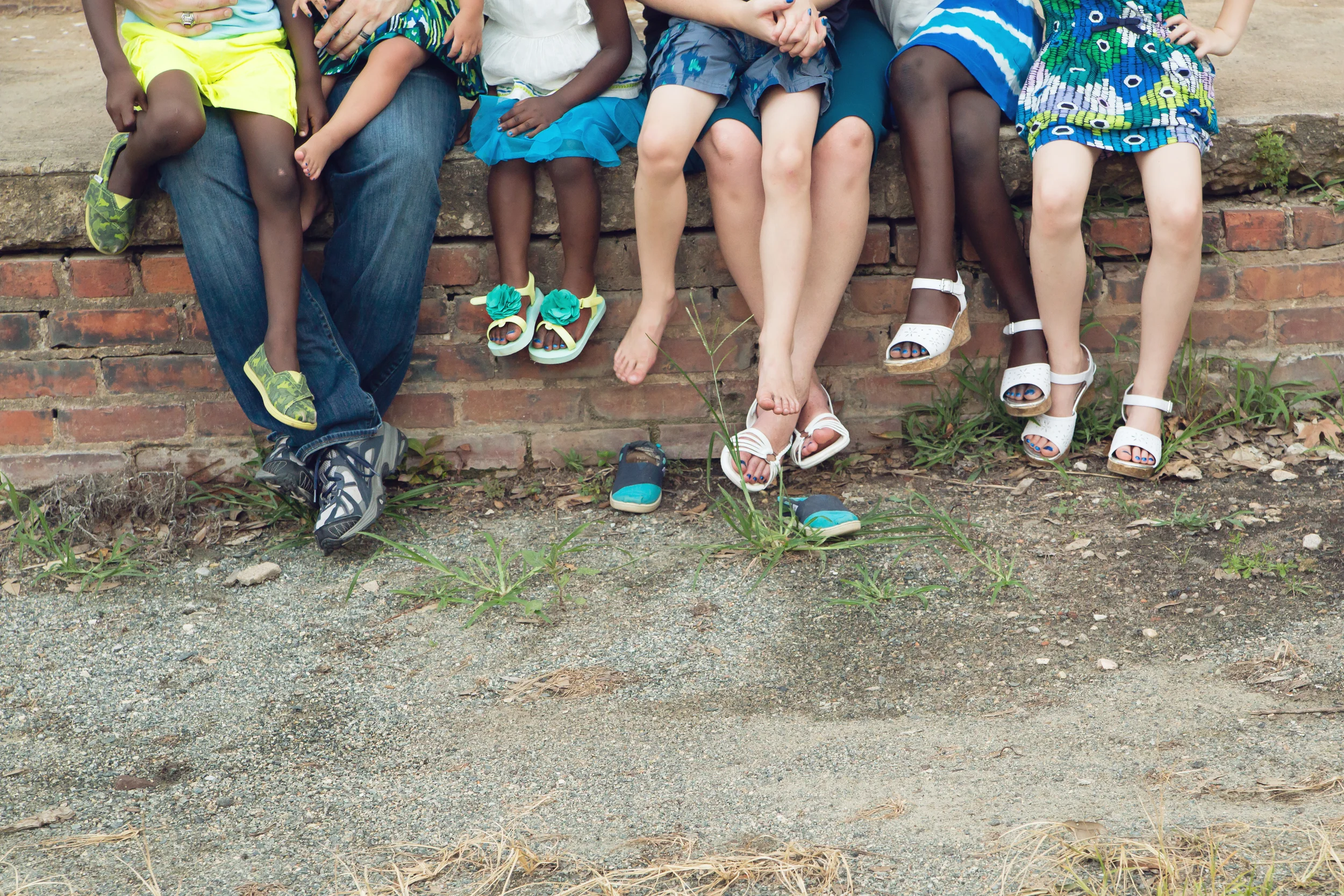
in defense of public school teachers

It saddens me that this sort of post is even needed. But when I read the news that 600 teachers have quit in our county this year, I couldn't not write something.

Why? Not because I'm a former public school teacher, though I could certainly take that angle. Not because as I put in on FB when this news first broke:
When you don't pay them a salary anywhere near what they're worth, freeze salary increases, offer no raises for several years in a row, fill every public medium with constant complaints about the work they do, and then have the gall to talk about how nice it must be to have two months off in the summer (nevermind that it's unpaid time off)... well, this is no surprise. It is sad, though.
I have to write something to brag about the amazing team of public school teachers and staff who have loved our family well in the past two years.

Adoption is hard, y'all. Oh, the stories I could break your heart a million times over with! Though it sounds a little cliche, it truly does take a village. I knew our church would rally around us (side note: y'all rock. thank you.) but I never expected our school community to step up as they have.

Blessed doesn't even begin to describe it.

Imagine having a little girl who was homeschooled for preschool enter your kindergarten classroom just 45 days after her life had been turned upside down by the arrival of a cute but demanding little sister from Taiwan and a mere 60 days before her world would shift again with her little brother's diagnosis of epilepsy.

Imagine receiving that same girl one year later and knowing your role wouldn't just be teaching her all that 1st grade includes but also supporting her through a prolonged absence while she traveled with her family to Africa to gain three more siblings.

Imagine being another 1st grade teacher who had a week's notice before the December arrival of a nervous and overwhelmed little girl who didn't speak much English, had only been in the US for two weeks, and knew more about life's hard realities than most adults.

I could go on and on about these three women who have loved us and our children well, as well as the teaching assistants and the ESL teacher and school counselor and assistant principal and principal and front office staff and... well, you get the picture.

So I'll just share one story that Patience's teacher shared with me. She meant it as an illustration of our girl's desire to learn and ask questions and understand the world, but? It struck me as an excellent example of our lengths these folks go for our kids:

During the first week of school for Patience, it rained a lot, as evidenced by the rain jacket in her first-day-of-school pics. 


One day, her teacher was reading them all a book about rain, and during the part in which the girl in the story stomped in rain puddles, Patience raised her hand. 


"What puddle?" she asked.


"Do you know what a puddle is, Patience?" her teacher asked.


Our girl shook her head.


Well, it was raining outside, so her teacher asked a teaching assistant to take over for a few moments, and she walked hand in hand with Patience out of the classroom, down the hall, out in front of the school, and right up to a puddle. 


"This is a puddle," she said. And then she had Patience stomp in it, just like the little girl in the book. 


And then, as if it was nothing out of the ordinary, she walked with Patience back to class and resumed the rest of the instructional day.


These teachers, they are our people. They are for us, for our girls, for our family. They have sustained us in ways I never expected... and it makes me mad that they aren't valued as much as they ought to be.

From the article linked above,
“This is an alarm cry. I need somebody to care, and I need somebody to recognize the problem, and I need the people who can do something about it to listen and respond,” Dr. Jim Merrill, Wake County Schools Superintendent said.
I care. I see the problem. And while I might not be in a position to do something about it, I hope my words will reach those who can.

So I'm going to ask something I almost never ask: would you be willing to share this? Because those who control teacher pay and raises and other supports need to understand the value of what these men and women do on the front lines of our children's lives.

After all, aren't our kids worth fighting for?

P.S. - To all my public school teacher friends, especially the ones pouring into my girls each day, "thank you" doesn't come close... but it's all I can offer. THANK YOU. You are invaluable. I'm so sorry that your paycheck doesn't reflect that. 


5 things I've learned in 7 years of special needs ministry #SpnMin #kidmin #church #specialneeds #adoption

When we started in special needs ministry, our little family looked like this:


Now our family looks a lot different, and no one would call it "little" anymore.


Between those pictures, we have:

  • welcomed one child via birth and four via adoption.
  • collected a handful of diagnoses: cerebral palsy, HIV, epilepsy, FASD and rheumatoid arthritis.
  • tricked a whole bunch of folks into thinking I'm some sort of expert in the field of special needs ministry and adoption, as evidenced by a growing list of national speaking engagements and consulting agreements and freelance writing opportunities and a couple book proposal requests that I'll be all over once I get 15 minutes to myself, which I expect to happen sometime in 2016 once everyone is in school. 

(Y'all realize I'm just a goofy mom of a wild crew of kids who merely wants to see people of all abilities worshiping God together, right? Because I honestly wear other people's drool more naturally than I wear any expert badge. True story.)

In the years between those pictures, we've learned a few things, so without further ado...

5 things I've learned in 7 years of special needs ministry


1. The only time a one-size-fits-all ministry approach worked was on the cross.

On the cross, Jesus took on all our transgressions to defeat sin and death for us because we were all unable to help ourselves. Elsewhere, Jesus treated (and still treats) every person He met as an individual with immeasurable worth and distinctive needs. In all His interactions throughout scripture and among the testimonies of His people now, it's not about broad strokes of sameness. He was and is both personal and relational. 

What a wonderful model for us to follow as we minister to and with people of all abilities!
(Because it's not about programs; it's about people, amen?)

2. I'm not Jesus. Try as I might, I'm going to get it wrong.

The funny thing about being labeled as an "expert" is that our Sunday mornings look a lot like yours. My family often rolls in late, which I consider a win as long as all eight of us are each wearing two shoes, preferably ones meant to be paired together. I might have systems and spreadsheets and such, but working with families affected by disability means a whole lot of surprises and abandoned plans. 

And sometimes? I screw up. Badly. 

But...

3. God's grace is for all of us.

For my daughter with cerebral palsy, and for her two year old buddies who are learning that Zoe's walker isn't a toy or jungle gym for them. For my child with HIV, and for classmates' parents who were initially concerned about the safety of that kid in their children's Sunday school class. For my son with epilepsy, and for the teacher who messaged me right after his first seizure to assure me that she would learn whatever she needed to so that Robbie could be safe in her class. For the people who immediately and warmly welcome those with disabilities and for the ones who are scared or hesitant or just plain mean. For the churches that say "YES!" and the ones that say, "We don't have a place here for your family." 

For me. And for you.  

4. I'm tired of focusing on the negative stories. 

For me, at least, it's time to shift gears and highlight the churches who are loving well instead of pointing fingers at the ones who are learning. Because, really? We're all learning, and because saying, "You're doing it wrong," doesn't build up the church or change attitudes as much as "Let me show you what has worked for us."

5. There is still work to do, but there is much progress worth celebrating.

In seven years, I can't even begin to describe the difference I've seen in the church's response to people with disabilities, not just around the country but right here in Raleigh where I live and serve. That's exciting, y'all! I truly believe the tide is turning and the Spirit is opening hearts and doors so that the church might include all the parts of its body, as laid out in 1 Corinthians 12.

Yes, there's still more to do. But if there wasn't still work to be done, then we'd be chilling with our Savior in heaven. Because on this side of eternity, we'll never be done.

Isn't it wonderful that we have a great provider - GOD! - so it's not all on our shoulders?


How about you? What have you learned in this area of ministry?

In a church setting, how can you support a parent who could be in denial about their child's special needs?

(This post was first published on this blog on January 24, 2012.)

I was 25. My daughter was nine months old. I was constantly in pain, exhausted, and easily irritable, but I was convinced it would get better because I was just adjusting to being a mom. And my husband called me out on my denial and told me it was time to go to the doctor.

That's the short story of how my two chronic health conditions were diagnosed. What I tried to explain away as "being a new mom" turned out to be Hashimoto's thyroiditis and rheumatoid arthritis.

Why am I telling this story in a post about parents who are in denial about their child's special needs? Well, because we can learn from it.


My husband made careful observations before he said anything;
you need to observe the child on multiple days in as many settings as possible.

Lee was positioned well to have observed what was going on with me and acknowledge that something wasn't right. He realized that my issues were constantly occurring and not based on my circumstances.

Are you sure you haven't decided that a parent is in denial about special needs because your information is limited? Maybe you've only seen the child once or twice. Maybe the child has to wake up earlier on Sunday morning and is struggling with that. Maybe the personality or teaching style in that class isn't a good match to the child. Maybe the issue at hand is your assumption and not the child's special needs. Take time to figure that out.

If you still are seeing something different going on...


My husband needed to confront my denial because it was damaging my body and hurting our family;
you need to evaluate if that parent's denial even needs to be addressed.

Sometimes denial really hurts a family. Usually, though, it won't hurt to give them more time. If a child is in danger in any way, say something right away. If no danger is imminent, you probably want to wait and build the relationship more.

Every kid is different. In a church setting, an undiagnosed special need can make teaching more challenging, but is it really a huge problem? Sure, you do want to be honest with parents if there are any troublesome behaviors, but do you want parents to dread seeing you because they never hear anything but bad reports? It is often better to adjust your approach to reach a child's heart rather than trying to fix their behavior to fit your expectations for typical development.


My husband could confront my denial because we had a relationship; 
you can't expect to help parents through their denial without first establishing a relationship.

It's the whole "they don't care how much you know until they know how much you care" principle. I was willing to hear my husband out because he knows me and I know him. Because he knows me well, his concerns were meaningful to me.

If you don't know the parents well, you haven't established the trust required to even suggest that their child might need extra support in a church setting.


My husband was willing to see us through the outcomes of any diagnosis;
you need to be willing, prepared, and available to support your families through their outcomes.

When I received a diagnosis, my husband didn't leave. He didn't get me to that point and then bail on me. He was in it for the long haul, showing that he cared with his actions. You need to realize that the outcome could wrap everything up nicely... or it could reveal ongoing needs. If the needs are ongoing, will the church be there? Will you be willing to provide support and/or make sure others in your church are mobilized to provide that support?

In other words, if you aren't able to assist with a solution, then you're not the right person to say anything.


My husband recognized that my denial meant I was grieving my old life;
you need to let parents grieve too if they need to.

This means letting them move through the stages of grief on their own timetable, not yours. Pray that the Holy Spirit will convict them of the need to move on when His timing is right, and don't try to play God by enforcing your own timetable.

Be patient. Be willing to listen. And be there for them, even if and especially when they're struggling with guilt, despair, or denial.


My husband know he couldn't meet every need and was willing to let the experts do their jobs;
you need to be willing to help parents connect with other resources if necessary.

The church should work to include people with disabilities in the body of Christ. However, my role as special needs ministry coordinator doesn't mean that I have to offer speech therapy, medical consultations, and education consulting to every family. I'm not equipped or qualified for all of that.

Just as my husband was willing to concede that doctors would be more helpful to me in some areas than he could be, you need to realize that the church's primary mission isn't to fill every practical earthly need for our families.


My husband prayed and sought God's wisdom through every step of this process with me;
so should you.

Amen.

some things truly are a matter of life & death

This week a story about our family and other families who have adopted children with HIV will be published online at NBC News. In it, we're open about some of the positive and not so positive responses we've gotten about HIV from loved ones.

We didn't take our involvement in the story lightly. We continued to keep our typical safeguards in place, like not identifying which of our children is the one with HIV and not publicly identifying anyone who has responded unkindly to the diagnosis. And we prayed - man, did we pray! - in advance of the interview.

The primary reason we said yes: the contrast between our child and a little girl named Daphne. 

The stories started out similarly, but their endings are tragically different.

We found out about our newest three children, including the HIV diagnosis for one of them, and declared with our acceptance of their referral that a child's diagnosis doesn't preclude him or her from the love of a family. We waded through the reams of paperwork and the labor of fundraising. We finally arrived in Uganda, fought for medical care that had been denied until then, and spent six weeks working through the legal process to bring Patience, Philip, and Patricia home as our children. Here, they have flourished, and the one with HIV now has undetectable viral loads, meaning that HIV is being suppressed by the daily medication regimen and our child is now developing like any other child.

Good story, huh?

Meanwhile, another little girl in Uganda also had HIV. Her name is Daphne. It's not my place to share her full history, but she ended up in an orphanage with no one in country able or willing to adopt her, given how sick she was. Friends here in the Raleigh area stepped forward to adopt her. A couple weeks ago, Alison and I were all set to have coffee and chat about our experiences parenting a child with HIV, sharing anything I could to help prepare them for their newest darling. Two days before that coffee date, they received hard news: Daphne wasn't coming to the United States. Her change of residence was from Uganda to heaven instead. Her body was too weak, and she succumbed to HIV-related illnesses that ended her earthly life.

I'm going to be blunt here:
Our response to "the least of these" can be a matter of life and death.

When we care enough to do something, lives are saved.

Even when we care as much as Daphne's would-be parents do, sometimes it's too late.

When we do nothing, children die.

balloons being released a week ago at a celebration of Daphne's life

So, yes, we're being transparent with a national news outlet this week. It's not because we want to shame anyone who hasn't loved us well in this transition or because we like to see our names or faces or stories all over the place. No, certainly not.

It's because we aren't comfortable waiting for people to come around about HIV when children are dying. We aren't okay with children becoming orphans because we care more about our own status quo than we do about the poor access to medical diagnostics, care, and treatment in other countries that, if changed, would prevent orphans from being created by illnesses that wouldn't lead to death here. We can't stand quietly as we received the news that our children's father died last week, following their mother's death previously, because we know that stigma about HIV delayed their treatment until it was too late for it to help.

We are the parents of a child with HIV. For us, that means we have to stand firm to say NO! to stigma.

Because, after all, it is quite literally a matter of life and death.


(If you'll be at CAFO 2014 in Chicago at the beginning of May, please join me and the Project Hopeful team for Friday's "Parenting HIV/AIDS" session to learn how NOT scary it really is.)

wearing my special needs mama badge like a pair of snug jeans

Let me start with an apology to my male readers: I have absolutely no idea if this post will leave you confused or if you'll relate or if you'll worry that my next topic will be about visiting the ObGyn.

(don't worry. it won't.)

But this week a friend has been on my mind, a friend who is just beginning to realize that she is now that special needs mama she never planned to be. As I prayed for her family and then kept finding my mind wandering back to them as I went about the rest of my day, an analogy came to mind.

Special needs parenting is kind of like a snug pair of jeans.

We all have that pair of jeans (at least, all of us ladies... guys, just trust me on this if you can't relate) that fits great after about an hour. Or maybe after one day of wearing them when we pull them on for the second day in a row. But when we first pull them on? The button is hard to close, the fabric squeezes too hard in all the wrong places, and it's almost a workout just to get them on.

For me, that's how it is with my special needs mama badge.

(As far as I know, there's no actual badge for us. But if one existed, I'd rock that bad boy.)

We have three children with special needs: cerebral palsy, epilepsy, and HIV. For two of those children, we had the luxury of never knowing our child without a diagnosis because we adopted them after that pivotal moment. We never had to reconcile our dreams for our children with the surprise of their diagnoses. Zoe, in our history with her, has always had cerebral palsy. Our hopes for her have always involved the knowledge of the brain injury she already had before we knew her.

Those pairs of jeans are often easier to slip into.


For Robbie, though, I'll never forget the moment when so much changed, the moment when I found him choking on his own vomit while seizing for more than 15 minutes until the paramedics drugged him to bring it to a stop. That was our night that separated before from after for us.

I fought hard to get into those jeans, and it took much longer for them to feel comfortable.


Some days, though, even the comfy jeans feel snug again. Maybe I just pulled them out of the dryer where they've shrunk a bit, or maybe they're tight because I turned to chips, salsa, and root beer floats to soothe the sadness over ordering our daughter's first wheelchair.

(Which I did last week, both the ordering of the wheelchair and the drowning my sorrows in sugar and Mexican food.)

Either way, there are days that catch me by surprise when I have to fight to get the jeans on again, even though they fit just fine the day before.

So to that special needs mama who is facing those jeans for the first time, I say this: None of us love the jeans, but all of us love the reason for them: the children whose diagnoses handed us our special needs mama badges. Someday, the jeans won't be so hard to slip into. Someday, you won't care if they make you stand out a bit. Someday, you'll be so accustomed to the daily routine that you'll forget that other moms don't fight their way in those jeans every day.

Some days, though, you'll have to fight to put them on.

And that's okay. There's grace a'plenty for all those somedays.

To the friends, church leaders, teachers, family members, and others who want to love that mama well, I say this: just because we wear the jeans well doesn't mean we didn't fight to put them on. We wear them because they're our jeans.

Some days, we make it look easy. Some days, it might be. Most days, it's just what we do.
So Joshua did as Moses told him, and fought with Amalek, while Moses, Aaron, and Hur went up to the top of the hill. Whenever Moses held up his hand, Israel prevailed, and whenever he lowered his hand, Amalek prevailed. But Moses' hands grew weary, so they took a stone and put it under him, and he sat on it, while Aaron and Hur held up his hands, one on one side, and the other on the other side. So his hands were steady until the going down of the sun. And Joshua overwhelmed Amalek and his people with the sword.
(Exodus 17:10-13)
Sometimes we think ministering to families affected by disability is about programs and volunteers and forms and logistics. Sometimes, it is.

Most of the time, though, it's about coming alongside families as they fight to wear those jeans they never would have picked out for themselves, holding them up as they grow weary and steadying them as they run with perseverance the particular and peculiar race God has set before them.

I am so thankful for all the Aarons and Hurs who have held and steadied me as I don these jeans I never thought I'd wear.

So very thankful.