#mc_embed_signup{background:#dbedf0; clear:center; font:14px Helvetica,Arial,sans-serif; }
Multiplying by zero
/We love because he first loved us. (1 John 4:19)
My command is this: Love each other as I have loved you. (John 15:12)
Multiply zero by any other number, no matter how high, and the result will be the same. Altruism is doubly pointless when both the one who seeks the good of others and those he seeks to help are ignorant of the meaning of life…The good works we perform for our fellow man are filthy rags in God’s sight because of His surpassing holiness (Isa. 64:6; Titus 3:5). (Jason Stellman, Dual Citizens, p. 107)
Should we serve people and engage in social and political issues? Yes. Should we do it at the expense of or with more importance than sharing the Gospel? No. However, we can - and should - do them concurrently. Just preaching the Gospel without engaging those around us is little more than shouting at the masses, acting as the Pit Preacher at UNC or the Brickyard Preacher at State. Just engaging the world without sharing the truth that is found in Christ is giving a false and fleeting hope; it's multiplying our works by zero.
Doing both? Now that's Christ-like. That's the Gospel.
Book review: The Church History ABCs
/
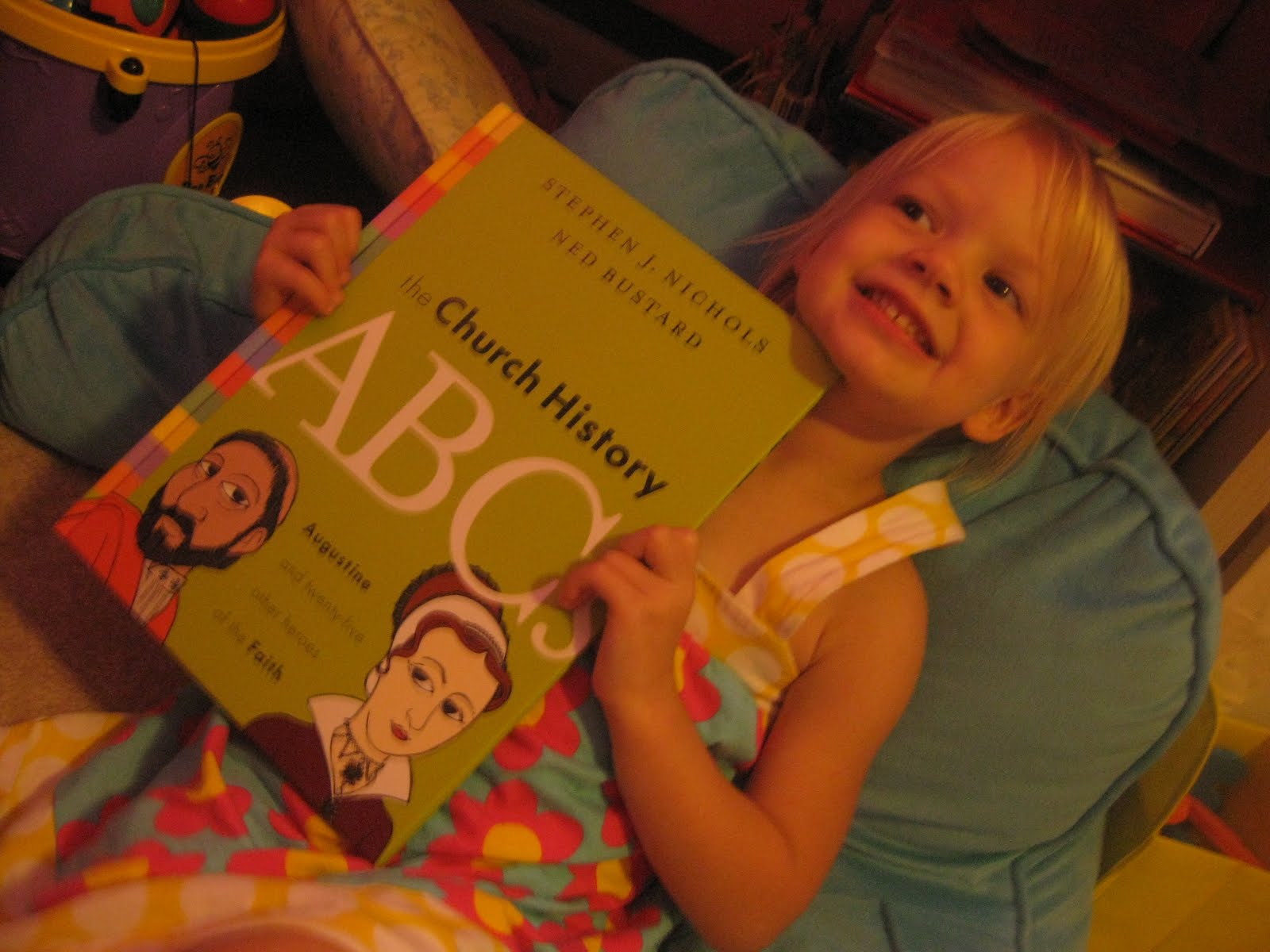
The book? The Church History ABCs: Augustine and 25 Other Heroes of the FaithMy thoughts? (part one) If you have kids and want them to have a primer in church history, get this. Like, now. Seriously.
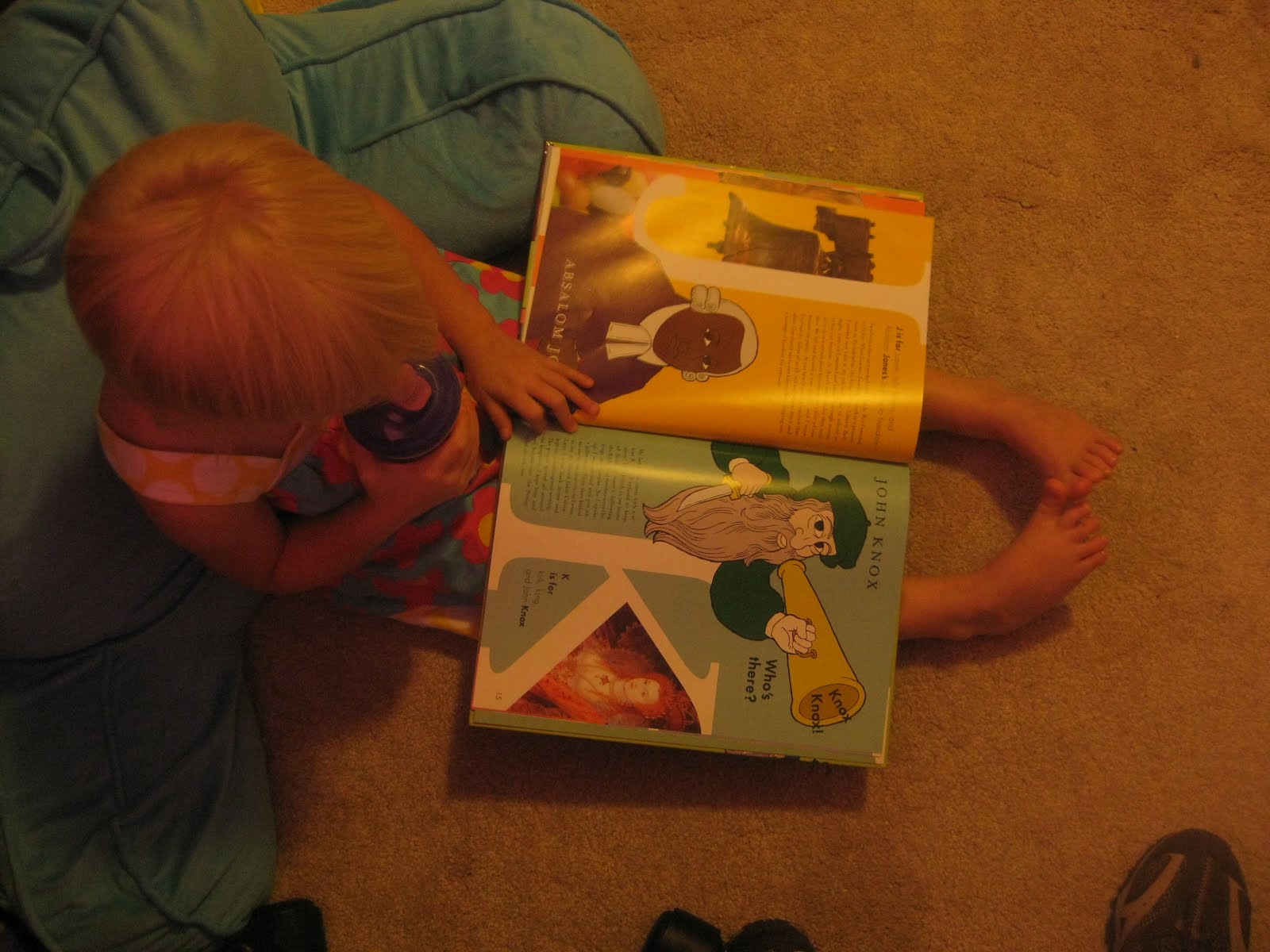
The gist? This book is a colorful, kid-friendly ABCs of, you guessed it, church history. From Augustine to Zwingli, you'll find illustrations and a paragraph for each person. In the back, a more adult-slanted paragraph can be found, which also explains some of the more cryptic pictures. For example, Jonathan Edwards is eating a chocolate bar in his because he loved that particular treat, and he has a spider pictured with him as a call back to his famous sermon, "Sinners in the Hands of an Angry God," in which he compared sinners to spiders dangling over hell by a thread. (Wow. That sounded creepy, as if you'll find that type of thing in these pages. No worries, this book doesn't delve into imagery like that!) The authors also provided a chronological timeline in the back, from Ignatius (who died in 110) to Florenece Young (died 1940).
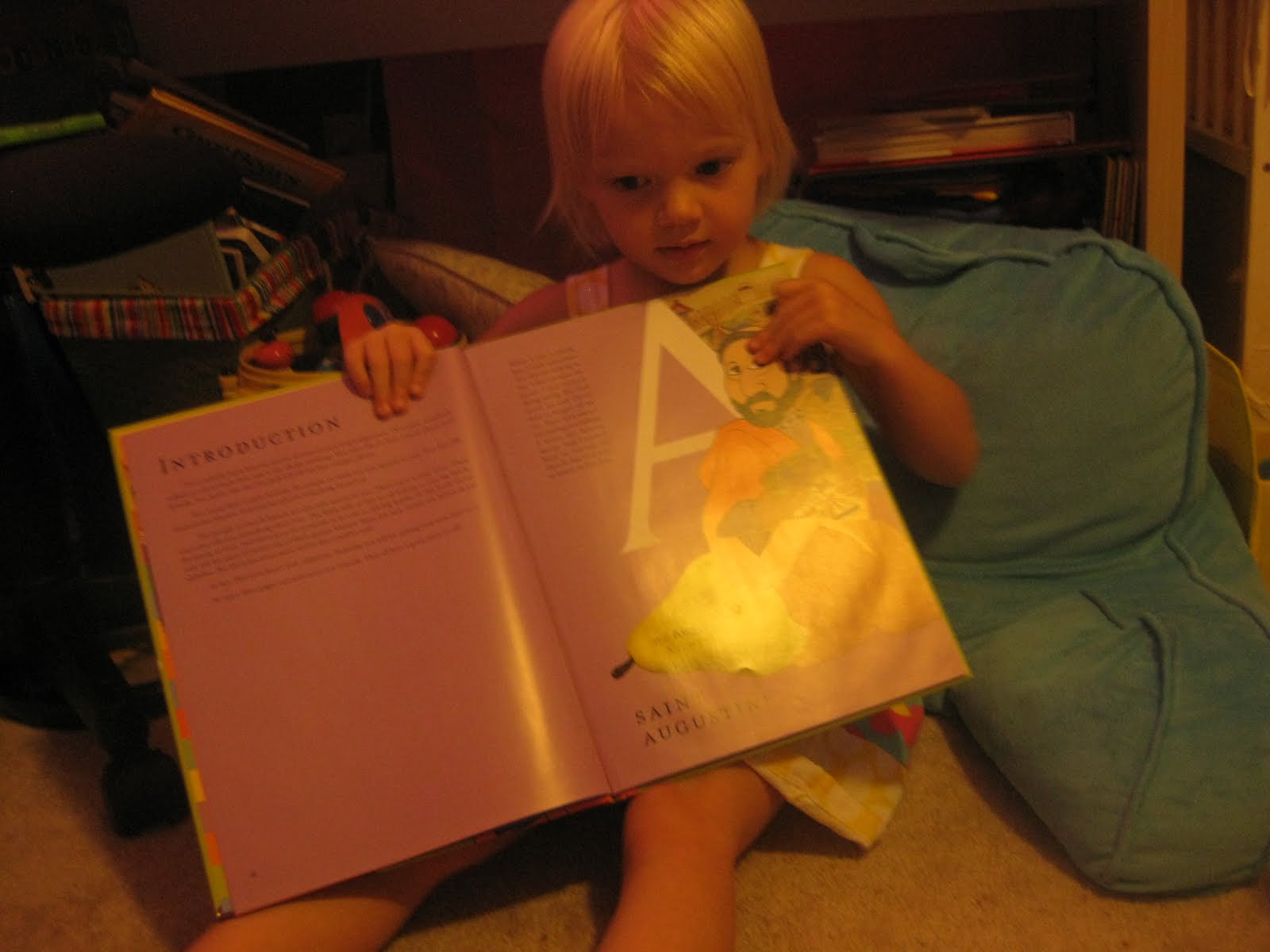
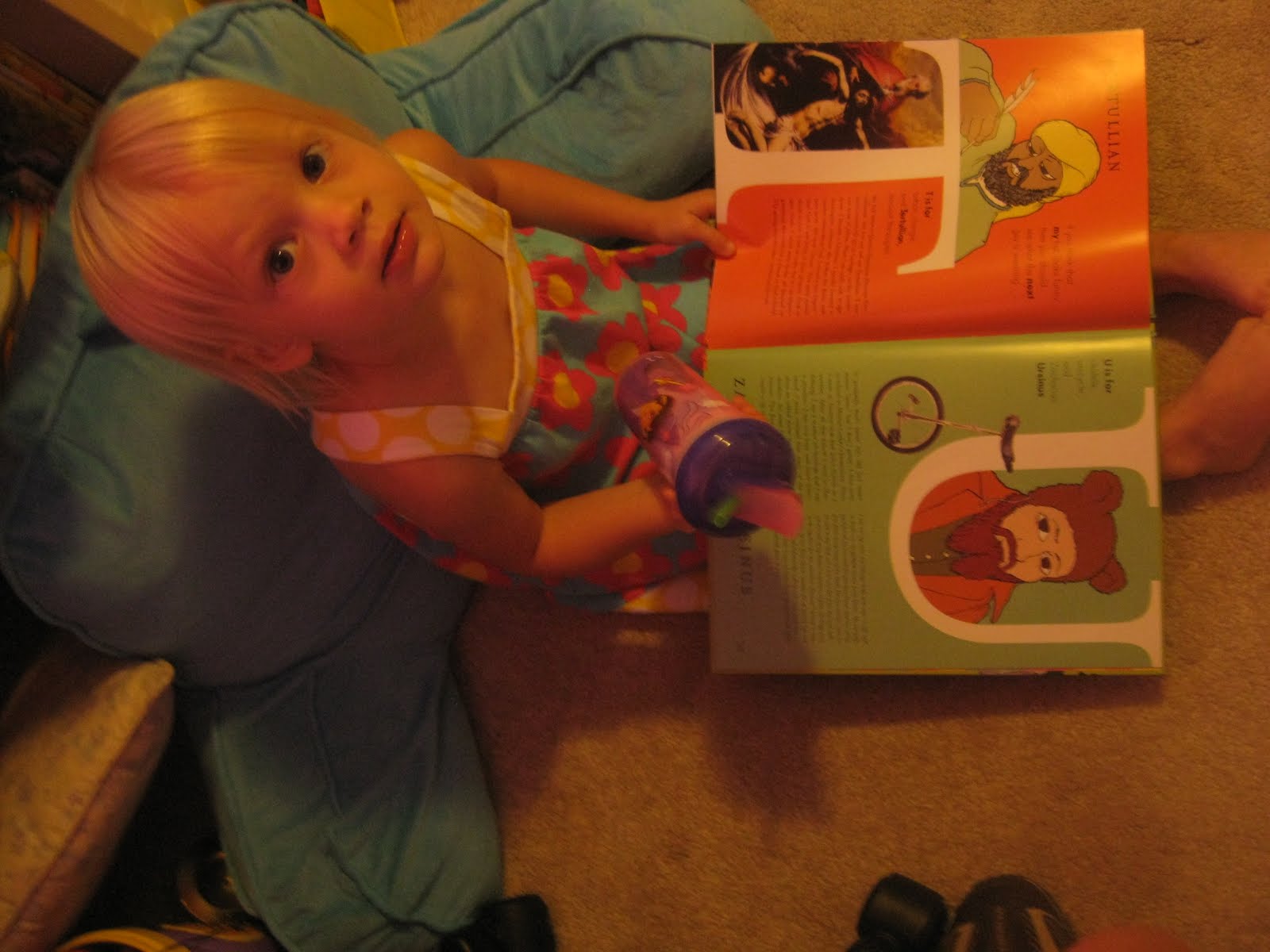
My thoughts? (part two) As you'll see in the pictures below, I have a sweet girl who loves this book. I'm not sure how much she's getting from it yet, because some of the vocabulary is a little over her head (it's geared toward kids a little older than her, ages 4-8), but she loves the colors, loves to have Mommy read it to her, and loves asking questions about the words and pictures. Did I fall in love with it right away? Yes. Do I love it even more now because she loves it? YES.
Did I love it when she climbed into bed at 6:30am yesterday with the book, woke me up, and asked me to read her all of the stories? Notsomuch. But I do still love the book! (As does she, even in bad lighting...)
And did I mention that you should get this? 'Cause you should.
Edited to add: Oh my goodness, I just found the book's website. It has coloring pages and activities for some of the people featured. I'm psyched.
The FTC requires that I disclose that Crossway Books provided this book for me to review. Crossway, however, required nothing from me and didn't ask for a positive review or anything else. Therefore, I like Crossway more than the FTC, but I include this disclaimer because I also like not being fined by the FTC.
Book review: Christ Among the Dragons
/
The book?
Christ Among the Dragons: Finding Our Way Through Cultural Challenges
by James Emery White
The gist?
The title comes from the medieval cartographer's use of the words "hic sunt dragones" along the margins of a map, indicating that the lands beyond those words were unknown and thus could be perilous. "Here be dragons" warned folks to cross those boundaries with caution. According to White, evangelical Christianity has crossed the boundary into the unknown, lacking the cohesiveness that used to exist around the issues of (1) truth, as we live in a world that embraces new words and attitudes like truthiness and wikiality while removing the words disciple, saint, and sin from the Oxford Junior Dictionary, (2) cultural engagement, as we are meant to influence culture as salt rather than be influenced by it and lose our saltiness, (3) community unity, as the Bible (in Titus 3:10, for example) calls us to avoid division and seek unity in the body of believers, and (4) the church, in a world in which more and more people are becoming disillusioned with church and organized religion.
My thoughts?
You'll find several nuggets from this book in future blog posts because I loved how he reframed truths I knew in a different way. I feel like much of what I hear about evangelical Christianity - from within and outside - is more fault-focused than solution-focused. Thankfully, White doesn't dwell on the negative more than necessary and provides a positive response for every criticism. And it's a little thing, but I also liked the pictures (nothing fancy, just things like the cover of A Million Little Pieces on the page where it's discussed).
All in all, I liked it. In his section about truth, though, he decries a disregard for truth and then flips sides to say that it doesn't matter on a truth level how God created the world as long as we believe that He did it, stating that the "Genesis narrative does not speak to how God created, only that God created." That seems to be embracing the same truthiness that he critiques. This only encompasses a few pages, though, so it's still a book I would recommend.
Many thanks to InterVarsity Press for providing this book for my review. I was not asked or required to write a positive one, just an honest one.
Christ Among the Dragons: Finding Our Way Through Cultural Challenges
The gist?
The title comes from the medieval cartographer's use of the words "hic sunt dragones" along the margins of a map, indicating that the lands beyond those words were unknown and thus could be perilous. "Here be dragons" warned folks to cross those boundaries with caution. According to White, evangelical Christianity has crossed the boundary into the unknown, lacking the cohesiveness that used to exist around the issues of (1) truth, as we live in a world that embraces new words and attitudes like truthiness and wikiality while removing the words disciple, saint, and sin from the Oxford Junior Dictionary, (2) cultural engagement, as we are meant to influence culture as salt rather than be influenced by it and lose our saltiness, (3) community unity, as the Bible (in Titus 3:10, for example) calls us to avoid division and seek unity in the body of believers, and (4) the church, in a world in which more and more people are becoming disillusioned with church and organized religion. My thoughts?

You'll find several nuggets from this book in future blog posts because I loved how he reframed truths I knew in a different way. I feel like much of what I hear about evangelical Christianity - from within and outside - is more fault-focused than solution-focused. Thankfully, White doesn't dwell on the negative more than necessary and provides a positive response for every criticism. And it's a little thing, but I also liked the pictures (nothing fancy, just things like the cover of A Million Little Pieces on the page where it's discussed).
All in all, I liked it. In his section about truth, though, he decries a disregard for truth and then flips sides to say that it doesn't matter on a truth level how God created the world as long as we believe that He did it, stating that the "Genesis narrative does not speak to how God created, only that God created." That seems to be embracing the same truthiness that he critiques. This only encompasses a few pages, though, so it's still a book I would recommend.
Many thanks to InterVarsity Press for providing this book for my review. I was not asked or required to write a positive one, just an honest one.