What the church can learn from pop culture

A couple weeks ago James Durbin's loss on American Idol nearly broke Twitter; he was a front runner who also happens to have Asperger and Tourette syndromes. Celebrity Apprentice had Marlee Matlin and her intepreter (who I really, really wish had been female, because it's disconcerting to have the communication of a woman expressed with a male voice). On Oprah, a guy with cerebral palsy named Zach Anner won his own show on her new network. Parenthood, which I've never watched, has a character named Max with Asperger syndrome. I'm one of about three people in the US who doesn't watch Glee, but I have loved seeing the positive reception of Lauren Potter's character; Lauren has Down syndrome. Bones, a show I do watch faithfully, has candidly and artfully handled the complex issue of an expectant couple who knows that they have a one in four chance that their baby is blind during this season. While it was cancelled before it really began, Paul Reiser's show made some headlines by casting Brock Waidmann, an actor who uses a wheelchair due to spina bifida and agenesis of the corpus callosum, to play a character who uses a wheelchair. And, of course, Extreme Makeover: Home Edition regularly features families with at least one member with special needs.

I have read many blogs and articles exalting all this as an indication that pop culture becoming more accepting of people with disabilities.

So, church, what are you doing? Are you really going to let pop culture do a better job of embracing those created by God than we do?

I didn't think so. Let's step it up.

Weak. And yet perfect. {2 Corinthians 12:9-10}

 2 Corinthians 12:9-10

But he said to me, "My grace is sufficient for you, for my power is made perfect in weakness." Therefore I will boast all the more gladly of my weaknesses, so that the power of Christ may rest upon me. For the sake of Christ, then, I am content with weaknesses, insults, hardships, persecutions, and calamities. For when I am weak, then I am strong.


the style of our home

In the past year, we've changed a lot about how our house looks - the arrangement of furniture as well as the furniture itself and many elements of decor - and we're still in the process of doing so. Because I've become addicted to websites like Nesting Place, I've realized that I need to clarify what our goals are for our physical space. Otherwise, I'm tempted to be drawn into things that look pretty in someone else's home but that don't really work for us.

I'm not sure I've fully meshed out those goals, but here's the current working version of them:
  1. I want our home to be a haven for my husband and our children. We're pretty laidback, so - for us - that means that comfort is key. And it also means that the arrangement of our home doesn't conflict with living our life, nor does the expense of decorating create hardship for us. And that means that I aim for my attitude in keeping our home to create a haven-like environment as well.
  2. I want our home to be an inviting place. In other words, I want that haven to extend beyond our family. This most often means, in a practical sense, that I want my home to be tidy enough that I'm not embarrassed to invite others into it, even without much advance notice. This also means that while we aim for our home to show that we have small children in that we don't hide away all the toys (because that would violate my first aim, that of creating a haven for them), we also - in so much as is possible with two small children - aim to have places for toys to go so that they don't always have to be underfoot. 
  3. I want our home to reflect the hope we have in Christ. While this is only authentic when our attitudes and dispositions also reflect that, I like to have scripture and Christian symbols around our home in obvious ways. Not only does this display that hope to others, but it also encourages me because so much of our time is spent at home. Plus it helps us, in one way, live out these verses:
 “Hear, O Israel: The Lord our God, the Lord is one.  
You shall love the Lord your God 
with all your heart and with all your soul and with all your might. 
And these words that I command you today shall be on your heart.  
You shall teach them diligently to your children, 
and shall talk of them when you sit in your house, 
and when you walk by the way, 
and when you lie down, 
and when you rise. 
You shall bind them as a sign on your hand, 
and they shall be as frontlets between your eyes. 
You shall write them on the doorposts of your house and on your gates.

Deuteronomy 6:4-9


My latest home addition was this Wood Carved Wall Hanging from Dayspring.


It will eventually hang below this plate and painting (also from Dayspring, found here), but I need to move them up so I can have all three hung at a height that it out of reach of my little guy.


The back allows it to be hung either way, and I don't know if there's a traditional way to do it. Should the fish's nose point left or right? Or do I just make an arbitrary call? Any suggestions?!?

What are your aims for your home? I would love to know!


Many thanks to Dayspring for providing this item for my review. Though they didn't ask for or require a positive post, I do love it!

Fridays from the Families: The Pressure to Abort and a Life Worth Living

I usually ask guest posters in this series to write something specific for this blog, because their personal blogs usually serve a different purpose than this one. For the first time, though, I asked an author if I could repost something from her blog here, and she graciously agreed. Tammy writes about her family at Praying for Parker, and her little man and her writing have captured my heart. 

In this post, she is writing to a pregnant woman who has found out that her child has Down syndrome and is deciding whether or not to have an abortion. I think the church needs to hear her words for two reasons: (1) we need to understand that being opposed to abortion also must mean that we're willing to love and welcome the lives that are not aborted, including those with disabilities, and (2) we need to be convinced, just like the pregnant mom to whom she writes, that these are lives worth keeping in our body; a body which, in the case of the church, is our body of believers.

I may not know you. But I think I may understand a bit of what you are feeling right now.

It’s never easy to discover that the little one growing within your womb may not be what the world considers ‘perfect.’

But what the world doesn’t understand, is that there are  many kinds of perfection.

IMG_7716

The world focuses on skinny bodies, perfectly balanced faces, the latest styles, the shiniest of things.

I want to share with you another kind of perfect.

He came 6 weeks early. Orange as a pumpkin. Looking exactly like his brothers.

He came with two holes in his heart that shouldn’t have been there, and without the hole in his tush that should have been.

We discovered the Pulmonary Hypertension after the surgery to de-tether his spinal cord.

And, yet, he was totally perfect.

I’ll admit it.  It’s been rough at times.

It’s also been worth it. A thousand times over. 

IMG_6973

I started this blog because I wanted to show the world that even with all the other medical issues Parker came to us with (which btw, is the exception rather than the rule) that a life with Down syndrome is so very worth living.

A child with Down syndrome is a gift. Maybe not the gift you were expecting. I get that. I can tell you though, that Parker has made me a better person. I needed him so much more than he will ever need me. He’s filled a part of my heart that I didn’t realize was missing until this sixth child of mine made his way into our family.

I can imagine your worry right now. You’re wondering about this little one within you. Will this baby look like you or your husband or your other kids? He will.

IMG_7711

Two Peas.  One Pod.

You may be wondering how this could have happened. This isn’t how things were supposed to be. It may feel as though your Happily Ever After has been blown to smithereens. Babies with special needs are born to other people, not you.

Maybe you’ve had experience with the special needs community. Maybe your first thought was to thank God that this community wasn’t a part of your life.

When that child with special needs is yours, it’s a game changer though. Something in your heart changes. It’s a blessing that is hard to understand unless you are willing to take that leap of faith that is staring you in the face even as I type.

Guess what? All the feelings you are experiencing are pretty normal. It’s the unknown ganging up on you. It happens to all of us some time or another. If you’ve read any of my writings, you’ll see that it’s happened to me a time or two.

IMG_7793

There’s something that you really can’t understand right now though. Because it’s in the future, and those of us without crystal balls have to wait for the future to become the present before they can understand this:

A child with Down syndrome is more like a typical child than the world realizes. Yeah. There are the hard days, I’ll give you that. But I’ve had hard days with my other kids too. Just different types of hard days. Parker is learning to read and write. He has his favorite stories. He loves to be outside, just like his big brothers always have.

Children with Down syndrome grow up to have dreams and goals and great potential.

Okay, maybe that potential may be different than what we typically perceive as being potential. But Parker’s life has both a purpose and a plan. I know this with every fiber of my being.

There are a few things I can promise you:
  • You may go through a period of ‘what could have been.’ It’s like planning a trip to Italy and then finding your plane landed in Holland. But soon you’ll find out just how amazing Holland can be.
  • The period where you keep thinking about the child you thought you were having will fade over time, with flare ups here and there.
  • You’ll discover the amazing that is found within ‘different.’ I’m not kidding about this. One day you will stop in your tracks and feel a unique wonder and awe that this most amazing of kids was sent to you. You will feel a type of pride that only a Mama of a child with special needs can experience as they watch their child do exactly what everyone had said he wouldn’t.
  • There will be people that (most often unintentionally) will say stupid things. You’ll learn to mentally roll your eyes and to forgive them. You’ll remember that once you used to think the exact same things. You’ll remember how you struggled with the diagnosis and not knowing what might (or might not) happen. You’ll be thankful that you are one of those that ‘get it.’ You may even feel kind of sad that those people don’t have a kid with special needs in their lives. Reed and I talk about this all the time.
  • There will even be times, lots of times, when you totally forget your child has Down syndrome. He’ll just be your kid. The one that just undid the whole roll of toilet paper. Again.
16333_219136205080_511935080_4432382_4446807_n

Please don’t let anyone tell you that a child with Down syndrome won’t walk, or talk, or potty train, or read, or go to school or hold a job, or that people with Down syndrome never marry. That isn’t true. 

The odds are through the stratosphere that there will come a day, far sooner than you ever expected, when you are thankful you didn’t let the fear of ‘different’ cheat you out of the opportunity to discover the beauty of that extra chromosome. I truly believe that the world is a richer place because of my son’s presence in it.  I receive emails telling me this very thing on a regular basis.

Ultimately the choice is yours. I just wanted to let you know that there are many who have been exactly where you are now, and are today thankful that they took their pregnancies to term, even if the fear of the unknown was at times overwhelming. It’s a leap of faith that more times than not, turns out having an end that includes hard work...AND great joy. A joy that can’t be expressed with mere words.

I’ve tried to be very upfront and honest in writing to you. You deserve that. It’s hard, but it’s worth it, regardless of what any doctors or anyone else may have told you.

I don’t envy you your decision. You’ve loved this baby from the moment you learned you were pregnant. It wasn’t supposed to be like this.

Then again, maybe it was.

But only you can decide that.

I sincerely wish you peace and a clarity of heart. You have my love as you go through the process of making this decision…and after as well.

 Thank you again, Tammy, for letting me share your words here. Visit her at her blog, and please come back to this blog next week for a post or two about what the church needs to know about the intersection between special needs and abortion.
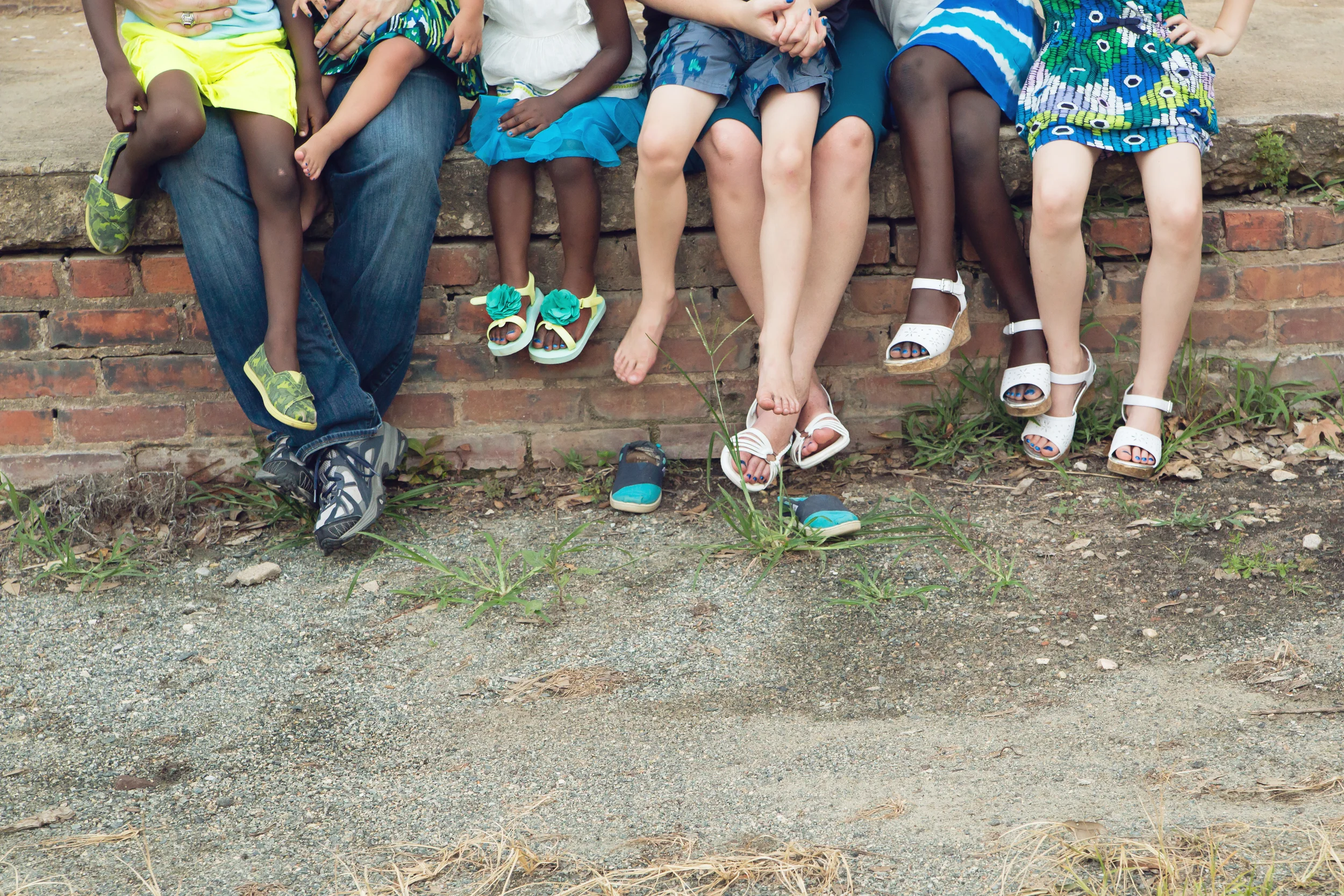
Why I write

I've been having some conversations lately with others who are involved in special needs ministry around the country. Many of these folks have been at it longer than I have, and I feel undeserving of the seat they've offered me at the table.

As I engage in these conversations, I've realized that I've never written here about why I write here.

One answer is that I'm a writer. I've been writing and posting pictures of my family at our personal blog for a few years. I was "published" for the first time in third grade when my life's work of poetry won a school contest. It was bound with a coil spine and made available for reading in our elementary school library. I was ecstatic. Since then, I've written whenever I could - drafting poems instead of taking notes in high school chem and writing for every purpose and outlet I could: for the paper in middle school and high school and a bit in college, for my children in journals I'll give them when they're older, for income for a couple publications, for the training new special educators for Teach For America, and sometimes for no specific reason other than to sculpt with words. So the first answer to why I write this blog is simply this: I'm a writer. Therefore, I write.

But why write about special needs ministry? Part of the answer to that question is that I love ministering with people with special needs. And when I need to figure something out, sometimes I just need to talk it out. Many posts come from my need for me to "talk" (or, rather, blog) it out.

But it's more than that. As I began digging into books and websites and organizations, I realized something. When I worked with Teach For America, we talked about developing mindsets, knowledge, and skills. I found that many of the available special needs ministry resources are focused on skills or, to a lesser degree, knowledge. Most of what I found skipped over the mindset piece,as if to say "if you're reading this, then you agree with me already, so let's dive into how to do it." To me, the mindset is the most crucial piece. If ministry leaders have the right mindset, then they can partner with secular organizations to make up for deficits in knowledge and skills. While my writing here does tips its toes into knowledge and skills too, I want to be mindset-oriented.

The main reason why many churches don't welcome people with special needs isn't a matter of too few resources or too little knowledge or too much apathy. It's too little Jesus in our ministry. We can learn all the knowledge about disabilities and develop all the skills necessary for including each person but still miss the heart of what we're doing: the Gospel.

I write because I love the church, and I want to see her fulfill the purpose intended for her. The church was never intended to be just a building where we gather; it's a body of believers whose heart beats singularly for the glory of God. When we exclude or excise part of that body, then the church becomes less than what it would have been.