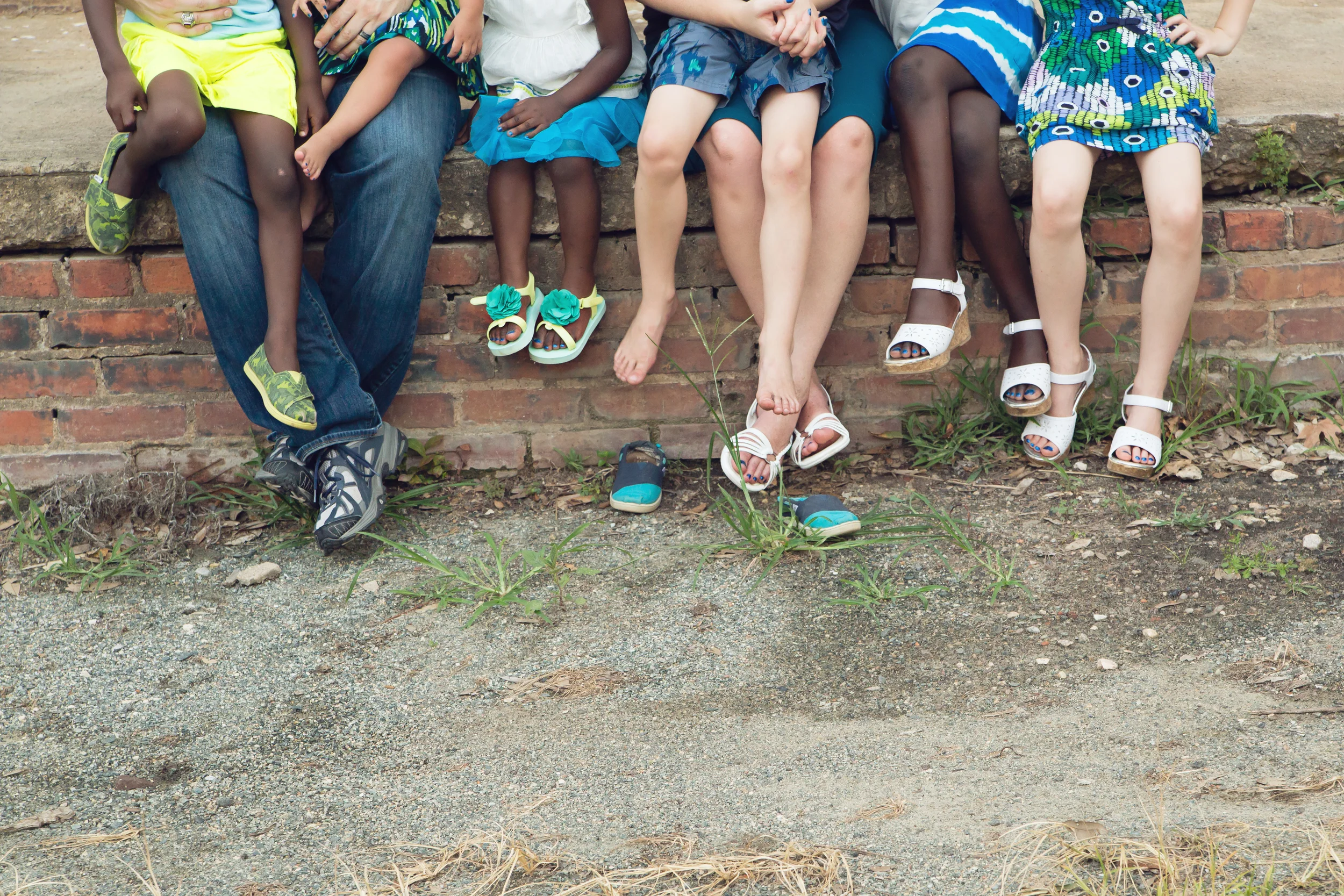
Ministering with an attitude of superiority?

Do you think you’re better than the people with special needs at your church and in your community?

No, seriously. Before you give a knee jerk “no, course not!” think about it first.

I don’t think it’s uncommon to minister – in any ministry, not just this one – with an attitude of superiority. Pride is sneaky and pervasive. Humility can be fleeting and faked.

Here are some questions to ask yourself. They're ones I ask myself regularly.
  • Do I talk about “ministering to” others more than I talk about “ministering with” them?
  • Am I more concerned about developing my own talents or helping others grow in their God-given giftedness?
  • Am I concerned about my name being known by others or God’s name being esteemed as great?
  • Am I easily offended?
  • How do I feel if I work really hard on something but someone else gets the credit?
  • Do I find myself talking about people with special needs as a homogenous group who needs me (helping them, serving them, and so on) or as individuals who, like me, are created by God and in need of a Savior?
  • When parents react negatively to something I do, am I quick to get angry or do I examine myself and my actions first?
  • Am I willing to admit when I don’t know the answer to something?
  • Am I eager to learn from and listen to someone else?
All these things my hand has made,
and so all these things came to be,
declares the Lord.
But this is the one to whom I will look:
he who is humble and contrite in spirit
and trembles at my word.
{Isaiah 66:2}

The night before Christ’s death, what did he do? Washed the grime and filth from the feet of his disciples, including Judas. He did not consider himself too good or too great or, simply put, too God to kneel at their feet and do the work of a servant. If he did not act as if he was impressed with himself, what right do I have to act that way?

I don’t deserve the glory. He does.

May I never forget that.

How do you guard against pride in ministry?

Monday round-up!

I regularly have a ridiculous number of browser windows open, because I don't want to forget about various articles from around the web. Several other bloggers I admire do weekly round-up posts, each with a list of links of interest from the previous week. I'm not sure yet if this will be a regular thing, but I do know it's today's post!

Great post about the grace shown to one momma and her daughter during VBS at a church that's doing a lot of right things in welcoming families with special needs!

So thankful that Pamela Wilson, the voice behind Bella Online's Special Needs Children's Site, was able to encourage this woman when she found out her child had Down syndrome. Verklepmt indeed, Pamela!

I think it would be great to create a series of panels like these to post around our church with statements about each child's worth in God and to the church. While this campaign's focus was kids with Down syndrome, I would include kids with other special needs as well.

Not sure that there's anything to be said about this, but I was struck by the juxtaposition of a story about a girl with Down syndrome who wasn't allowed to fly as an unassisted minor on a British Airways flight despite being fairly independent and another story about Quatari airports' taking extra measures to be welcoming to people with special needs. (And, FYI for those in the US, here's the TSA's site about traveling with disabilities or other special needs.)

Next up: I'll be writing more about this in the future, but I've found much food for thought in Dr. Steve Grcevich's post on Special Needs Ministry about the rate of depression among dads of children with autism and this post about reaching out to moms and dads in different ways. As we're seeking to welcome families who have children with special needs, how can we make sure it's not just mom + kids who we're welcoming while dad is ignored and disengaged?

Barb's post about using teen volunteers in disability ministry resonated with me, because I am blessed to have a summer intern who is a rising senior in high school. (And she rocks. We love you, Kelsey!) And then I came across this blurb about the winners of a property owner's association's scholarships, noting that one winner had opportunities to serve in her church's special needs ministry and is now preparing for a degree in occupational therapy to work professionally with the same population. We miss out in encouraging the passions of the next generation if we don't include them in meaningful service in the body of Christ! (And have I mention that we love Kelsey and our other student volunteers?)

Wayne Stock's post about recruiting volunteers was timely for me, as I look at the needs in our ministry. When I was involved in recruitment for Teach For America, we were trained to be starkly honest about the difficulties but just as transparent about the rewards. We didn't want to scare folks off, but we also didn't want to be peddling lies either, especially because we found that corps members recruited that way might join but would then quit quickly or stay unhappily. The same is true in ministry. (And you might also want to check out another post by Wayne on the same blog: Nine Special Needs Blogs for Kidmin, in which I'm humbled to be included.)

Two posts by Cassi LeTourneau, who blogs at Treasure the Rain, were featured on The Inclusive Church (Amy Fenton Lee's blog) last week, and they are possibly the two best special needs ministry blog posts I've ever read: Ministering to Parents of Children with Special Needs and 5 Things I Learned After Becoming Involved in Disabilities Ministry

And, finally, I enjoy Ron Edmondson's take on how you can guarantee that no one disagrees with your leadership.

(And, if you're still reading after this random collage of thoughts and links, would you mind leaving a comment to let me know if you'd like to see a weekly post like this or if I should just stick with writing a typical post on Mondays? Thanks!)

Fridays from the Families: Contributing with a disability

While I have written some personal posts here about minor degree of physical impairment I experience due to rheumatoid arthritis, this is the first guest post I've had that is written by an individual with a disability. (I'm sticking with "Fridays from the Families," though, because I like alliteration!) If you asked me to describe Lucy - even though I've only met her online - I would probably mention her writing ability and authenticity and love for Jesus and sense of humor...and then maybe add, as an afterthought, "oh, and she has a hearing impairment too." 

On her blogger profile, she describes herself with these words: "I am hard of hearing and loud of mouth. I'm thankful God's grace is sufficient for both." (As for me? I'm just loud of mouth, but I am thankful for grace from God and others about that!) Lucy - who blogs at To Live Quietly - will be joining us here again later this summer to talk about specific things the church can do to welcome people with hearing loss or deafness, but today's is a repost from her old blog. She wrote a five-part series about disability, and today's post was the final one in that series. I've included links to the other ones - and a couple other posts of hers that I love - at the end of this post. 

And, now, enjoy this post from Lucy...

All week long I've been talking about what the church can and needs to do for those with disabilities. But as with most things in life, it's a two-way street, you know. Those of us who do live with disabilities cannot just stand around, waiting to be served. My friend Carin commented on one of my earlier posts and I thought she made a great point:

"Disabled" people also need to get involved and do things they are gifted and able to do. ... [W]e who are viewed as "disabled" have a responsibility to become involved and serve as well. And it need not be only in the area of our "disability" as you said. For example, as a deaf person, I am still able to serve my church family in many ways - not only the deaf - but my CHURCH FAMILY (all of them!). There are some things that I am not able to do well because of my hearing loss, but there are many other things I CAN do to serve. I need to do some of them and not just sit back with the attitude that "oh I am deaf..."

People with disabilities are often just as guilty of perpetuating division within the church by demanding this service or that accommodation, or by sequestering themselves with people who are like them. I know that sometimes I am tempted to think that because I have a disability that my suffering is more unbearable than someone else's, or that I am worthy of more attention because of it. But that is not true at all. Disabled or not, we are all sinners in need of a Savior and ought to serve one another in light of that truth. When I look at a brother or sister, I shouldn't see their able bodies and be jealous or angry; instead, I should see someone who needs Christ just as much as I do. The cross is an equalizer in that there is no room for superiority or inferiority in the Body - we are all disabled in soul before the Lord.

Something else that I'm tempted to do is to claim that I have nothing to contribute to the Body or that I'm worthless to serve because I can't hear everything. But when I do that, I buy into the lie that hearing loss defines me instead of embracing the truth that the gospel does. It's true that I can't hear everything and that there will just be some areas where I cannot serve. For example, you'll never see me help lead worship and I'd be reluctant to work at the information desk. I see so many people with disabilities just not contribute because they focus so much on what they can't do, or maybe they're missing all the things they used to be able to do and now suddenly can't. And at the heart of it is a pride issue; we want to do what we want to do and are angry that our efforts are hampered. Isn't God faithful, though? He doesn't let us slip through the cracks and He certainly doesn't put us out of commission just because our ears or legs or eyes stop working. To say that we have nothing to offer because of our disability is like saying that disability has more power than God, that the Almighty could somehow be crippled by our weakness. Puh-leez.

Having a disability does not excuse us from coming alongside of our brothers and sisters, to weep when they weep, to rejoice when they rejoice. My hearing loss does not let me off the hook to make meals when a family welcomes a new baby, help coordinate childcare, hand out worship guides, pitch in with cleanup, be kind to people, love them as Jesus does and offer a listening heart. It's true that I can't do everything, but I can trust that the Lord will equip me to do the things that He has called me to do - for my good and His glory. And so often, we expect that God has a special job just for us and that disability has somehow thwarted that plan, but that's presumptuous. God is, I think, less concerned with exactly what it is we are doing and far more concerned with how we are doing it. There are no loopholes in Micah 6:8 - abled or disabled, the decree is the same:

He has told you, O man, what is good;
and what does the Lord require of you
but to do justice, and to love kindness,
and to walk humbly with your God?

Finally, those of us with disability need to remember that these are just temporary bodies. C.S. Lewis said, "You don't have a soul. You are a Soul. You have a body." Bodies with crooked spines and lifeless legs and silent eyes and damaged ears - they're just for now. Disability advocacy and raising awareness is a good thing, but it's not the most important thing. When we make disability the standard by which we live, we've missed the point. When we judge other people or churches based on whether or not they meet our needs, we're sinning. At the end of the day, the question is not, "Did the church serve my disability?" but, "Is Jesus my only hope?" Am I finding joy and fulfillment and completeness in the finished work of Christ and embracing the truth that His blood has already spoken for me, or am I basing who I am and what I think and how I act on how my body functions or doesn't function?

God is enough. And that's all I really wanted to say.


Amen to that! I think Lucy is great, in large part because she is constantly pointing to God's greatness rather than trying to exalt herself. I've tried to figure out a less cheesy way to say this, but I love Lucy. I really do. 

You can find the four posts that preceded this one on her old blog at the links below, and you can find Lucy at To Live Quietly. Thanks for letting me share this, Lucy!
Defining disability - Part 1
The kinship of disability - Part 2
A proper response to disability - Part 3
Learning from disability - Part 4
And while they aren't part of the series, these posts are also worth reading: Why I'm Not Deaf and Train's Gone, Juan (both of which provide great explanations of Deaf/deaf culture).

Studying Sardis: Waking up and taking the next step

Yesterday I wrote about Laodicea; today I’d like to back up a few verses to check out the way the church in Sardis is described.
I know your works. You have the reputation of being alive, but you are dead. Wake up, and strengthen what remains and is about to die, for I have not found your works complete in the sight of my God. {Revelation 3:1b-2}
While you ponder that, consider what Dr. Erik W. Carter shares on page 7 of Including People with Disabilities in Faith Communities,
LaRocque and Eigenbrood (2005) surveyed 91 Christian, Jewish, and Muslim congregations about how accessible they were for people with disabilities. Most reported being only in the very early stages of increasing their accessibility. For example, although 71% of congregations said general awareness of barriers to the participation of children and adults existed in their faith community, 69% of congregations reported that they had not yet started or were only getting started at transforming their community “into a place where children and adults with disabilities are welcomed, fully included, and treated with respect” (p. 60). Furthermore, only 53% of congregations said that they were well on their way to increasing the participation of people with disabilities in their congregation and only 28% had explored partnerships with community agencies and organizations serving people with disabilities.
Consider the implications of that. Nearly 30% of religious congregations don’t even have a general awareness of barriers to including people with special needs. More than half were doing nothing about it or just getting started. Less than a third had reached out to those in the community with more expertise.

Granted, that research wasn’t just limited to Christian congregations, but it’s worth considering nonetheless (particularly because so little research is available about religious life and disabilities).
Now look back at Christ’s words to the church in Sardis:
I know your works. You have the reputation of being alive, but you are dead. Wake up, and strengthen what remains and is about to die, for I have not found your works complete in the sight of my God. {Revelation 3:1b-2}
What do you think He would have to say about our reputation? Let’s become a church – in the broad sense – that strengthens what remains and is about to die. For some churches, that might mean stepping up our efforts to fully welcome and include people with special needs. For others, it may be starting something new because no efforts have been made yet.

Whatever that next step is, do it. Wake up. Strengthen what remains and is about to die.

Be alive.