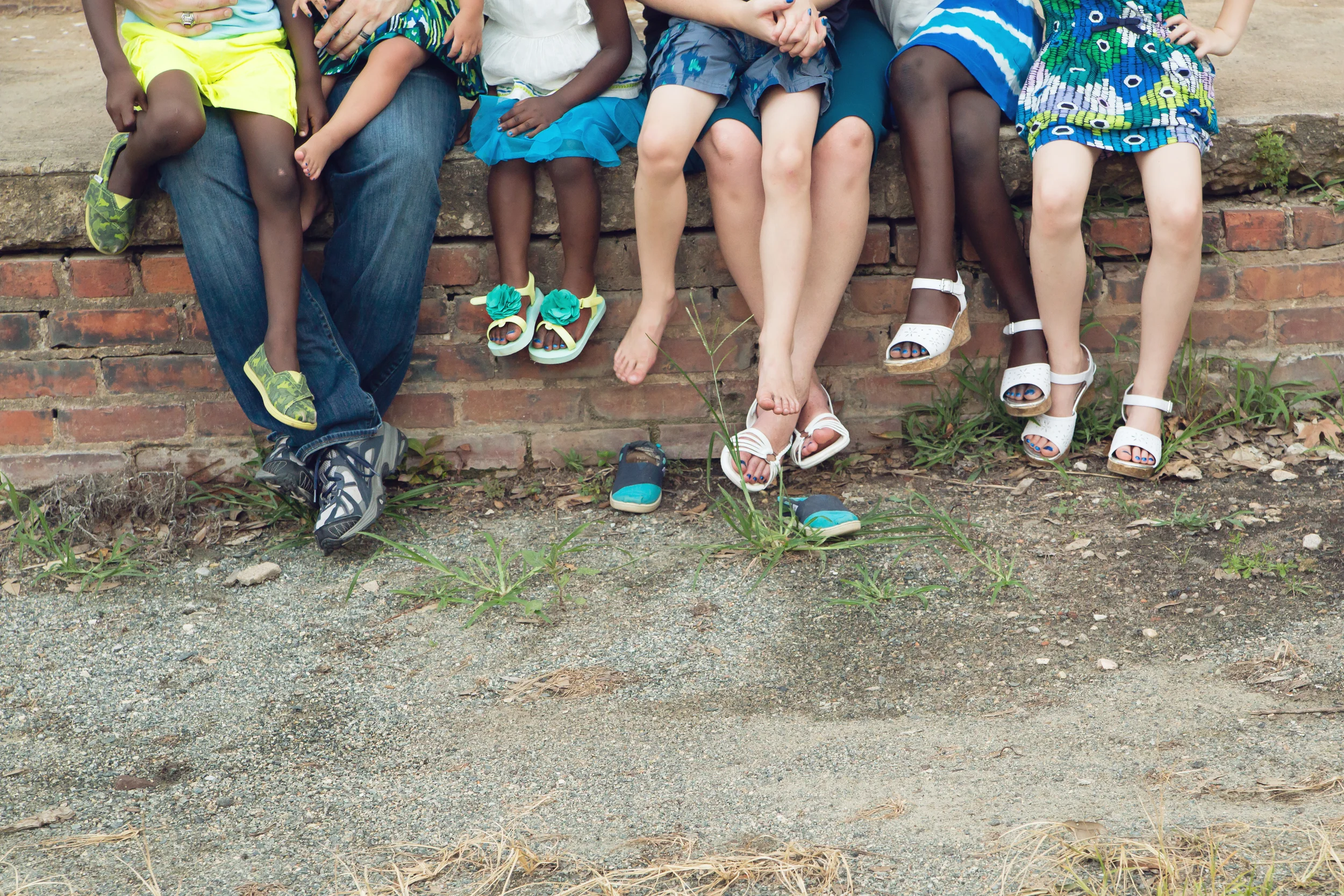
Fridays from the Families: Unspokens

I've been following Jeneil's blog, Rhema's Hope, for many months. She is married to Brandon and has two daughters, Rhema (who have autism and a seizure disorder) and Hope. I love her writing and her perspective. She is graciously allowing me to share this post with you, and I know you'll be thankful for it.

Rhema was a few months shy of her 2nd birthday when she started receiving speech therapy. There was no autism diagnosis yet, but tests indicated a hearing loss due to fluid buildup in her ears. Ear tubes were quickly inserted, and we waited with baited breath for the promised language explosion.

Messages to my faithful friend Cha:
Dec 2005
since she can hear significantly better now, the speech and language should improve. i’m praying to see major improvements very soon… like NOW.
Jan 2006
she is starting to say some words… maybe? i still would prefer that she be quoting shakespeare by now. but there goes God teaching me patience and trust again. =) i’ve even enrolled in a speech therapy class myself – i have homework and everything! trying to do what i can to help rhema catch up…
March 2006
I’m so impatient. I want her to talk, talk, talk and understand everything I teach her. She’s nowhere close to where I want her to be…

Five years and an autism and seizure diagnosis later, Rhema is still pre-verbal. Never has my desire for her to ‘talk, talk, talk’ wavered. In fact, as she grows older the longing to know her heart-thoughts — to have even just one real conversation with my girl– only intensifies.

I was thinking about a funny practice we had in my church youth group. The leader would ask if anyone had any prayer requests. Then he’d ask for “unspokens.” Those were prayers requests that you had but didn’t want to say out loud, so you just quietly raised your hand. Then we’d all pray for the “unspokens.” God heard every word, every request of the heart, even if it was unspoken.

It dawned on me that Rhema has many unspokens. Oh, how she speaks…

Her big toothy smile and giggles tell me she is so happy to be here

Her soft hums say she’s content

Her deep gaze with big brown eyes whispers ‘I know I’m safe with you’

Her spontaneous hug is the only way she knows to say thank you

Her shrieks are excitement uncontained

Her wailing usually means ‘I need cheese or a popsicle stat.’

Her very life is one beautiful, unending song: God is good!

Brandon sent the following message to a friend after Rhema’s ear tube surgery. He could not have known…:
She’s BEGINNING to talk…very little, but my estimate is that she was about 8 months behind, so I anticipate a daughter that we can’t get to stop talking in about 5 more months… You know her name means “God’s spoken word to the soul/heart” as it is used in the Bible. We always prayed that she would be a witness for Christ…and for months we were afraid that she might not even be able to hear or speak. I quietly thought that perhaps the Lord was going to use her to speak in ways that words might not be able to…that she might have a special gift of communicating or living that spoke of Jesus in speechless ways…but it was ironic that we called her that name and went thru about 1 year wondering if she would ever speak…but she won’t be silenced. Jeneil says we will always tell her of this time and the prayers we prayed…and how special her gift of speaking is…
(Smile). Sometimes God’s plans for our children are even bigger than our own.

I daresay, Rhema - and the precious ones like her - do and will speak of Him in ways that words cannot.

And I believe there will be a day (if not in this life, then in heaven) when she will hear and respond and talk and sing to her Maker forever; she will be unhindered by autism.

Until then, there is much to hear.


~+~
If you'd like to read a couple other related posts written by Jeneil, see Autism at Church, Part 1 and Autism at Church Part 2.

Past. Present. Future.

Don't Let Yesterday - Cherokee Proverb Magnet

It's easy - in any area of life, but particularly at church - to let the past dictate future responses.

"No, we can't do that because we've always done it this way."

"No, we don't go to church because we went once [or twice or...] and it wasn't a good experience. So we just worship God from home."

"No, none of the other churches in the area have ever done anything like that, so it probably isn't wise for us to try either."

"Yes, I know her, but she flaked out on a volunteer commitment before, so I'm not going to even respond to her email expressing interest in serving again. She won't follow through."

"Last time I approached that mom, she blew me off rudely. I'll just focus on the more responsive parents."

"We had one of those autistic kids come to our church before. It was too hard to have him in class."

"Every church we've visited doesn't seem to know what to do with the needs of our family. It's just not worth it." 

"There's no point in bothering with families with special needs at our church. They've never stayed for long in the past, so we should focus our efforts in an area in which we can have better results."

Yes, some of those statements are hard to swallow, but I've heard variations of each one. But look back to the image above: Don't let yesterday use up too much of today.

And, as far as future worries go, "Therefore do not be anxious about tomorrow, for tomorrow will be anxious for itself. Sufficient for the day is its own trouble." (That would be Matthew 6:34.)

And concerning anxiety for yesterday, today, or tomorrow, how about this one? "Do not be anxious about anything, but in everything by prayer and supplication with thanksgiving let your requests be made known to God. And the peace of God, which surpasses all understanding, will guard your hearts and your minds in Christ Jesus." (That one is Philippians 4:6-7.)

Learn from the past. Live in the present. Dream and plan for the future. Don't sacrifice one for the other, and don't let anxiety creep into any of them. 

And recognize, worship, and follow the Author of yesterday, today, and tomorrow. Find comfort in the truth of Hebrews 13:8: "Jesus Christ is the same yesterday and today and forever."  

Amen.

The simple story of a mom's winsome church advocacy

As I prepared for Monday's weekly round-up, I came across this snippet about Jose Angel Oliveras, a guy raising money for autism awareness:
Oliveras was exposed to autism by the mother of an autistic child through his church. As she is a proactive volunteer for the cause, Oliveras was touched and became fully involved. Just the way he was moved by others, Oliveras wishes he can do the same. “I want to continue doing triathlon for autism. Along the way, I also hope I inspire others to do something positive. I need more people to carry the torch.”
What a fantastic model of how parents can influence others to join them in carrying the torch!

How do we respond when their theology is their child?

I regularly read the blog A Thinking Person's Guide to Autism, and this recent post is one of my favorites: My Baby Cried Louder Than Science. I know it might be controversial to share it here, as it is staunchly pro-vaccination and unapologetic in its dismissal of vaccine concerns. That's not why I love the post, though, and please know that I'm using this as a springboard to jump to another topic altogether.

In the post, Jennifer Byde Myers writes about taking her daughter - her second child, born after her older son's diagnosis of autism - for a well-baby check-up that included shots. She writes:

When she woke up at home I reached in to get her and she began to wail. "Poor thing, must be starving"... so I pulled her close and set about to nurse her... and she twisted her head this way and that, thrashed about and screamed. And screamed. And screamed. Every time I tried to comfort her, cradling her in my arm like she was a bouquet of flowers, she just screamed at me. She wouldn't eat. I panicked.
Oh my God. My child had her shots two hours ago, and now she is a different child. This is how it is, one minute the child is there, then they're gone; that's what I've heard. My daughter has autism. Oh my God.
In an instant, every single piece of science went out the window, and anecdote took hold. My science was my child,  my screaming child.

In case you don't pop over to the original post, here's the rest of the story: Jennifer called the doctor back, kept trying to calm her daughter, and finally took her baby girl back to the doctor in a panic ... where they realized that she had been causing the crying by putting pressure on one of the sore spots where the shot had been administered. The child was screaming because her momma was pinching her, not because she had a bad reaction to the shot itself. Jennifer was convinced that science supported the practice of vaccinating kids; she was willing, though, in a state of panic and helplessness to change that conviction.

I don't link to this to begin a scientific debate. Actually, I want to change the subject now, steering us away from science and toward theology instead. I've talked with enough parents of kids with special needs to know that this post could have been written about faith instead of vaccines. Instead of "my science was my child, my screaming child," I've heard variations of "my theology was my child, my hurting child."

Jennifer's doctor was compassionate. She didn't dismiss her concerns. She didn't mock her because she, as a mom, was misunderstanding her daughter's cues. She didn't look down on her. She listened. She watched. She helped.

Is the church willing to be just as gentle and compassionate and helpful? Are we willing to listen to the grief of hard theological questions instead of dismissing them? And are we willing to be patient with and available to parents who need support in their moments of panic and anxiety?

Disability raises questions. Hard questions. Sometimes, in an effort to avoid hard questions, we run from the families whose circumstances could force us to ask or answer them. Please, don't do that. Don't walk away from the questions or the individuals posing them. You'll miss out on so much if you do!

Whether or not you're personally comfortable with hard questions, know this: God is okay with them. He can handle them without intimidation or avoidance. He never runs from families with disabilities, even when others do.

Weekly round-up! {8/15/11}

I'm not sure if she reads this blog (because, unlike my other one, I don't include pictures of her grandbabies here!), but HAPPY (belated) BIRTHDAY to my beautiful mother. I hope you had a marvelous day yesterday! I let the blog have a sabbath day on Sundays, so I couldn't include the well wishes until today.

Will We Protect the Little Ones?: If you've read this blog before, you probably know that I admire the way that John Knight points to God's sovereignty in disability with both his life and his writings. This post from the Desiring God blog is no exception:
Prenatal tests are not the problem. The problem is the bias of our culture against the lives of little ones born with Down syndrome. Our culture does not think that these littles ones should be given the opportunity to live.
And there is no neutral ground on this issue: you are either doing something to protect the lives of unborn babies with disabilities or you are letting the culture pressure parents about what they "should do."
'Environment' Poses a Knotty Challenge in Autism: This news article from the NY Times is the best one I've read about the complexity in possible causes of autism spectrum disorders. (And it makes me thankful for the One who holds all the answers.)
Recent research has taught us more about the complexity of the genetics of autism, but the evidence also has suggested an important role for environmental exposures. It has become a very complicated picture: Genes matter, but we usually can’t tell how. Environmental exposures matter, but we usually don’t know which.
Teens, Tweens, and Transitions for the Student with Disabilities: This isn't a recent post - it's about seven months old - but it speaks to issues of age-appropriateness that I discussed in my Q&A last week. Plus it's written by a special needs ministry veteran and advocate I respect greatly, Jackie Mills-Fernald. In the article you'll find specific tips for inclusion and wonderful nuggets like this one:
Instead of saying we have no program for an individual with disability, why not ask, "What do we need to do to make a place for them in the body, so even those with disabilities have a church life like yours and mine?" Jimmy has a life like that; a life where he is able to impact those in the church, community and globally with the love of Christ, even with his diagnosis of Autism, because Jimmy has a church family that sees past his disability and sees his ability and potential as a child in Christ and Kingdom builder.
Eye Contact and Churches Including Children with Disabilities: This article, also from the International Network of Children's Ministry, is written by another passionate advocate for special needs ministry, Barbara Newman. She writes,
While speaking at a conference in Saint Louis, I met a pastor who just finished up a phone conversation with a family friend. He had been asked to fly to their community and lead the funeral service for their five-year-old child who had just died due to complications from several areas of disability. He had asked this family if their own local pastor would also be participating in the funeral service. The family admitted that they had no local church. They had tried eight churches within an hour driving distance from their home, and each one had said, "Sorry, we do not have anything for you here." The church down the road, however, had agreed to host the funeral service. I looked that pastor in the eye and said, "It is amazing that the first time this child's body will be welcome in church will be in a casket".
 Wow.

Now, as usual, here are some glimpses this week of the body of Christ rallying around families with special needs in a good way,