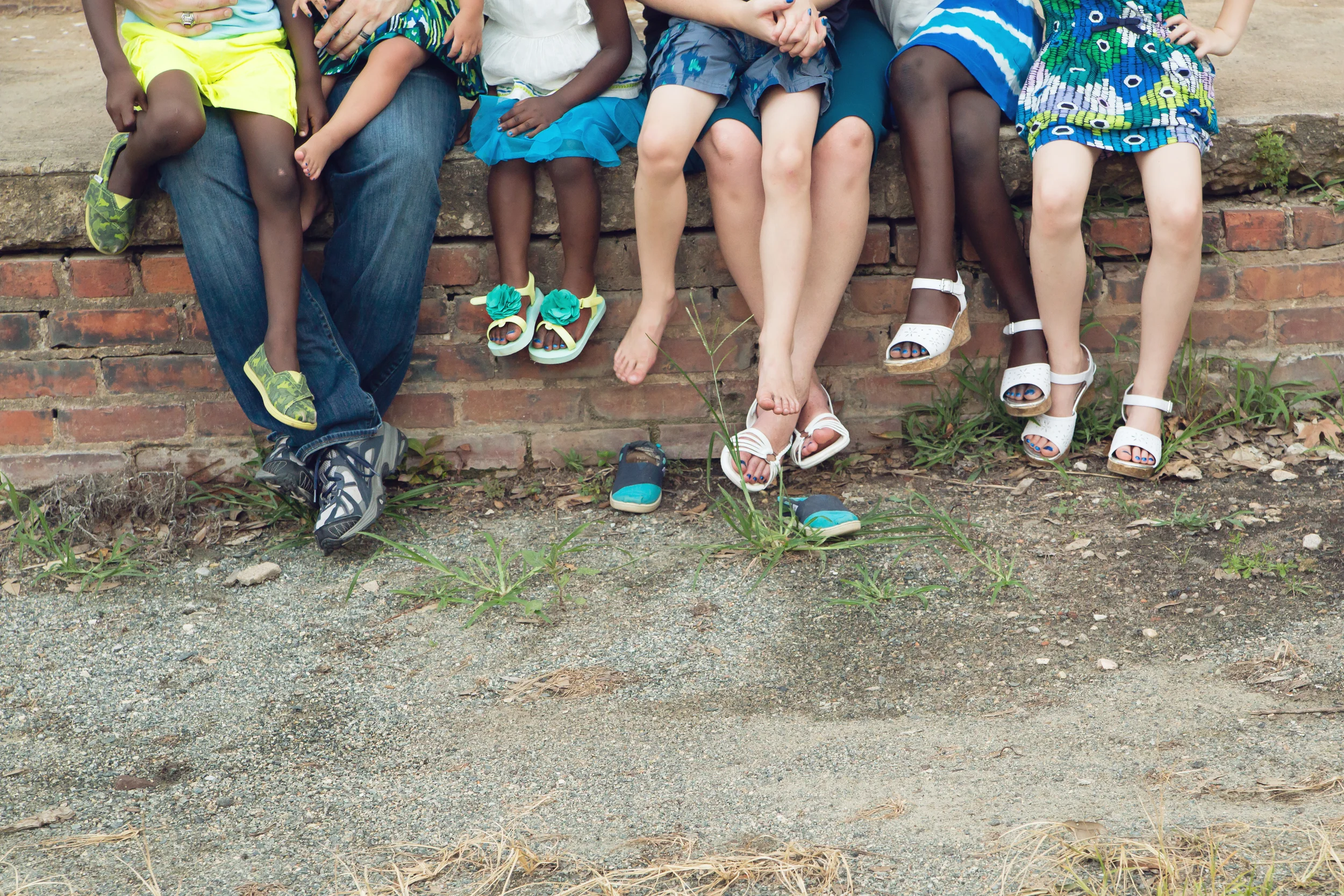
Fridays from the Families: Communion, the cry room, and funerals

This week's edition of Fridays from the Families is a little different from usual. I have found a few posts written by moms on their own blogs, and I'm sending you to each instead of having you read them here. In other words, it's a sort of Weekly Round-up for family posts.

First up, The Crying Room. This mom writes about a sweet moment in her church's cry room with her daughter CB. On the intro page to her blog, she describes CB as "16 year old, lanky blue-eyed girl with a sweet soul and good nature. She has been diagnosed with severe Autism, severe cognitive impairments, a seizure disorder, hypothyroidism, and scoliosis. She is non-verbal, receptive language at about a 8-10 month old level, needs all self-care done for her, and she is still in diapers. She has a smile that will melt your heart." And this post will melt your heart too.

In this guest post on the Autism & Alleluias blog, Take This All of You and Eat, parents share how they prepared their daughter Danielle, who has autism, to take her first communion using visual cues and communication. Then their son used the experience as the foundation for his Eagle Scout project to provide resources to other families and churches in this same situation. While the qualifications for receiving communion and the preparation for it vary from church/denomination to church/denomination, there are useful ideas (and a sweet story) for any church leader here.

And this is a great post about how to help families who have a child with autism attend a funeral. Tips include providing childcare if needed, offering tools like social stories if the child will attend any part of the services, and making meals for the family that take into account any food allergies or sensitivities.

And, finally, Gillian Marchenko is a pastor's wife and mom of four girls, including two with Down syndrome (one who also has a diagnosis of Moyamoya disease and has survived a stroke and two brain surgeries, and the other who was adopted into their family internationally through Reece's Rainbow). She is asking for input from parents of kids with special needs and mothers who have experienced a miscarriage as she prepares for some MOPS speaking engagements. If you fit those categories, please visit this post and leave a comment.

considering a different perspective

Two nights ago, my husband was cleaning the kitchen, I was taking a bubble bath (yes, my man serves me well!), and the kids were playing ... that is, until my son sliced two of his toes. Thankfully, we didn't have to visit the ER or urgent care, but I thought we were destined for one until the bleeding slowed.

Our master bath looked like a horror scene, and I have to say that it's a good thing I was already planning to replace the rugs in there. Robbie didn't want us to touch his foot, and we couldn't convince him in his two-year-old logic that pressure would help and that a bandage was necessary. Eventually he allowed it, but only after he asked for bandaids on his knee, ankle, and right big toe ... none of which had any cuts or booboos. As I put bandaids in places where he didn't need them, I gained his trust to put them where he did need them.

(I think there's probably a lesson there about building trust with families in need at church, but you can go ahead and draw that lesson out, because I'm taking this a different direction.)

As we cleaned him up and fixed him up, my daughter stood in the doorway of the bathroom. My husband, concerned that she would get blood on her princess costume (aren't all four-year-old girls in princess costumes at 6:00pm?), asked her to go to her room. She hesitated, and I saw something in her eyes that made me pause as well.

"Jocelyn, do you think Robbie is going to die?" I asked quietly.

She nodded slowly, her gray eyes large and brimming with tears. Bless her heart. She had never seen more than a single drop of blood before, so she drew her own conclusions.

We assured her that Robbie wasn't dying, and Lee found a clean place she could stay in the bathroom while she comforted her brother and we comforted her. But if I hadn't noticed that look in her eyes when Lee asked her to go to her room and realized the fear in her perspective, we would have sent an anxious girl to her room where she would have thought she was waiting alone for her brother to die.

Many people with disabilities aren't familiar with church because churches haven't had a great track record for  welcoming them. As such, we need to be willing to consider their perspectives. What regular activities that are common to us might seem odd to them, such as communion, baptism, or even just the cues to sit and stand at various points during the worship service? What words are mystifying, such as grace, mercy, triune, or hallelujah? What phrases could be confusing to someone who thinks more literally, as some people with disabilities do; would "invite Jesus into your heart" (which is a phrase I think we all should retire, but that's a post for a different day) or "pass the peace" make sense to them?

If you're a ministry leader or someone who has attended church for at least a few years, you may have trouble considering the perspective of someone who hasn't entered a church in years. Or maybe you know your specific church so well that you forget what aspects of it could all be strange to newcomers. For example, my church doesn't look like a church because it was once a hotel building; I'm used to that, but it is a little weird.

Ask God to open your eyes to consider what church is like from someone else's perspective. He knows their perspectives already, and his perspective is invaluable.

show grace.


For church leaders, that means you shouldn't make assumptions about families or judgments about parenting.

For people with disabilities and their family members and friends, that means you shouldn't be too quick to presume that the staff and/or volunteers at a particular church don't care, won't be welcoming, or don't want to be helpful.

For all of us, remember the grace you have received from Christ. You didn't deserve it. Show that same grace to others, whether or not you think they deserve it.

Blessed are the merciful, for they shall receive mercy.
Matthew 5:7

Let your speech always jbe gracious, seasoned with salt, so that you may know how you ought to answer each person
Colossians 4:6

I therefore, a prisoner for the Lord, urge you to walk in a manner worthy of the calling to which you have been called, with all humility and gentleness, with patience, bearing with one another in love, eager to maintain the unity of the Spirit in the bond of peace. There is one body and one Spirit—just as you were called to the one hope that belongs to your call—one Lord, one faith, one baptism, one God and Father of all, who is over all and through all and in all.
Ephesians 4:1-6

But what if our special needs ministry is different from yours?

Whenever I get the opportunity to talk with other church leaders about special needs ministry - as I did several times this weekend at the Connecting Church & Home conference in Louisville, KY - the conversation usually involves lots of questions about what we're doing at Providence. I answer the questions, but I try to do so with this caution:

What we're doing works at Providence. We make choices based on our own church needs, culture, and dynamic. What we do won't be the same as what you do.

I don't know if it's pride or just a love for answers (which is a form of idolatry, if we're really honest with ourselves), but it's hard to send someone away without giving them a plan, especially if they have come to me asking for one: "What do we do?" "How can we start?" "How can we deal with our current circumstances?"

Truth is this: I can't answer those questions. I'll try to offer practical advice by asking questions to learn more about your church, but I can't give you a foolproof answer for what will work at your church.

Most churches start with disability ministry in children's ministry. It's more rare to start with adults - which is what Providence did ten years ago - but that happens too. Many churches provide respite events to give parents the gift of time, and others provide support groups. Some connect with outside organizations to provide family retreats. Some group most kids with special needs into separate classes, while others practice inclusion and still others have a mix. Some churches feel called to reach out to those with more obvious special needs while others are drawn to more hidden ones. 

Here's my point: There is no perfect model. 

Think about the churches you've been a part of, and think about the Bible-preaching churches in your town. They aren't identical. The leaders in two different churches can be faithfully serving and depending on Christ, but the churches may look dissimilar. That's okay. 

Think about Christ. As we read through Matthew, Mark, Luke, and John, we see that Jesus doesn't respond the same way in every circumstance. He sees the needs and loves the people, which means he doesn't follow a formula for his behavior.

What if our special needs ministry is different from yours? Great! I would be concerned that you were ignoring the needs and dynamic at your church if you were simply trying to replicate our model at your church.