did you know...


Did you know that the abortion rate is higher than the birth rate in Taiwan?

Did you know that in Taiwan an estimated 90% of pregnancies to unwed mothers end in abortion? (source)

Did you know that only a handful of crisis pregnancy centers operate there, each supporting unwed moms who choose life for their child and each doing so in the name of Christ?

And did you know that our third child is named Zoe Amanda, is three months old, has cerebral palsy, is living in a home affiliated with one of those crisis pregnancy centers, and will be coming home as an official Dingle family member sometime this summer?

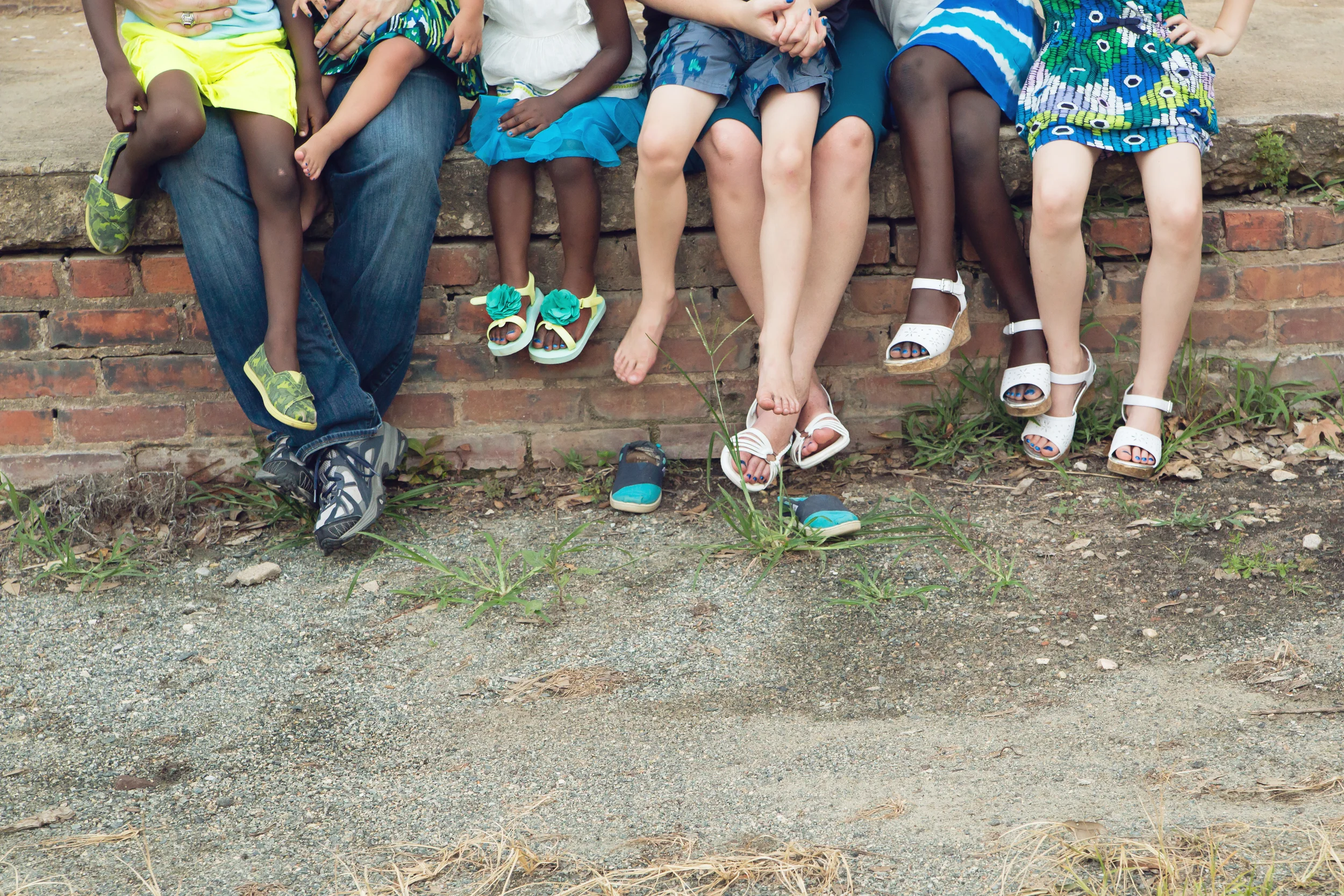
(I apologize for my little man's sullen look. He was running a fever when we took this!)
Yeah, we didn’t know any of that either until January 28th when a friend contacted us and asked us to pray about adopting Zoe. We agreed to pray, fully expecting to say no. But we prayed. And God moved our hearts and plans and minds.

This was not the timing we planned, the country we planned, the age we planned, the special needs we planned, or… well, suffice it to say, “For my thoughts are not your thoughts, neither are your ways my ways, declares the Lord. For as the heavens are higher than the earth, so are my ways higher than your ways and my thoughts than your thoughts.” {Isaiah 55:8-9}

This is crazy. And exciting. We’re still in a bit of shock about all of this, but we can’t wait to meet our little girl and hold her and bring her home.

I’ll share more details in future posts on our family blog, but please pray. Pray for Zoe, pray for Taiwan, pray for us.

Thanks, y’all.

did you know...


Did you know that the abortion rate is higher than the birth rate in Taiwan?

Did you know that in Taiwan an estimated 90% of pregnancies to unwed mothers end in abortion? (source)

Did you know that only a handful of crisis pregnancy centers operate there, each supporting unwed moms who choose life for their child and each doing so in the name of Christ?

And did you know that our third child is named Zoe Amanda, is three months old, has cerebral palsy, is living in a home affiliated with one of those crisis pregnancy centers, and will be coming home as an official Dingle family member sometime this summer?

(I apologize for my little man's sullen look. He was running a fever when we took this!)
Yeah, we didn’t know any of that either until January 28th when a friend contacted us and asked us to pray about adopting Zoe. We agreed to pray, fully expecting to say no. But we prayed. And God moved our hearts and plans and minds.

This was not the timing we planned, the country we planned, the age we planned, the special needs we planned, or… well, suffice it to say, “For my thoughts are not your thoughts, neither are your ways my ways, declares the Lord. For as the heavens are higher than the earth, so are my ways higher than your ways and my thoughts than your thoughts.” {Isaiah 55:8-9}

This is crazy. And exciting. We’re still in a bit of shock about all of this, but we can’t wait to meet our little girl and hold her and bring her home.

I’ll share more details in my next post, but please pray. Pray for Zoe, pray for Taiwan, pray for us. I’ll also be sharing information about specific prayer, financial, and practical support we’d appreciate (for example, anyone have a crib to spare? we don’t anymore. we thought we were done with babies in the Dingle household, so we gave that away! update: praise God, we now have a crib!), though prayer is our greatest need.

Thanks, y’all.


P.S. - If you see me around, ask to see Zoe's picture! I can't post them publicly here, but I have a couple of pictures I can share in person and via email. 


disability ministry weekly round-up {2/6/11}

I'm tingly with excitement about some wild and crazy news I'll be sharing tomorrow.

Tingly.

And a little giddy.

But for now, I have to leave you wondering for one more day. If the suspense is killing you, please channel that into prayer. We would love the radical work God is doing in us and our family to be bathed in prayer. Thanks!


And now... on to the links for the week...

Parish's acolyte ministry includes those with special needs I just love this story. I think it's a mix of my fond memories of serving as an acolyte in my Lutheran church as I grew up and the joy I feel when people with disabilities are serving as full members of the body of Christ.

Pondering Psalm 139 {A post from my wife Ashley} Ashley's words cut to the core: " If you had been my parents and you knew that you carried a baby with a deformity, a baby who may have other unseen disabilities, and the doctor muttered the words to you “there’s something wrong with her"... would you have aborted me?"

Transplant may be in sight for girl with intellectual disability An update on a major pro-life story that's been big news in the disability community in the last couple weeks.

The Five-by-Five Approach to Differentiation Success Great tips for teaching anything, including Sunday school!

Raleigh church offers exciting ministries for those with special needs Here's an article about my church and some of what we have going on.

Dear Family A powerful blog post by a mom, thanking her family for specific ways they have served her and her son with autism and for their affirmation of John 9:3.

A Special Place for Special Needs I love finding articles of churches and ministry who are reaching out to adults with disabilities. Here's one (though the divorce stat used in the article is incorrect).

Burts believe strongly in inclusion This church is having monthly topical meetings for parents related to special needs and providing care for their children during the meetings.

Hope you're having a great week!

The Power of One {guest post by Bill Gaventa}

Bill Gaventa, M.Div., is a leader in the inclusion of people with disabilities in faith communities, and his unique mix of experience makes him a great thought partner for a wide range of issues related to disability and the church. He is an Associate Professor in Pediatrics and the coordinator of Community and Congregational Supports for The Elizabeth M. Boggs Center on Developmental Disabilities at the UMDNJ-Robert Wood Johnson Medical School. I'm thankful that he's allowing me to share his words in today's post as a follow-up to this post last week. 

Over the years of my ministry, I have heard stories of people with disabilities and/or their families being unable to find a welcoming congregation. That also has included staff working in group homes or providing other forms of support to help assist adults in taking part in community and congregational life.

But early in November, 2010, at a Saturday conference sponsored by the Lancaster Christian Council on Disability, I heard two parents, now fully included in congregations, tell their stories of being asked to leave previous congregations because of their child. One was a parent of a son with a mental illness; the other’s daughter is on the Autism Spectrum. The first family had been asked to leave 7 congregations, the latter, 13. I was stunned.

A congregation may not feel that it is equipped to deal with a child with intense behavioral issues or may think, this is just one family. But it is not just one person or family. When a child is asked to leave, the family does as well, and word ripples about that congregation to other relatives, extended families, other families of children with disabilities. When an adult is not welcomed or asked to leave, word also ripples, not just to families but to young staff in those agencies who may be struggling with their own faith, and end up being further disillusioned. It is evangelism in reverse, sending people of all kinds into the ranks of what some Christians call the “unchurched.”

The opposite is also true. When a congregation welcomes a child, their family, or an adult with support staff (many of whom may not have ever been in a church like yours) and really helps them feel included, it not only is good for those individuals and your church, but it is also a witness. The word gets out. Through family networks, to others in a support agency, and to extended family. That is why some congregations are now citing their development of inclusive ministries as the primary reason for their church growth, because intentional and radical welcome and inclusion often extends to many others as well.

If there are issues or problems, then simply deal with them. First, ask the family or staff what they need, and how you can best support them and their child or person they are accompanying. Find congregational members who may be professionals to help figure out the supports needed. Connect with school teachers or agency staff to help you. Figure out ways to address behavioral or other issues that give the individual a chance to learn your rituals and routines.

After all, those individuals and families are not the only individuals or families that may have posed challenges for a congregation. If we asked everyone who posed a challenge at some point in their life to leave, our sanctuaries would be empty and our light dark. The amazing fact about the two families in Lancaster was the faith of the individuals and families who kept searching and hoping, in spite of the lack of faith and love demonstrated by the rejecting congregations. Start with the one. If you have 99 in a congregation to help you figure it out, then the shepherd has lots of help, and your congregation has the possibility of a journey that will benefit everyone.
What can YOU do to demonstrate God's love for all people, including those with disabilities?

I thought I had something to write today, with several topics in mind. But as I sat to write, I read something else that I'd rather call your attention to. It's part of a talk John Knight gave recently about disability and the sanctity of life, with this segment offering suggestions for what we each can do to affirm God's sovereignty in disability:
You don’t need to be an expert in disability.  In fact, sometimes that is an advantage.  You can do informal things.  If the Kanowitz family had not adopted us and loved us and persisted in love for us almost 16 years ago, I would not be standing here.  They didn’t know anything about Paul’s disability, but they knew how to love.  Trust God to help you, even if the person does what I did, and that was respond with bitterness and derision. They persisted because they trusted God more than they feared me, even when nothing changed in our hearts or lives for a long time. If God can change my heart, he can change anybody’s heart!
You can speak up when the hard issues are discussed.  The abortion movement assumes one of its best arguments for abortion is that it must be legal, especially late-term abortions, because nobody wants the disabled babies.  Don’t let that lie just sit out there – move into it, get underneath it, love the mother and father, save the baby.  Get the mom into Hope Keepers here at Bethlehem, a group Caryn Turner organizes of mothers and spouses experiencing disability in their loved ones.
You can do simple, one-time things.  When Dianne was so sick from treatment for her cancer, we received meals three times a week (coordinated by two wonderful ladies who selflessly served us for nine months).  Some of those meals came from very young people – and I was encouraged that they had the courage to come to the door of a home that, potentially, could be so sad, so angry.  That cup of cold water will never be forgotten by God himself!
Some of you will be called into even longer term service.  We have families at Bethlehem who have intentionally adopted lots and lots of children with disabilities – talk about leaning into the promises of God.  And we have families who have unintentionally adopted children with disabilities, and they are pursuing, in love, the good of the children God has given them, even with this heart-breaking surprise.
Everyone, put a stop to the cruel words like retard and spaz, first from your own mouths if necessary. I know it is possible for children to stand up to that cruelty, because I’ve seen my own children do so without any prompting from me.
If you live with a disability and have gifts that are not being used, please pray about using them here!
Please don’t misunderstand – there is joy, and the sorrow and the suffering is very real.  I have cried more than I thought a man could cry these last 16 years.  I am not saying there is a straight line between serving families like ours and a light, breezy happiness.  But I am saying there is an eternal weight of glory beyond all comparison coming (2 Corinthians 4:17).  And I take comfort that even the tears are valuable to God.
Psalm 56:8: You have kept count of my tossings; put my tears in your bottle. Are they not in your book?
God is sovereign.  Jesus is Lord.  Your sins are forgiven.  Joy is coming.
To read the rest of John Knight's talk about disability and the sanctity of life or to watch the video of it, please go to his blog. And, when you do so, bookmark it, because God is doing amazing things in John's family and church and you'll want to keep reading his blog to hear/read more.