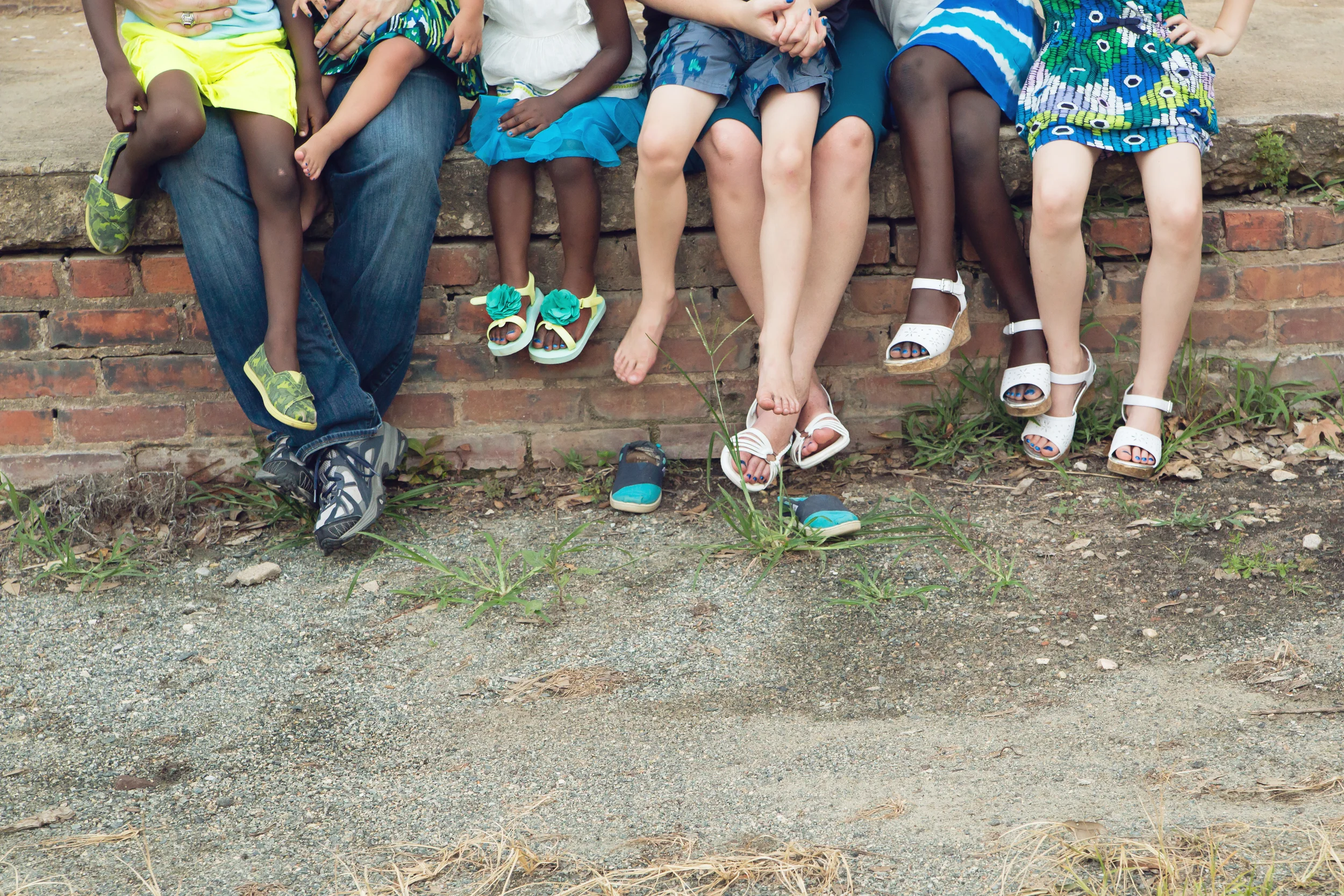
Children {with disabilities} being welcome in worship
/
Yesterday one of my favorite blogs featured a guest post titled Children In Worship - Let's Bring It Back The author writes, "As the church, let’s be open to the idea of inviting our children into worship again. Let’s be patient, deliberate, and wise, but let’s encourage families to have their children in worship as soon as they are able."
As he acknowledges that each family will approach this with different timetables, he provides clear reasons for why it is beneficial to include children in worship. I've pasted that section below.
But first, consider this as you read them: you can replace "children" with "people with disabilities," and it still remains true. As you read the rationale below and make the mental replacement, I think it will become clear why the inclusion of individuals with special needs matters.
Why should children attend the worship service?In today's post at the same blog, the author will be offering tips for including children in the worship service, and some of those will work for individuals with disabilities too. I'll be writing a follow-up post once his goes live.
- Our children are members of the covenant community (the church):Corporate Worship on Sunday morning is the primary activity the covenant community engages in together (Acts 2:42; Hebrews 10:24-25). Therefore, our children as members of this community should be included in this crucial aspect of covenantal life.
- Our children will be present in the midst of the means of grace: Our children benefit by being where the Word is preached (Romans 10:14), the sacraments are administered (Matthew 28:19-20), and corporate prayer is practiced (Acts 2:42-47). These are the chief means by which God pours out grace upon His people. Why knowingly rob our children of this blessing?!
- Our children will be present in the midst of the entire congregation:Our children benefit greatly by being in the presence of Christians of various ages. They are able to see that the faith of their parents is not a faith that they own alone, but is a faith that is important to all of these people who are gathered around them on Sunday morning. This only reinforces what Mom and Dad are modeling and teaching when they see this incredible gathering of people reading the Word together, praying together, confessing together, and singing together (Deuteronomy 31:9-13). They need to see the body in action.
- Our children will be present with their parents: Worshipping together as a family helps to counter the current trend in our society of fragmenting our families. If our children join us in worship from four years of age until they are eighteen they will worship with their parents in 780 Sunday morning worship services! Think about the cumulative effect of a family worshipping together, in the midst of the means of grace, meeting with God for 780 Sundays in a row.
- Our children will witness their parents worshipping: It is the Biblical role of parents to disciple their children in the faith (Deut. 6; Psalm 78; Eph. 6). What a benefit there is when children witnesses their mother or father singing with conviction, praying in reverence, listening intently to the sermon, or receiving the Lord’s Supper in joy. In these moments a child witnesses the importance of faith and worship. There are few greater encouragements to a child’s faith then seeing their parents worship God with reverence and joy. (Exodus 12:1-28; Deut. 4:9-11; Deut. 6; Psalm 78; Ezra 10:1; Nehemiah 12:43; Joel 2:12-17; Acts 16:33).
- Our children will learn the rhythms of church life: Teenagers in our culture often balk at attending corporate worship. But how many of our teenagers have we setup for this reaction, because we did not consistently include them in worship until they were a teenager? If attending church for years has always meant coloring Bible pictures, singing songs to a cd, playing games, and doing crafts—then we should not be surprised that our young people find worship to be odd, uncomfortable, and even boring. I love good children’s songs—they ring through my house. I love good children’s Christian crafts—they decorate my study. But if this alone is the rhythm of church life we have set up for our children week in and week out, we have done them a great disservice. They must see, know, and learn that the singing of the great hymns of the faith, the preaching of the Word, reading of confessions, corporate prayers, etc. is anything but boring. It is the gathered life of the community of faith. It is our weekly rhythm—appointed by God, designed by Him, established for the ages—this is what we want them to know, because we want them to know and worship Him.
As we ponder this, I want to suggest that becoming a church that welcomes kids in worship is taking a vital first step to welcoming people with disabilities. How? Consider a church that accepts children in worship, knowing that they might make noises at odd times or demonstrate other "atypical" church behaviors. As this becomes part of their church's culture, those behaviors will become "typical" as the congregation becomes patient and understand toward those who are learning to worship and who may express their praise in different ways. As that happens, these churches often become places that are more likely to welcome people with disabilities and any "atypical" church behaviors they might bring.
And then the definition of "typical" changes once again, as the church's culture will change to consider those individuals with special needs to be vital members of their body, embracing the words below:
For just as the body is one and has many members, and all the members of the body, though many, are one body, so it is with Christ. For in one Spirit we were all baptized into one body — Jews or Greeks, slaves or free—and all were made to drink of one Spirit.
For the body does not consist of one member but of many.
If the foot should say, “Because I am not a hand, I do not belong to the body,” that would not make it any less a part of the body. And if the ear should say, “Because I am not an eye, I do not belong to the body,” that would not make it any less a part of the body. If the whole body were an eye, where would be the sense of hearing? If the whole body were an ear, where would be the sense of smell? But as it is, God arranged the members in the body, each one of them, as he chose. If all were a single member, where would the body be? As it is, there are many parts, yet one body. The eye cannot say to the hand, “I have no need of you,” nor again the head to the feet, “I have no need of you.” On the contrary, the parts of the body that seem to be weaker are indispensable, and on those parts of the body that we think less honorable we bestow the greater honor, and our unpresentable parts are treated with greater modesty, which our more presentable parts do not require. But God has so composed the body, giving greater honor to the part that lacked it, that there may be no division in the body, but that the members may have the same care for one another. If one member suffers, all suffer together; if one member is honored, all rejoice together.{1 Corinthians 12:12-26}
Let those words be true of our churches.
Amen.


