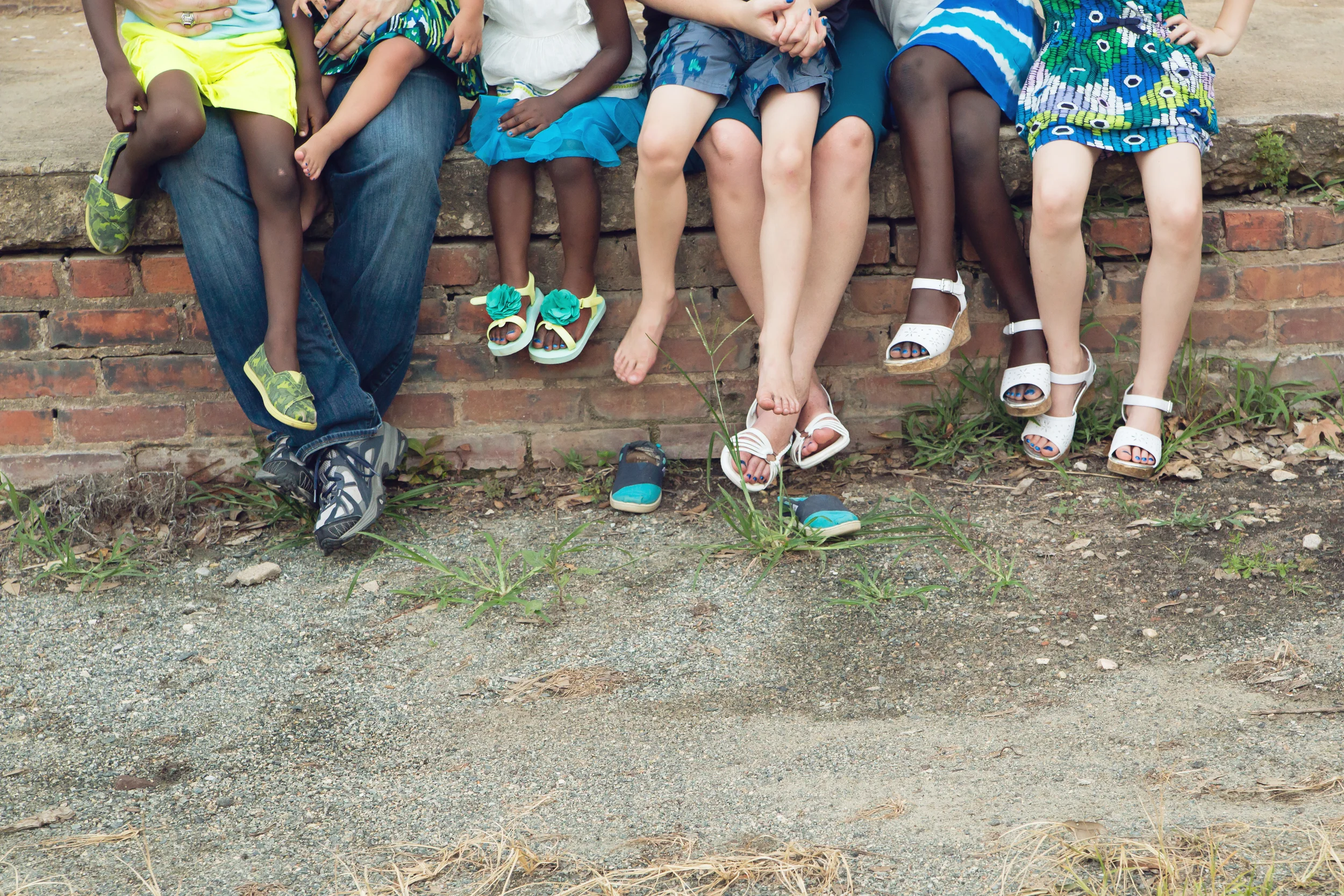
Including ALL People in the Church (from my #D62012 Nuts & Bolts of Special Needs Ministry session)


Special needs ministry can be done well at any church that is willing to include ALL people in the church by:
Adapting
Loving
Looking
(See how I did that? Yep, an acronym. In order to speak at a church conference, you have to prove that you’re able to use at least one. I got bonus points for having three in my first session, and I’ll share the others later this week.)

Adapting

  •        Any degree of special needs ministry in your church will require a willingness to change. Sometimes physical environments – the building, the room set-up, the parking – needs to change…
  •       …but more often than not attitudes need to change. The best way to change attitudes is with God’s truth. Here are my eightfavorite Bible passages (and one I don’t often use) related to special needs ministry.
  •     Other aspects of ministry – such as curriculum choices, measures of success, volunteer recruitment, and teaching – need to change as needed too.  
o   Volunteer recruitment.
We tend to measure need by the number of kids in a class. For example, if we have two classes with no Sunday school teachers – a large class and a small one – we usually prioritize getting the large class covered because it’s easier for subs to teach a smaller class or to combine the smaller class with another class. However, this way of thinking isn’t always helpful. It is just as valuable to find the right person to be paired with one child who needs support as it is to find the right person to teach a class of 15; God’s economy doesn’t measure the work of the person with one child as more or less important than the work of the one teaching the full class.

o   Curriculum choices.
I can’t tell you the perfect choice that will work for all kids, students, and adults with special needs, but some good features to look for in a curriculum or to add to what you’re already using are visual aids, music, movement, teaching time broken into smaller chunks instead of long stretches, and a clear, consistent, and predictable schedule. (In our adult class, we use the Access curriculum from Lifeway. In our children’s and students’ ministries, we use the Treasuring Christ curriculum, for which I write special needs strategies.)

o   Teaching time.
Here's an example. I recently emailed our children’s discipleship pastor about the need for visual aids – even a few powerpoint slides – during his large group teaching time at our kids’ Sunday night program. The cool thing is that while I asked for this to help one child with autism in the group, it will also benefit most of the other kids and improve the teaching time for all.

o   Measures of Success. 
Fair doesn’t mean equal. Let's identify the core biblical truth we intend to impart in each lesson, andaim for all kids to grasp that, even if some don’t get all the nitty grittyextra tidbits in the story. Let’s learn to celebrate every milestone – a partially memorized verse, even if the other kids memorize five verses during that time; eye contact with a classmate; the first day that a child who is prone to elopement (that’s the fancy special needs word for wandering off or running away) doesn’t try to leave the classroom.

Loving


When we interact with people affected by disabilities, we can show love through:

  • Safety. Churches should be safe places, emotionally and physically, for families affected by disability. (I’ll expand more on this in tomorrow’s post.)
  • Friendship. Don’t look away or avoid people with disabilities. Get to know them, beyond their disability. Be a friend, and let them be a friend to you. Talk about sports or clothes or church or music or whatever other topic you might talk to any other friend about.
  • Confidentiality. We keep the details of their diagnosis and challenges confidential. Those who are involved with teaching need to know them, but otherwise let the person be a person first. None of us wants to walk around church wearing a sign that says “My biggest challenge is [fill in the blank]” so don’t do that to people with disabilities in your church by sharing openly about their stories without permission. (Remember: It’s their story, not yours.)
  • Presence. I get to go to my first Miracle League baseball game this Saturday. A young friend of ours is playing, and I might get to see another friend and his family there too. As a dad said in one of Marie Kuck’s D6 sessions, "Just be there and be incarnational in that way." (To be honest, though, I’m not going there with the aim of being incarnational. I just really, really like hanging out with our little friend and his family.)
  • Joyful service. One mom told me, “We’ve never been asked to leave a church because of my son’s disability, and I’m thankful for that because I know that sort of thing happens. It’s just that… well, at other churches they make us feel like a burden.” Families affected by disability need to know that church is a different sort of place, a place where we are happy they are there and we care about them.


Looking


You want to look for the kids and students and adults who are not being physically included and who are not being spiritually included.

Physically included: The most obvious (yet easiest to ignore) families who aren’t physically included are the ones who aren’t present at all. If your church doesn’t reflect or exceed the average prevalence of disability in your area (for example, if you’re in the US and your children’s ministry doesn’t have one child with autism in approximately every 88 children), then you need to examine why.

Another kind of family who isn’t physically included at your church could be one who selectively attends, coming to worship but not Sunday school or vice versa.  If that’s due to their preference, fine. However, if it’s because they aren’t able to attend church (perhaps because of sensory overload) or because they aren’t able to attend Sunday school (perhaps because a child needs more help than your church provides for those with disabilities), then you’ve found an area in which you might be lacking physical inclusion.  

Spiritually included:  Once we’re physically including people with disabilities, we are often tempted to stop there. However, if our aim – for example – in children’s ministry is for all children to know Christ and grow in Him, then that means we’re aiming for more than kids simply showing up. Therefore, we ought to also aim for more than the physical presence of people with disabilities throughout our church. (Pat yourself on the back for physical inclusion, though! That’s a good first step. It’s just not your last one.) Consider, what is our goal for all typical members of our church? Are we upholding that for the members who have special needs? Look for the places in which your church is falling short and figure out what you can do to bridge that gap.


What other ideas do you have for ALL people to be included in the church?
My 8 Favorite Bible Verses for Special Needs Ministry (& The One I Usually Don't Use)

When I'm training volunteers, talking to new families, advocating for our ministry within the church, or speaking at conferences, these are the eight verses I use to emphasize the calling that each church has to include all people.


John 9:1-3 


As he passed by, he saw a man blind from birth. And his disciples asked him, “Rabbi, who sinned, this man or his parents, that he was born blind?” Jesus answered, “It was not that this man sinned, or his parents, but that the works of God might be displayed in him."

What I love: 

that Christ saw the man first, that those who had been spending time closely with Christ still didn't have a right understanding of theology and disability, that Christ makes it clear that disability is not a punishment for sin, and that God has a purpose in disability


Luke 14:12-14 


He said also to the man who had invited him, “When you give a dinner or a banquet, do not invite your friends or your brothers or your relatives or rich neighbors, lest they also invite you in return and you be repaid. But when you give a feast, invite the poor, the crippled, the lame, the blind, and you will be blessed, because they cannot repay you. For you will be repaid at the resurrection of the just.”

What I love:

that people who know Christ are called to act differently and unexpectedly, that God is inviting us to have a party that includes people of all walks of life, and that we are called to serve without expectation of reciprocation


Psalm 139:13-16 


For you formed my inward parts;
you knitted me together in my mother's womb.
I praise you, for I am fearfully and wonderfully made.
Wonderful are your works;
my soul knows it very well.
My frame was not hidden from you,
when I was being made in secret,
intricately woven in the depths of the earth.
Your eyes saw my unformed substance;
in your book were written, every one of them,
the days that were formed for me,
when as yet there was none of them.

What I love: 

that God creates all life purposefully and that life begins in the womb


Mark 10:14-15


But when Jesus saw it, he was indignant and said to them, “Let the children come to me; do not hinder them, for to such belongs the kingdom of God. Truly, I say to you, whoever does not receive the kingdom of God like a child shall not enter it.”

What I love: 

that Christ welcomes all, that He rebukes the disciples for keeping the children away, and that He esteems child-like faith over adult intellect


Mark 16:15 


And he said to them, “Go into all the world and proclaim the gospel to the whole creation.

What I love: 

that people with disabilities are part of the whole creation


1 Corinthians 12:12-27 


For just as the body is one and has many members, and all the members of the body, though many, are one body, so it is with Christ. For in one Spirit we were all baptized into one body—Jews or Greeks, slaves or free—and all were made to drink of one Spirit.
For the body does not consist of one member but of many. If the foot should say, “Because I am not a hand, I do not belong to the body,” that would not make it any less a part of the body. And if the ear should say, “Because I am not an eye, I do not belong to the body,” that would not make it any less a part of the body. If the whole body were an eye, where would be the sense of hearing? If the whole body were an ear, where would be the sense of smell? But as it is, God arranged the members in the body, each one of them, as he chose. If all were a single member, where would the body be? As it is, there are many parts, yet one body.
The eye cannot say to the hand, “I have no need of you,” nor again the head to the feet, “I have no need of you.” On the contrary, the parts of the body that seem to be weaker are indispensable, and on those parts of the body that we think less honorable we bestow the greater honor, and our unpresentable parts are treated with greater modesty, which our more presentable parts do not require. But God has so composed the body, giving greater honor to the part that lacked it, that there may be no division in the body, but that the members may have the same care for one another. If one member suffers, all suffer together; if one member is honored, all rejoice together.
Now you are the body of Christ and individually members of it.

What I love:

that every part of the body of Christ matters and that we're all in this together, no matter how strong or weak we seem


Exodus 4:11 


Then the LORD said to him, "Who has made man's mouth? Who makes him mute, or deaf, or seeing, or blind? Is it not I, the LORD?"

What I love:

that God reveals a theological mystery here, taking credit for disability (i.e. He doesn't just allow it, He authors it, even if we don't understand the purposes)


Romans 3:23


for all have sinned and fall short of the glory of God.

What I love: 

that in this verse and all others, "all" includes people with disabilities... and the gospel applies to them as well as me, because all of us are sinners in need of a Savior

...and the one I don't use often.

Matthew 25:31-46. 


I won't paste the entire passage here, but this is a oft-quoted "least of these" story told by Christ. I don't have a problem with others using it, but I don't usually use it in special needs ministry trainings. Why? Well, I find that my listeners immediately identify as the ministers (us) and consider people with special needs to be the least (them). Considering that all of us are broken by sin and all - with and without disabilities - gifted to contribute to the body of Christ (see the 1 Corinthians passage above), it is often unhelpful to cast ourselves into separate camps. Instead of always ministering to "them," how about "us" and "them" acknowledge together that we're all the least of these and join together to worship the King of kings?


What are your favorites? Did I leave off any verse(s) that you find useful as a disability ministry leader or a special needs parent?

links I'm loving in disability ministry (on unexpected wisdom, being asked to leave church due to #autism, and faulty divorce stats)

A four-year-old with disabilities provides the best advice of all!
Finally little Krista walked over and said (I can still hear it today), "Guys, we need to pray about this."

The Tale of Two Churches
I was escorted out of a church service yesterday with my 9-year old autistic son. Despite the fact I had heard of this sort of thing happening on the news more than once, I never expected it to happen to me.

A scientist responds to 'Fetal Flaw'
Disability (I will not use the word defective) is not easy, but it is not a reason to kill a human being.

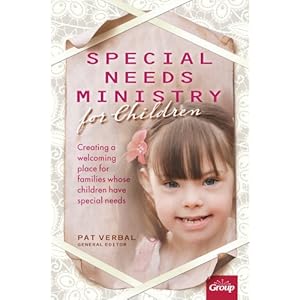
Book: Special Needs Ministry for Children

A new version of this good ol' special needs ministry staple (formerly titled Special Needs, Special Ministry; I reviewed that version here) just came out from Group.

Pastors: That Divorce Rate Stat You Quoted Was Probably Wrong
Christians aren't the only group to be misrepresented. Parents of special needs children are victims of this as well. But as pastors who are charged with proclaiming Truth (with a big T), we must also commit to proclaiming truth (with a little t).

Book: Your Special Needs Child: Help For Weary Parents

I'm not familiar with this book, but a publisher who was at D6 sent me a tweet about it after I had to leave earlier. Here's part of the description: "Steve Viars helps parents of special needs children to be authentic before the Lord about their pain, guiding them in thinking biblically about their challenges and God's promises." (I do wish the title used person-first wording, though.)


pressing on, because it's worth it.

Sometimes people ask how we I do it all right now: getting a house on the market and under contract in March, selling one house and buying another and moving everything in May, finalizing the adoption of our youngest in July, and starting public school for our oldest in September.

In the past, I've turned to various vices to get through big transitions. Not this time. Through the help of precious friends willing to hold me accountable, I've mostly avoided those. (Mostly, not completely. Let's just say that the new jeans I bought for my speaking engagement last week were a size bigger than my usual ones. So, maybe I've been eating like I did when I played water polo in college... you know, minus the working out part.) 

(Can I still call it baby weight even if I wasn't in on the gestating?)

Anyway, the only answer I have is "give us this day our daily bread." Nowadays, to do lists are long enough to make me hyperventilate at the sight of them. I just count on God to guide me through figuring everything out one step at a time.

But, to be honest, I'm tired.

Actually, I'm not quite sure what the word is. Exhausted doesn't cut it. Neither does weary or beat or wiped out or any other word the thesaurus offers up.

When you ask how I do it, I fumble with my answer. I don't know. Most days, I don't think I'm doing it too well.

Here's what I do know:

Not that I have already obtained this or am already perfect, but I press on to make it my own, because Christ Jesus has made me his own. Brothers, I do not consider that I have made it my own. But one thing I do: forgetting what lies behind and straining forward to what lies ahead, I press on toward the goal for the prize of the upward call of God in Christ Jesus.
(Philippians 3:12-14)

I'll figure out how to get our oldest to and from school and still make sure our son gets play time while juggling three or four therapy appointments for Zoe each week, because it's worth it. (I said she would probably walk. I didn't say the process to get there would be easy.) I'll serve in Access Ministry, including kids with special needs in church, because it's worth it and because it's the outlet that keeps me sane in the midst of everything else. I'm not quite sure how to not lose all my friends in the process of everything else, but even if some friendships do fall apart for lack of attention, it's worth it.

In other words, I'm in a constant state of pressing on, because it's worth it.

But I'm still tired.

Kind of like this sweet girl. (Yes, she's sleeping in her exersaucer.)

holding a miracle (on Zoe's evaluations, possible outcomes, and role in connecting two other children to families)

Our girl is a miracle.

Really, she is.

You can read about what the neurologist had to say about her expected outcomes here. That link goes to my friend Georgeanna's blog. Their family is adopting a two-year-old girl with Down syndrome and some health needs from Taiwan, but they first considered adopting Zoe. After they realized it wasn't meant to be for them to be Zoe's family, they were the ones who contacted us about her.

They are knit into our lives in a way I never thought would happen back when G and I were in Miss Dixie's Bible study group a few years ago.

Here's an excerpt from Georgeanna's blog about what the neurologist had to say about Zoe, then called Jesse (but also, for brief periods, called Adelyn and then Hannah Brooke by families who briefly considered her to be theirs but then determined that God was not leading them to adopt her):
I don't remember exactly what he said, but I CLEARLY recall the words "devastating brain injury". He went on to explain (as gently as he possibly could) how things might be for us. We were looking at a child that would probably never walk, maybe never talk, probably struggle with sleep/wake patterns and incontinence. He expressed a concern for the possibility of behavioral issues and all of the care she might need -- things he felt I needed to seriously consider. He not once said anything unnecessary or hurtful, and he never came across as judgmental of our desire to adopt -- he was just stating the facts as he saw them. I could tell he was trying to be positive and careful not to crush my spirit, but I could see the concern in his eyes. At the end of the appointment he walked me out and hugged me, telling me how much he appreciated my heart for these special kids and he wished me all the best.
That neurologist who reviewed Zoe's records then is the neurologist we see now. The one who gave us this report. The one who later said he was surprised by her new MRIs and admitted that no medical reasoning could explain how well her brain is doing.

We still don't know 100% what her outcomes will be, and we won't for a while. Usually, age three is the point at which kids with her kind of brain damage are old enough to really guess at their long-term outcomes. I can tell you, though, these wonderful tidbits from her developmental evaluation:

  • Typical nonverbal problem solving skills (no delays at this point)
  • Typical receptive language skills (no delays at this point)
  • Typical expressive language skills (no delays at this point)
  • Typical cognitive development (no delays at this point)
  • Typical adaptive/self-help skills (no delays at this point)
  • Typical-to-advanced social-emotional development (no delays at this point)
  • Significant delays in gross motor skills (rolling, sitting, walking, climbing, etc)
  • Mild-moderate delays in fine motor skills (using fingers and hands)

We knew she would be most affected in the physical realm. By all medical reports, it would have been crazy for us to expect no delays in other areas. 

Those other delays might show up eventually. Or they might not. 

As for her physical impairment, the pediatrician conducting Zoe's developmental evaluation shared that "while the physical delays will mean that she'll reach milestones on her own timeline, I don't see any reason why she shouldn't be able to walk eventually." 

Y'all.
(For those of you who don't speak Southern, "y'all" can serve as a stand-alone phrase that roughly translates to: "seriously, you ought to think about what I just said or what I'm about to say.")

"I don't see any reason why she shouldn't be able to walk eventually."

The reports were pretty certain that handicapped accessibility would be an eventual need for our family if we adopted Zoe. One reason we chose this house was for accessibility for Zoe. We considered putting Zoe in what is now Robbie's room, but you have to navigate a few turns to enter the room, each tight enough to be difficult to maneuver in a wheelchair. 

Now? That's probably not an issue, though her physical abilities will probably never be a strength of hers. She won't be an Olympian, but for now it looks like walking will be something she does in time. We'll see.

God is in the miracle department, and so far, Zoe is living the miracle. We were prepared to love and parent her, regardless of her needs, but it is a joy to realize that her life will probably be more typical than not.

And about those families who considered adopting Zoe enough to name her before they determined that they weren't at peace in moving forward? Well, one adopted a daughter named Adelyn now, and here's Brooke's beautiful post about a conversation with their doctor about Adelyn's neuropathology. The other is that same friend Georgeanna, whose family is adopting their sweet two-year-old girl from Taiwan.

That's another reason that Zoe is a miracle. Who but God would take one orphan with special needs and use her story to bring her home to a family and to bring two other families to children in need in the process?

I love getting to hold our sweet miracle every day, thanking God for what He has done in all of our lives in 2012.